
High-Precision Engineered Component Portfolio
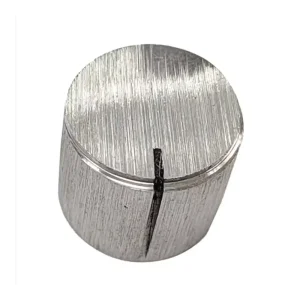
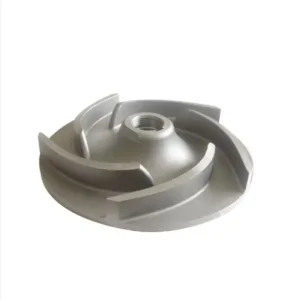
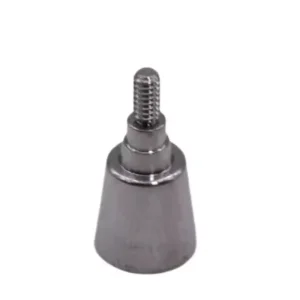
CMM-verified hardware assemblies, fluid control components, and optical housings crafted under ISO 9001:2015 and IATF 16949 certified manufacturing processes.

Strategic Imperatives in Precision Contract Manufacturing
Analyzing global procurement shifts toward high-integrity OEM/ODM contract partners with localized engineering support and end-to-end quality validation.
In the contemporary industrial ecosystem, global original equipment manufacturers (OEMs) across aerospace, automotive, medical device, and industrial automation sectors are fundamentally restructuring their global procurement frameworks. Sourcing decisions are no longer driven merely by initial unit cost arbitrage; instead, enterprise procurement directors prioritize total cost of ownership (TCO), multi-axis tolerance capability down to micro-meter limits, robust supply chain resilience, and verifiable quality assurance protocols.
High-quality contract manufacturing exporters and specialized factories act as extended engineering facilities for international buyers. Modern contract manufacturing encompasses full-lifecycle engagement, spanning early-stage Design for Manufacturability (DFM) optimization, advanced CAD/CAM multi-axis toolpath engineering, metallurgically verified alloy casting, precision multi-axis CNC turning and milling, and post-processing surface treatability to rigorous military and international standards.
Information Gain Insight: The Precision Tolerancing Threshold
Sub-micron precision contract manufacturing relies on controlling physical and environmental variables. Ambient temperature variation of even 2°C can shift aluminum linear dimensions beyond tight OEM limits (±0.005 mm). Leading Chinese contract manufacturers now operate climate-controlled CMM inspection rooms kept strictly at 20°C ±0.5°C to guarantee measurement integrity.
The Shenzhen & Pearl River Delta Ecosystem Advantage
Unrivaled vertical integration, raw material availability, rapid prototyping cycles, and scalable mass-production hardware infrastructure.
Vertical Supply Integration
Within a 50-kilometer radius in Shenzhen and Dongguan, factories access raw alloy billet distributors, specialized heat-treatment plants, anodizing lines, and tooling shops. This dense ecosystem reduces lead times for complex components from weeks to days.
Material Metallurgy Diversity
Direct supply partnerships allow rapid sourcing of specialized materials including AL6061-T6, AL7075-T6, Stainless Steel SS316L, Titanium Grade 5 (Ti-6Al-4V), high-purity PTFE, PEEK, and optical-grade Polycarbonate (PC) with certified mill test reports (MTRs).
Agile Tooling & Rapid Iteration
Leveraging high-speed 5-axis CNC machining, EDM wire erosion, and rapid die mold fabrication, engineering revisions (ECNs) are implemented smoothly without stalling major project production deadlines.
Global Enterprise Sourcing, IP Protection & Compliance
Engineered governance structures protecting intellectual property while delivering complete documentation for international audits.
1. Multi-Layer Intellectual Property Protection Protocols
Enterprise buyers require zero-leakage IP security before transmitting sensitive 3D CAD models (STEP, IGES, SolidWorks files). World-class contract manufacturing exporters institute enforceable Non-Disclosure Agreements (NDAs), air-gapped internal data servers, role-based drawing access permissions, and strict physical factory security preventing unauthorized photo or video capture of proprietary components.
2. Production Part Approval Process (PPAP Level 3)
For automotive and aerospace contract manufacturing, supplying parts requires a complete PPAP Level 3 submission. This includes Design Records, Process Flow Diagrams, Process Failure Mode and Effects Analysis (PFMEA), Dimensional Results verified via Coordinate Measuring Machines (CMM), Material Inspection Reports, and Measurement System Analysis (MSA) studies.
3. International Regulatory Compliance & Testing
Full compliance with international directives ensures smooth customs clearance and environmental acceptability. Exporters provide material verification for:
- RoHS & REACH Compliance: Verification of non-hazardous chemical usage in surface treatments (e.g., trivalent chrome passivation).
- Conflict Minerals Declarations: Traceability verification for Tantalum, Tin, Tungsten, and Gold (3TG).
- EN 10204 3.1 Inspection Certificates: Independent metallurgical chemical analysis and mechanical property testing per batch.
Precision Contract Manufacturing Engineering Matrix
Comparing primary manufacturing capabilities tailored for high-reliability industrial applications.
5-Axis CNC Milling & Turning
Tolerance: Down to ±0.005 mm
Surface Finish: Ra 0.4 µm (as machined), Ra 0.1 µm (polished)
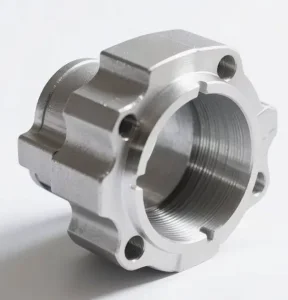
Applications: Complex aerospace brackets, sensor bodies, titanium medical implants, high-frequency RF shield enclosures.
Low & High-Pressure Die Casting
Alloys: A380, ADC12, AlSi10Mg, Magnesium AZ91D
Wall Thickness: Down to 1.2 mm
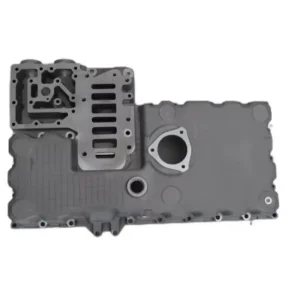
Applications: Automotive clutch oil pans, transmission retarders, LED high-power luminaire heat sinks, motor housings.
Deep Drawing & Metal Stamping
Materials: Stainless Steel 304/316L, Copper C1100, Brass
Process: Progressive die tooling, micro-stamping
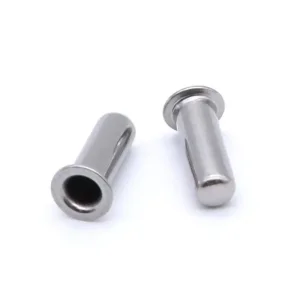
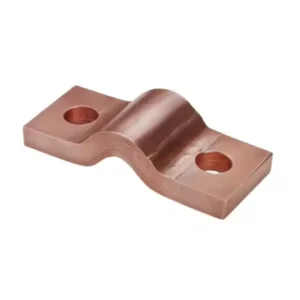
Applications: Deep-drawn temperature sensor housings, flexible laminated busbars, battery pack crimp terminals.
Precision Injection & PTFE Turning
Polymers: Optical PC, PTFE, PEEK, Delrin (POM), ABS
Features: Clear optical lenses, low-friction washers
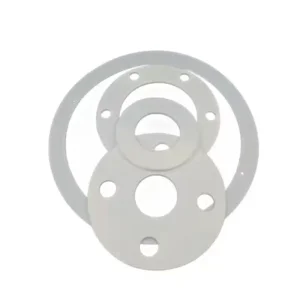
Applications: High-transparency PC optics, chemical-resistant PTFE gaskets, industrial control knobs.
Next-Generation Hardware Sourcing Trends (2026–2030)
Pioneering integration in Physical AI, electric vehicle powertrain hardware, sub-nanometer optic assemblies, and sustainable alloy engineering.
1. Physical AI & Humanoid Robotics Actuator Hardware
The rapid rise of Physical AI and humanoid robotics demands ultra-lightweight structural frames with high torque-to-weight ratios. Contract manufacturers are innovating custom CNC machining techniques for thin-walled magnesium alloys, integrated harmonic drive housings, and customized titanium joint connectors requiring zero axial backlash.
2. EV Battery Power Distribution & Laminated Copper Busbars
Electrification trends necessitate custom laminated copper busbars capable of high current densities with low thermal dissipation. Advanced stamping facilities combine precision laser cutting, diffusion bonding, and flame-retardant insulation dipping to manufacture flexible busbars tailored for high-voltage EV battery pack architectures.
3. Semiconductor Test Fixtures & Cryogenic Polymer Machining
Next-gen semiconductor testing equipment relies on micro-machined PTFE, PEEK, and Torlon insulating washers and probe cards. Holding tight tolerances on soft polymers requires customized cryogenic freezing fixtures during CNC turning to prevent material deformation under cutting forces.
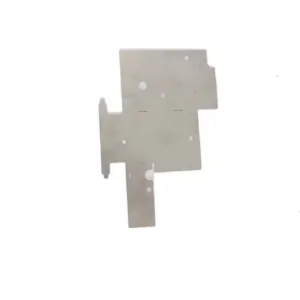
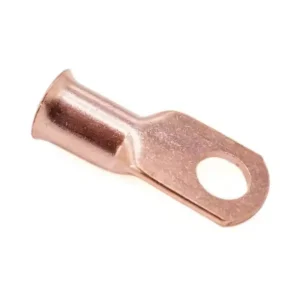
Specialized Heavy Industrial & Precision Component Manufacturing
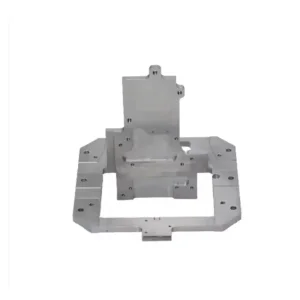
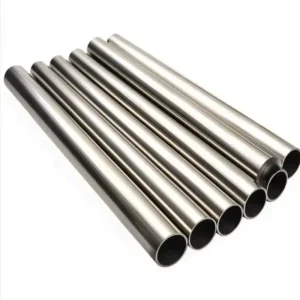
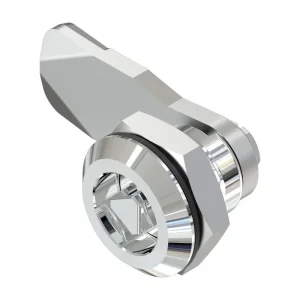
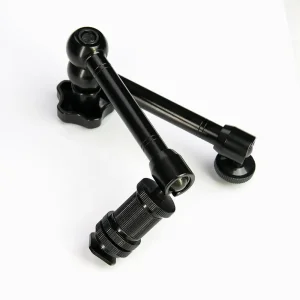
From high-current electrical distribution to aerospace wire EDM brackets and capillary tubing assemblies.
Contract Manufacturing Technical Frequently Asked Questions
Addressing critical procurement, quality control, tolerance capability, and DFM validation inquiries from international buyers.
What minimum dimensional tolerances can your CNC machining and casting processes hold?
For standard precision CNC milling and Swiss turning, our baseline tolerance is ±0.01 mm. For critical functional dimensions (such as bearing bores and micro-flange fits), our climate-controlled 5-axis machining centers routinely achieve tolerances down to ±0.005 mm. In aluminum low-pressure die casting, as-cast tolerances comply with ISO 8062-3 CT4–CT6, with critical mating faces CNC post-machined to sub-micron accuracy.
How is intellectual property (IP) protected when submitting complex 3D CAD drawings?
Prior to collecting any CAD files or technical specifications, we execute a legally binding Non-Disclosure Agreement (NDA). Your technical drawings are hosted on encrypted, air-gapped internal servers with restricted role-based employee access. We manufacture exclusively direct-to-factory, ensuring zero third-party broker exposure or unauthorized data transfer.
What quality inspection documentation accompanies export shipments?
Every shipment is accompanied by a full First Article Inspection (FAI) report according to AS9102 or custom OEM standards. Additional documentation includes material mill test certificates (EN 10204 3.1), CMM full-dimensional measurement logs, salt spray testing reports for surface anodizing/plating, and RoHS/REACH chemical compliance declarations.
How do you resolve potential DFM (Design for Manufacturability) conflicts before tooling?
Within 24 hours of receiving your RFQ, our engineering team performs a thorough DFM audit utilizing Moldflow analysis for injection molding and CAM simulation for multi-axis CNC toolpaths. If features such as sharp internal corners, zero-draft walls, or excessive deep-drawing ratios are identified, we submit annotated engineering proposals to optimize part strength while reducing manufacturing cost.
What surface finishing options are available for industrial components?
We provide comprehensive in-house and audited finishing services, including Anodizing Type II (decorative) and Type III (Hardcoat), Electropolishing for SS316L medical parts, Chromate Conversion Coating (MIL-DTL-5541), PVD coating for wear resistance, Electro-tinning for copper busbars, and custom Powder Coating per RAL specifications.
Ready to Optimize Your Hardware Supply Chain?
Upload your 3D CAD files (STEP, IGES, STL) or 2D technical drawings for immediate DFM feedback, CMM quality verification planning, and factory-direct pricing within 24 hours.