
Featured Precision Molded & Machined Components
Browse engineered solutions across custom plastic injection, precision turned parts, stamped springs, medical implants, and structural assemblies.
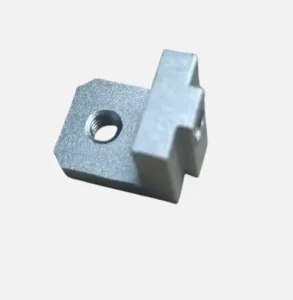
ODM Custom CNC Milled Aluminum Alloy Right Angle Mounting Bracket Manufacturer, Supplier
Request Product Quote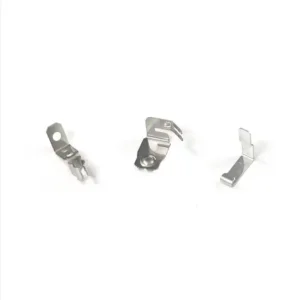
OEM Custom Phosphor Bronze and Steel Battery Contacts for AG13, CR2032, CR2450 Coin Cells
Request Product Quote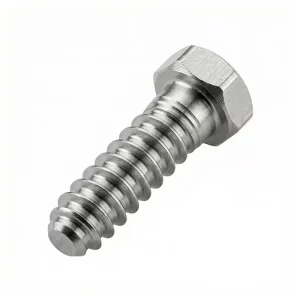
China Bone Screw Suppliers - Premium Titanium Medical Implants from Trusted Factory Exporters
Request Product Quote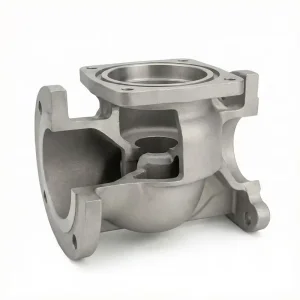
Custom China Stainless Steel Valve Body - Investment Casting Suppliers | Reliable Factory Solutions
Request Product Quote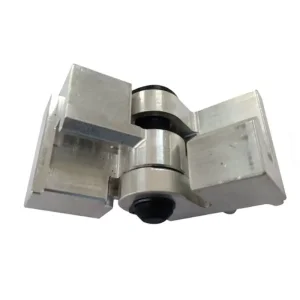
ODM Custom Precision CNC Machined Aluminum Hinge Assembly Structural Connector
Request Product Quote
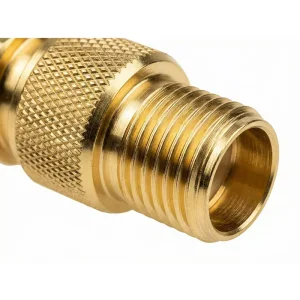
Custom Precision Knurled Brass Threaded Connector - High-Grip Gas Sealing Solution
Request Product QuoteThe Evolution of Rapid Prototype Injection Molding in Global Hardware Sourcing
In modern hardware product development (NPD), the gap between initial 3D design verification and full-scale mass manufacturing represents the highest risk phase for engineering teams. Custom prototype injection molding has evolved from a simple low-fidelity plastic sampling process into a high-precision, data-driven engineering bridge capability. By leveraging rapid tooling technologies, Master Unit Die (MUD) modular frames, and aluminum/hardened steel inserts (such as Alumold 500, NAK80, and P20), enterprise procurement teams can now produce 100 to 10,000+ production-grade plastic parts using actual end-use resins in record lead times (typically 7 to 15 business days).
Global OEMs across North America, Europe, and the Asia-Pacific region are increasingly replacing traditional additive manufacturing (3D printing) and direct CNC plastic milling with rapid injection molding during EVT (Engineering Validation Test) and DVT (Design Validation Test) phases. While 3D printing offers speed for form-fit models, it inherently lacks isotropic tensile strength, thermal resistance, and true molded surface aesthetics required for regulatory certifications (e.g., UL94 flame rating, FDA bio-compatibility, ISO 10993). Rapid prototype molding resolves this friction by delivering real molded physical properties at a fraction of high-volume steel tooling costs (saving up to 70% of initial tooling capex).
Mastering Tooling Materials, Gate Dynamics & Moldflow FEA Optimization
Achieving dimensional stability, flash-free parting lines, and zero sink marks in prototype molding demands rigorous upfront Design for Manufacturability (DFM) analysis. Our engineering workflow integrates 3D Moldflow FEA simulation to predict plastic fill patterns, volumetric shrinkage, clamp tonnage requirements, and weld line placements prior to cutting metal.
Tooling Alloys & Insert Selection
Depending on target production quantity and resin abrasiveness, we select between QC-10/7075-T6 aircraft aluminum inserts (optimal thermal conductivity for fast cycles and 10,000 shots), pre-hardened P20 steel (for 50,000+ shots), or NAK80 mirror-finish steel (for optical grade clarity, lens components, and high-gloss textures).
Gate & Runner Engineering
We utilize tailored gating strategies based on part geometry: Submarine (Tunnel) gates for automatic de-gating, Edge gates for high-shear flow control, Fan gates to minimize shear stress in wide flat panels, and Hot Runner / Valve Gate systems for zero-waste production in high-cost technical polymers (PEEK, Ultem, PPSU).
Conformal & Rapid Cooling Lines
Cooling accounts for over 60% of the total injection mold cycle time. By incorporating 3D-printed metal conformal cooling inserts into complex cavity cores, we achieve uniform thermal dissipation, reduce cycle time by 30-40%, and eliminate differential warpage in glass-filled structural polymers.
Rapid Tooling vs. CNC Machining vs. 3D Printing (SLS/MJF)
Evaluating the optimal manufacturing path requires balancing unit economics, lead times, surface finish options, and mechanical properties. The table below outlines key technical tradeoffs for engineering teams specifying custom prototypes.
| Evaluation Parameter | Prototype Injection Molding | 5-Axis CNC Plastic Milling | Additive (SLS / MJF 3D Printing) |
|---|---|---|---|
| Typical Lead Time | 7 – 14 Business Days | 3 – 5 Business Days | 1 – 3 Business Days |
| Target Volume Range | 50 – 50,000+ Units | 1 – 50 Units | 1 – 100 Units |
| Material Authenticity | 100% Real Resins (PEEK, PC/ABS, TPU, PA66+GF) | 100% Stock Machining Blocks | Simulated Resins / Polyamide Powders |
| Mechanical Isotropy | Fully Isotropic (Molded Molecular Chain) | Fully Isotropic | Anisotropic (Z-Axis Delamination Risk) |
| Dimensional Accuracy | ±0.010 mm to ±0.050 mm | ±0.005 mm to ±0.010 mm | ±0.150 mm to ±0.300 mm |
| Surface Texture Standards | SPI A1 (Mirror Polish) to Mold-Tech Grain | Machined Tool Marks (Ra 1.6 - 3.2 µm) | Grainy / Powdery Finish (Ra 4.0+ µm) |
| Cost at 500+ Units | Lowest Cost per Unit | High (Linear Machine Hour Rate) | Very High (Consumable Powder Costs) |
Sector-Tailored Engineering Solutions & Resin Selection
Different global market sectors impose unique physical, regulatory, and thermal constraints. Sunmy Hardware integrates strict process control parameters to satisfy rigorous cross-industry compliance metrics.
Automotive & EV Power
Key Resins: PBT+30%GF, PA66/6, PC/ABS, Flame Retardant PPS.
Applications: Busbar insulating covers, sensor housings, fluid connectors, under-hood clips under IATF 16949 auditing standards.
Medical & Life Sciences
Key Resins: Medical Grade PEEK, Polypropylene (PP), LCP, Clear PC.
Applications: Surgical handle assemblies, microfluidic cartridges, diagnostic enclosures requiring ISO 13485 & USP Class VI compliance.
Robotics & Physical AI
Key Resins: Carbon Fiber Reinforced Nylon (PA12-CF), POM (Acetal), TPU.
Applications: Lightweight robotic joint shells, internal gears, compliant end-effector grippers with high fatigue resistance.
Industrial Electronics
Key Resins: ABS, PC/ABS blends, Flame Retardant V-0 Resins, EMI Shielding Resins.
Applications: Ruggedized handheld enclosures, smart meter housings, terminal blocks, DIN rail mount assemblies.
Metrology, CMM Inspection Protocols & Material Traceability
Under Google’s Search Quality Rater Guidelines (E-E-A-T), manufacturing authority is demonstrated through rigorous quality protocols, verifiable measurement instrumentation, and transparent engineering governance. Every prototype mold built at Sunmy Hardware undergoes formal T0/T1 sampling audits backed by complete metrology documentation.
1. First Article Inspection (FAI)
We provide full AS9102 / ISO 9001 aligned First Article Inspection reports covering 100% of critical 2D drawing dimensions, GD&T callouts, flatnesses, concentricities, and thread pitch verifications.
2. In-House CMM & Optical Scanning
Equipped with Hexagon Coordinate Measuring Machines (CMM) and non-contact optical video measurement systems, we verify mold core/cavity tool dimensions to within ±0.002 mm prior to polymer injection.
3. Resin Material Certifications
Every production batch includes lot-traceable raw material mill certificates, RoHS 3 compliance docs, REACH-SVHC statements, and UL94 yellow cards directly from verified tier-1 resin suppliers (Sabic, Covestro, DuPont, BASF).
Intellectual Property Safeguards & Direct Export Compliance
Direct-from-factory sourcing eliminates unnecessary broker margins, communication latency, and IP leaks. Sunmy Hardware enforces strict institutional safeguards to protect client designs throughout the prototype-to-production lifecycle:
Bilateral NDA Protection
Non-Disclosure Agreements signed prior to CAD file upload. 3D STEP/IGES data stored on air-gapped, encrypted engineering servers.
Customs & DDP Logistics
Seamless door-to-door (DDP) air freight logistics via DHL/FedEx/UPS with complete HS code classification and duty-paid handling.
Dedicated Project Engineering
Single point of contact: English-fluent Senior Tooling Engineers available for real-time video DFM design reviews.
Frequently Asked Questions: Prototype Injection Molding & Tooling
Detailed answers addressing key design rules, undercut mechanisms, life cycles, and tooling quotes for procurement officers and product designers.
Custom Metal, Plastic & Composite Component Portfolio
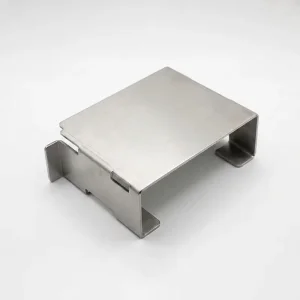
Explore additional custom manufacturing capabilities across stainless steel brackets, tungsten shielding canisters, sheet metal enclosures, hydraulic components, silicone watch straps, and automotive housings.
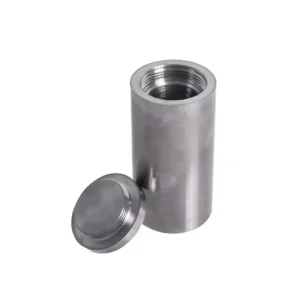
ODM Customized Tungsten Carbide Shielded Canister with Lid - Top China Suppliers & Factory
Request Product Quote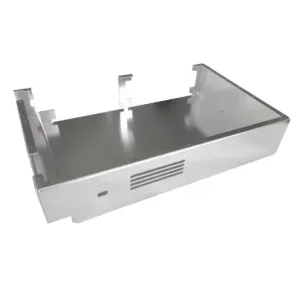
OEM Precision Sheet Metal Fabrication - Stainless Steel & Aluminum Cabinet Enclosures
Request Product Quote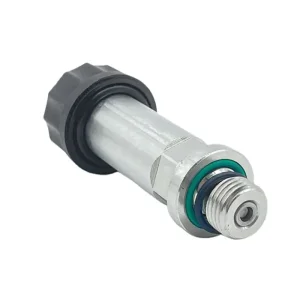
High-Performance Hydraulic Solenoid Valve Core - Precision CNC Turned Excavator Parts
Request Product Quote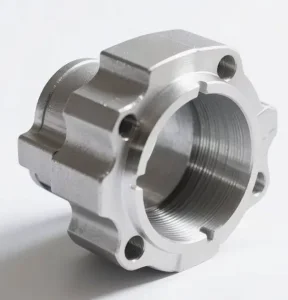
Custom High-Performance Aluminum, Zinc, Magnesium, and Copper Alloy Components
Request Product Quote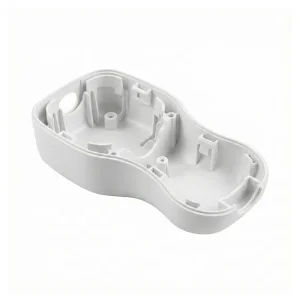
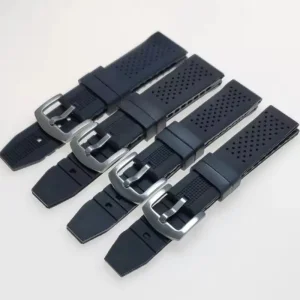
Custom Universal Silicone Sport Watch Strap with Multi-Hole Air Vents (18mm - 24mm)
Request Product Quote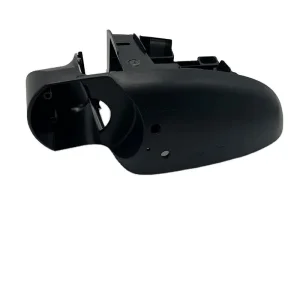
OEM Precision Custom Plastic Injection Molded Automotive Components & Housings
Request Product QuoteReady to Quote Your Prototype Injection Molded Project?
Upload your 3D CAD drawings (.STEP, .IGES, .X_T) for a comprehensive DFM manufacturability analysis, gate placement recommendation, and itemized tooling quote within 24 hours.