
High-Precision OEM Components & Structural Parts
Explore our foundational tooling and multi-material manufacturing portfolio supporting global tier-1 supply chains.
Liquid Silicone Rubber (LSR) Molding: Executive Technology Synthesis
An in-depth analysis of thermosetting organopolysiloxane processing, high-speed platinum cure chemistry, and zero-flash mold design for critical OEM applications.
Platinum-Cured Liquid Siloxane
LSR relies on a two-component (A+B) addition-curing system catalyzed by platinum. Unlike peroxide-cured High Consistency Rubber (HCR), platinum curing produces no acid reaction by-products, ensuring biocompatibility, low compression set, and optical transparency.
Thermally Inverted Tooling
Standard plastics melt in a hot barrel and cool in a cold mold. LSR operates in reverse: low-viscosity liquid is metered into a cooled runner block (15°C - 25°C) and injected into a heated mold cavity (170°C - 210°C) to induce ultra-fast vulcanization within seconds.
Micro-Viscosity Fill Capability
Because virgin LSR exhibits extremely low viscosity prior to thermal crosslinking (shear rate dependent, typically 100,000 to 1,000,000 mPa·s), it fills micro-structured features and thin walls down to 0.10mm without flow lines or high internal stress.
Material Performance Comparison: LSR vs. HCR vs. TPE / TPU
| Performance Metric | Liquid Silicone Rubber (LSR) | High Consistency Rubber (HCR) | Thermoplastic Elastomer (TPE) |
|---|---|---|---|
| Thermal Stability Range | -60°C to +230°C (Specialty grades to 300°C) | -50°C to +200°C | -40°C to +120°C |
| Cure Mechanism | Platinum Addition (No By-Products) | Peroxide / Heat Vulcanization | Physical Crosslinking (Reversible) |
| Compression Set (22h @ 175°C) | Ultra-Low (< 10% - 15%) | Moderate (25% - 40%) | High / Poor Thermal Creep |
| Cleanroom Compatibility | ISO Class 7 / Class 8 Bio-Cleanroom Approved | Requires Extensive Post-Cure Cleaning | Outgassing Risk at High Temps |
| Cycle Time Efficiency | Fully Automated (15 - 45 Seconds) | Manual / Semi-Auto (3 - 8 Minutes) | Fast Injection (20 - 50 Seconds) |
| Biocompatibility (ISO 10993) | USP Class VI / ISO 10993 Certified | Variable depending on additives | Limited medical grades available |
Precision Manufacturing Scale & Metrics
Delivering repeatable, zero-defect liquid silicone parts for high-reliability medical, automotive, and electronic platforms.
Global Industry Trends & Strategic Buyer Requirements
Understanding the transition to mini-LSR, 2K overmolding, and stringent international regulatory requirements across key global sectors.
1. Medical Devices & Bio-Pharma Wearables
The rise of Continuous Glucose Monitors (CGM), drug delivery pumps, and minimally invasive surgical tools has created massive demand for implantable-grade liquid silicone. OEM buyers require zero-cytotoxicity materials (USP Class VI), cleanroom molding (ISO 13485), and micro-fluidic seals that resist tear propagation during dynamic usage.
2. Electric Vehicles (EV) & Autonomous Sensors
EV powertrains operate under harsh voltage spikes and intense thermal cycling. LSR is rapidly replacing traditional EPDM rubber in high-voltage cable grommets, battery pack pressure relief valves, and LiDAR sensor seals. LSR's retention of dielectric strength up to 200°C makes it indispensable for IATF 16949 automotive suppliers.
3. IP68 Consumer Electronics & Smart Infrastructure
From hydrophobic earbuds to waterproof smartphone SIM trays and smart water meter diaphragms, 2K overmolding (LSR directly bonded onto PC, PBT, or metal contacts) eliminates manual assembly while guaranteeing IP68 ingress protection against water and dust intrusion.
4. Supply Chain Localization & Risk Mitigation
Global procurement directors are actively transitioning from multi-vendor supply chains to integrated single-source manufacturers capable of delivering DFM simulation, mold design, cleanroom LSR molding, surface coating, and automated sub-assembly under one quality umbrella.
Advanced Manufacturing Capabilities & Tooling Technology
Overcoming micro-flashing, thermal isolation challenges, and mechanical bonding constraints in high-speed production environments.
2K Multi-Shot Overmolding
Direct bonding of LSR onto thermoplastic substrates (PA66, PBT, PC, PEEK) or stainless steel/brass inserts without primers. Utilizing modified self-adhesive LSR grades featuring chemical bonding agents that activate during heated vulcanization.
Cold Runner System (CRS) Tooling
Advanced direct-gating CRS valve gate technology prevents silicone curing inside the manifold. Zero waste runnerless design slashes material overhead by up to 35% while keeping shot-to-shot weight consistency within ±0.1% variances.
Flash-Free Tooling Engineering
Due to LSR's low viscosity, parting line gaps must not exceed 2 to 3 microns. Our molds feature vacuum venting channels, optical surface grinding, and hardened tool steels (S136, H13 treated to HRC 54-58) to eliminate flash without manual deburring.
From CAD Design to Mass Production: The Tooling & Molding Lifecycle
DFM & Moldflow Simulation
Evaluating non-linear shrinkage (typically 2.0% - 3.5%), air entrapment, gate location optimization, and thermal gradient analysis.
Ultra-Precision Tooling
5-Axis CNC milling, mirror EDM, and sub-micron grinding of core/cavity inserts under temperature-controlled workshop conditions.
Cleanroom Sampling (T1)
Automated dosing unit integration, vacuum degassing, and closed-loop shot verification inside ISO Class 8 cleanrooms.
Automated Scale Production
Robotic end-of-arm tooling (EOAT) extraction, inline vision system verification, continuous vulcanization, and post-curing baking.
Strict Quality Verification & Regulatory Compliance
Ensuring complete traceability, material purity, and dimensional fidelity across every production batch.
Global Medical & Food Standards
Full compliance with FDA 21 CFR 177.2600, BfR XV, USP Class VI, and ISO 10993 cytotoxicity standards. Complete lot-level material certification delivered with every shipment.
Non-Contact 3D Metrology
Because soft elastomeric materials deform under tactile probes, dimensions are verified using non-contact optical coordinate measuring machines (CMM) and laser profile scanners.
Post-Curing Volatile Extraction
Thermal post-baking (4 hours at 200°C) is conducted to drive off volatile siloxane oligomers (D4, D5, D6 residues), stabilizing physical properties and eliminating outgassing risks.
LSR Technology Roadmap (2025 – 2030)
Pioneering advancements in optical siloxanes, conductive elastomeric matrices, and eco-friendly circular silicone processing.
1. High-Transmittance Optical Grade LSR
Replacing glass and PMMA in automotive matrix headlights and LED architectural optics. Optical LSR offers > 94% light transmission, zero yellowing under intense UV exposure, and heat resistance beyond 150°C, permitting complex non-planar lens geometries.
2. Conductive & Piezoresistive Silicone Matrix
Integrating carbon nanotubes or nickel-coated graphite into liquid silicone to create flexible, stretchable tactile sensors, integrated EMI shielding gaskets, and bio-wearable dry electrodes for real-time patient monitoring.
3. Self-Lubricating & Low-Friction Coatings
Formulating LSR with phase-separated fluid siloxane additives that bleed out slowly over time, reducing surface friction coefficient (μ) by up to 70%. Eliminates external oil greasing in needleless medical valves and automotive sliding seals.
4. Closed-Loop Silicone Circularity & Recycling
Developing chemical depolymerization protocols to convert post-industrial LSR scrap back into high-purity monomeric siloxane feedstocks, matching global carbon-neutral manufacturing mandates for tier-1 OEMs.
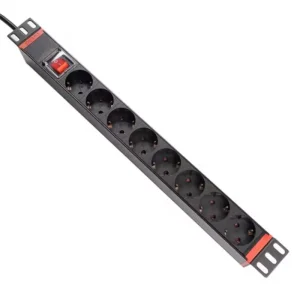
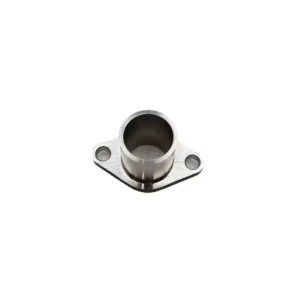
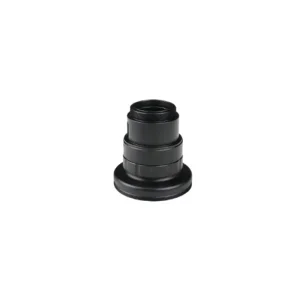
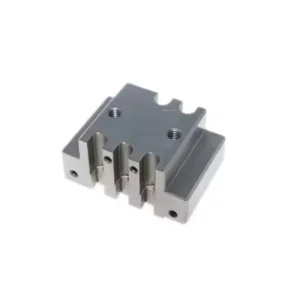
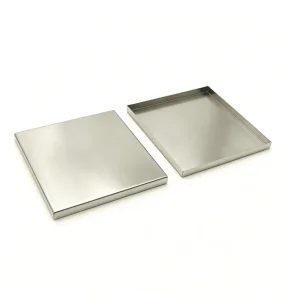
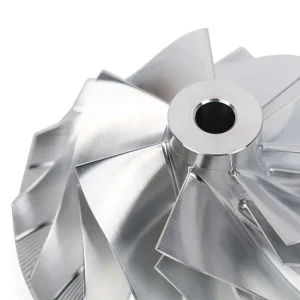
Precision OEM Modules & Industrial Solutions
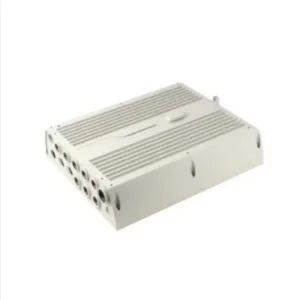
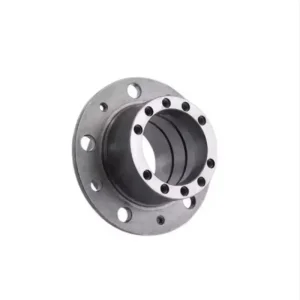
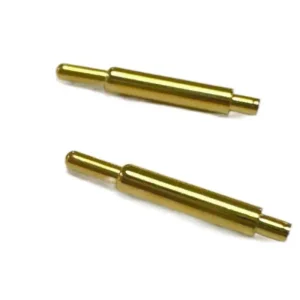
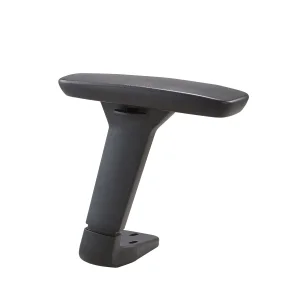
Complementary precision turned, cast, and stamped assemblies customized to your exact technical drawings.
Frequently Asked Questions Regarding Custom LSR Molding
Authoritative engineering answers addressing tooling design, material selection, quality control, and order execution.
What is the minimum wall thickness achievable in custom Liquid Silicone Rubber (LSR) injection molding?
Due to LSR's low shear-thinning viscosity, wall thicknesses as thin as 0.10mm (0.004 inches) can be successfully filled across small feature areas. However, for uniform structural integrity and reliable demolding without tearing, a standard recommended nominal wall thickness ranges from 0.50mm to 3.00mm depending on component geometry and durometer selection.
How does 2K (Multi-Shot) LSR overmolding achieve substrate bonding without primers?
Direct primerless bonding is achieved by using self-adhesive LSR grades engineered with functional silane or hydride crosslinkers. When injected onto a high-temperature thermoplastic substrate (such as PBT, PA66, or PC), thermal energy in the mold activates a covalent chemical bond across the interface, delivering cohesive failure strength where the silicone tears before the bond breaks.
What is the standard linear shrinkage allowance for LSR, and how is it controlled?
LSR experiences high thermal shrinkage upon cooling from the cure temperature (170°C-200°C) down to ambient temperature, typically ranging from 2.0% to 3.5% depending on durometer and filler content. We use advanced DFM thermal simulation and high-precision CNC tool steel scaling to compensate for non-isotropic shrinkage factors down to ±0.005mm.
Which quality certifications and cleanroom standards govern your silicone production?
Our LSR manufacturing operations adhere to ISO 13485 (Medical Devices) and IATF 16949 (Automotive Quality Management). Injection molding, demolding, and primary packaging can be performed inside audited ISO Class 8 (Class 100,000) or ISO Class 7 cleanrooms to ensure compliance with USP Class VI, ISO 10993, and FDA 21 CFR 177.2600 standards.
How do you eliminate flash on custom LSR elastomeric components?
Because virgin LSR can penetrate parting line gaps as small as 2 to 3 microns (0.0001 in), flash control requires extreme mold rigidity, optical parting line fitting, zero-deflection mold bases, dynamic vacuum venting systems, and precise closed-loop injection pressure control. This eliminates manual trimming and maintains clean parting edges.
What file formats are accepted for rapid DFM evaluation and tooling quotes?
We accept native 3D CAD files including STEP (.stp, .step), IGES (.igs), SolidWorks (.sldprt), Parasolid (.x_t), and 2D engineering drawings in PDF or DWG/DXF format with explicit GD&T callouts. All submitted intellectual property is protected under binding Non-Disclosure Agreements (NDAs).
Ready to Optimize Your Custom LSR Molding Project?
Consult directly with our senior silicone tool designers and polymer engineers. Receive comprehensive Design for Manufacturability (DFM) feedback and transparent tooling quotes within 24 hours.