Featured Custom Industrial Components
Engineered to exact geometric tolerances with full CMM inspection, material traceability, and DFM validation.
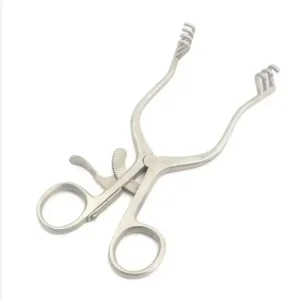
China Professional Quality Stainless Steel Custom Surgical Retractor Factories, Quotes
Request Quote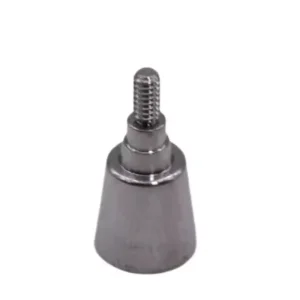
ODM Custom CNC Turned Titanium Abutment Implant Driver & Prosthetic Connector Suppliers, Exporter
Request Quote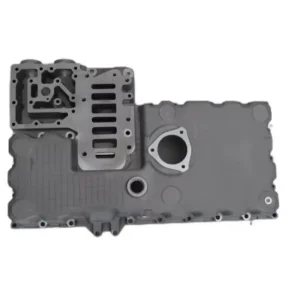
China Premium China Suppliers Factory Low-Pressure Cast Aluminum Alloy Clutch Oil Pan for Automotive Transmission Retarder Factories, Factory
Request Quote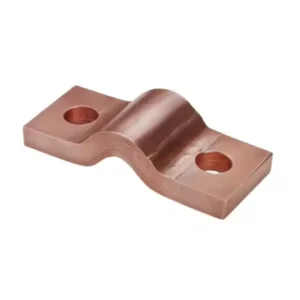
High-Quality Custom Flexible Laminated Copper Busbars for Battery & Electrical Equipment - China Suppliers and Factory Products, Factory
Request Quote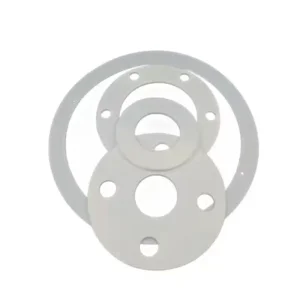
China High Precision CNC Turned White PTFE Washer Gasket Products, Product
Request Quote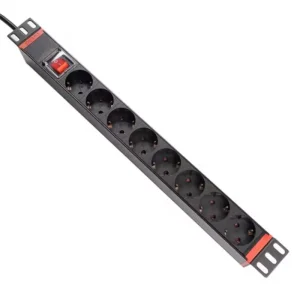
OEM Custom 8-Way German Standard 16A Rack-Mount PDU Power Strip (Sheet Metal Fabrication) Suppliers, Factory
Request Quote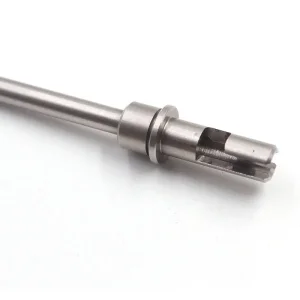
ODM Precision CNC Turned Stainless Steel Stepped Shaft Supplier, Quotes
Request Quote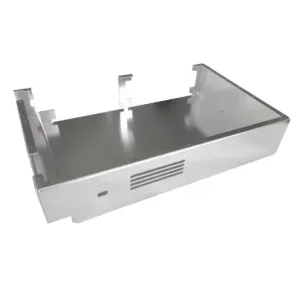
OEM OEM Custom Precision Sheet Metal Fabrication - Stainless Steel & Aluminum Cabinet Enclosures Supplier, Quotes
Request Quote1. Global Industrial Landscape & Modern Sourcing Imperatives
Strategic shifting from localized single-source dependencies to hybrid resilient production ecosystems.
In the contemporary industrial ecosystem, modern equipment OEMs, aerospace systems integrators, medical device pioneers, and automotive powertrain developers face an unprecedented dual challenge: accelerating product launch cycles while simultaneously maintaining strict quality verification standards. Sourcing high-precision custom industrial components—spanning micro-machined titanium medical implants, heavy die-cast automotive housings, and complex multi-layer flexible copper busbars—is no longer merely a transaction based on basic part drawings. It requires a deep technical partnership rooted in rigorous Design for Manufacturability (DFM), total cost of ownership (TCO) efficiency, and global trade compliance.
The global industrial component landscape has evolved past simple low-cost region sourcing (LCRS). Procurement directors and Chief Technology Officers (CTOs) must now navigate volatile supply chains, shifting trade regulations, and stringent sustainability standards. The modern paradigm emphasizes supply chain resilience—the ability to pivot rapidly from low-volume rapid prototyping (via 5-axis CNC machining or 3D SLA/SLM printing) to high-volume repeatable production (via automated low-pressure casting or multi-cavity injection molding) without encountering quality drop-offs, geometric variance, or documentation gaps.
2. Advanced Engineering Processes & Material Specifications
Selecting the optimal manufacturing route to optimize tensile strength, fatigue resistance, thermal dissipation, and unit economics.
5-Axis CNC Machining & Turning
Utilizing high-speed multi-axis CNC milling machines and Swiss-type precision lathes, components like surgical retractors, optical housing lens barrels, and stepped stainless steel shafts are produced with micron-level accuracy ($\pm 0.005\text{ mm}$). Advanced surface finishing including type III hard anodizing, electropolishing, and passivating ensures extreme longevity under cyclic physical strain.
Low-Pressure & Investment Casting
Ideal for automotive retarder oil pans, pump impellers, and structural brackets. Low-pressure aluminum die casting and stainless steel investment casting eliminate internal gas porosity and micro-shrinkage. Vacuum-assisted casting routes ensure superior structural integrity and high yield strength, exceeding SAE and DIN standards for load-bearing applications.
PTFE Turning & Engineering Polymers
High-precision turning of virgin and filled PTFE (Teflon), PEEK, and UHMW-PE for severe chemical environments, seals, and electrical isolation gaskets. Machining fluoropolymers requires specialized single-point diamond tooling and ambient temperature compensation to prevent creep and thermal expansion during cutting cycles.
| Material Grade | Primary Process | Tensile Strength (MPa) | Surface Roughness (Ra) | Core Application Scenarios |
|---|---|---|---|---|
| Titanium Grade 5 (Ti-6Al-4V) | Swiss CNC Turning / 5-Axis Milling | 880 - 950 | 0.4 µm (Electropolished) | Dental Implants, Surgical Retractors, Aerospace Fasteners |
| Stainless Steel 316L / 17-4PH | Investment Casting / CNC Turning | 560 - 1100 | 0.8 µm (Passivated) | Slurry Pump Impellers, Stepped Shafts, Medical Hardware |
| Aluminum A356-T6 / AL6061-T6 | Low-Pressure Die Casting / CNC Milling | 240 - 310 | 1.6 µm (Anodized/Powder Coated) | Automotive Clutch Pans, Aerospace Electronics Enclosures |
| C11000 ETP Copper (Laminated) | Precision Stamping & Diffusion Bonding | 200 - 250 | 1.2 µm (Nickel/Tin Plated) | EV Battery Busbars, High-Power Rack PDUs, Inverters |
| Tungsten Carbide (WC-Co) | Sintering & Wire EDM / Grinding | 1500 - 2300 | 0.2 µm (Diamond Lapped) | Radiation Shielded Canisters, Heavy Wear Tooling Inserts |
3. China Factory Supply Chain Resilience & Structural Efficiency
How the Pearl River Delta & Shenzhen Advanced Manufacturing Hub deliver unmatched agility, lead-time compression, and scale.
Hyper-Clustered Raw Material Logistics
Within a 50-kilometer radius in the Shenzhen-Dongguan manufacturing cluster, facilities access certified mill-grade stainless steel bars, specialized aerospace titanium billets, high-purity copper coils, and raw engineering polymer resins. This geographic concentration reduces raw material procurement lead times from weeks to under 24 hours.
Tooling Agility & Rapid Iteration
Transitioning from 3D CAD modeling to physical First Article Inspection (FAI) reports is compressed drastically. In-house toolmakers produce complex progressive stamping dies, pressure casting molds, and multi-cavity injection tooling up to 40% faster than European or North American domestic timelines, allowing OEM customers to compress their NPI (New Product Introduction) cycles.
Integrated Surface Finishing & Heat Treatment
Secondary processing—such as vacuum heat treatment, hard anodizing, physical vapor deposition (PVD) coating, powder coating, and laser etching—is executed within audited, ecologically compliant supply rings, maintaining continuous quality oversight without transport delays.
4. Localized Industrial Application Scenarios
Tailored manufacturing solutions addressing stringent compliance standards across mission-critical sectors.
Medical Devices & Surgical Instrumentation
Micro-turned titanium implant drivers, prosthetic connectors, and surgical retractors manufactured under ISO 13485 cleanroom environments. Precision thread profile machining prevents galling during surgical procedures, while passivated surfaces guarantee biocompatibility and resistance to harsh autoclave sterilization.
E-Mobility & Renewable Battery Systems
Flexible laminated copper busbars engineered for high-ampere battery module interconnects in Electric Vehicles (EVs) and grid storage systems. Multi-layer copper sheets undergo diffusion welding to achieve maximum electrical conductivity while absorbing vibration and thermal strain between battery cells.
Aerospace & Automotive Drivetrains
5-axis CNC machined aluminum mounting brackets and low-pressure cast transmission retarder oil pans built for extreme thermal dissipation and weight reduction. Precision-machined sealing surfaces prevent oil weeping under continuous hydraulic pressure.
Data Center & Rack Power Distribution (PDU)
Sheet metal fabricated 8-way German Standard 16A PDU enclosures and server rack chassis. Electro-galvanized cold-rolled steel and aluminum alloy structures are laser cut, CNC bent, and powder-coated to provide EMI/RFI shielding and physical security.
Nuclear & Chemical Handling Security
Custom tungsten carbide shielded canisters with precision-fitted lids designed for transporting radioactive isotopes and dense hazardous chemical agents. High-density tungsten provides superior radiation attenuation compared to traditional lead shielding.
Industrial Fluid & Slurry Processing
Investment cast stainless steel open impellers for high-viscosity centrifugal slurry pumps. Blade profiles are hydro-dynamically balanced to withstand abrasive particulates, chemical attack, and cavitation erosive forces in mining and chemical processing plants.
5. Technical Roadmap & Future Manufacturing Outlook
Integrating artificial intelligence, digital twins, and additive-subtractive hybrid processes into component production.
AI-Driven Automated DFM & Simulation
Algorithmic DFM engines analyze STEP files instantaneously, predicting tool wear, heat dissipation issues, and injection mold flow lines before metal cutting starts, reducing engineering redesign cycles by up to 70%.
Hybrid Additive-Subtractive Manufacturing
Combining 3D Selective Laser Melting (SLM) with 5-axis CNC post-machining allows for internal conformal cooling channels within mold inserts and aerospace housings that were previously unmachinable using conventional tooling.
Closed-Loop Automated Quality Assurance
In-line optical CMM scanners and laser interferometers stream real-time dimensional data back to CNC machine controllers, dynamically adjusting tool offsets to prevent drift and guarantee zero-defect batch delivery.
6. Localization Support, Compliance & Quality Assurance
Standardized international verification procedures ensuring seamless integration into global OEM production lines.
Traceable Documentation Package
Every component shipment is accompanied by complete mill test certificates (EN 10204 3.1), RoHS and REACH compliance statements, heat treatment charts, and full CMM (Coordinate Measuring Machine) inspection logs.
Intellectual Property (IP) Protection Protocol
Strict non-disclosure agreements (NDAs) are executed prior to processing 3D CAD files. Secure server architecture and segmented floor production prevent unauthorized data access or distribution.
Global Logistics & Regional Warehousing Support
Offering flexible incoterms including EXW, FOB, CIF, DDP, and VMI (Vendor Managed Inventory) buffering programs to mitigate container shipping delays and maintain safety stock levels for uninterrupted production schedules.
Complete Custom Manufacturing Portfolio
Explore additional high-precision OEM/ODM parts engineered to technical buyer specifications.
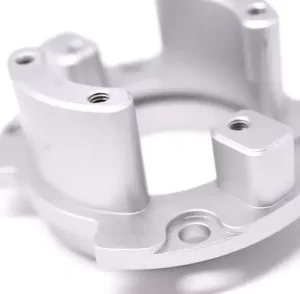
ODM Precision 5-Axis CNC Machined Aluminum Housing Mounting Bracket for Aerospace & Automotive Exporters, Factories
Request Quote
Custom Custom CNC Titanium Abutment Implant Driver & Prosthetic Connector - China Suppliers and Factory Suppliers, Products
Request Quote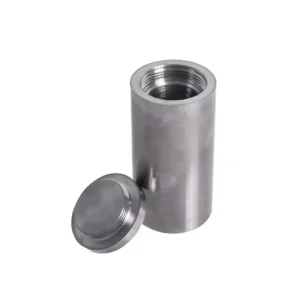
ODM Customized Tungsten Carbide Shielded Canister with Lid - Top China Suppliers & Factory for Quality Products Supplier, Exporter
Request Quote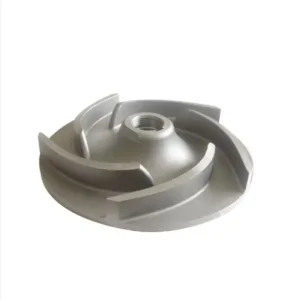
Custom High-Quality Centrifugal Slurry Pump Stainless Steel Investment Casting Open Impeller Manufacturer, Products
Request Quote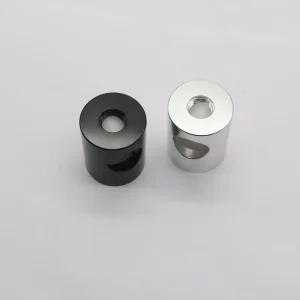
Custom Custom Precision CNC Turned Stainless Steel Medical Components Manufacturer, Quotes
Request Quote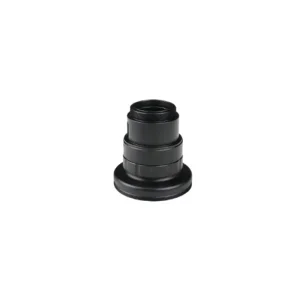
ODM Custom Precision CNC Turned Black Anodized Aluminum Lens Barrel & Optical Housing Components Manufacturer, Service
Request Quote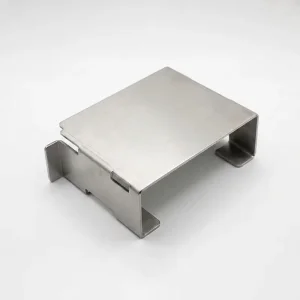
Custom Custom Stainless Steel Mounting Bracket Factories, Factory
Request Quote
OEM Custom Laser Cut & Welded Heavy Equipment Control Panel Manufacturers, Quotes
Request QuoteFrequently Asked Questions
Technical guidance on tolerances, material certification, lead times, and DFM procedures.
What minimum dimensional tolerances can be guaranteed for CNC turned and milled parts?
Standard CNC machining tolerances are maintained at $\pm 0.01\text{ mm}$. For critical features such as medical implant connectors, optical lens housings, and bearing stepped shafts, our 5-axis machining centers and Swiss lathes consistently achieve tight tolerances down to $\pm 0.005\text{ mm}$, verified via CMM inspection reports.
How are material authenticity and compliance documented for overseas buyers?
Every order includes EN 10204 3.1 material test certificates detailing chemical composition and mechanical properties. Additionally, compliance documentation for RoHS, REACH, and conflict-free minerals is provided alongside First Article Inspection (FAI) reports before full-scale manufacturing runs.
What is the typical turnaround time from CAD drawing submission to quote and prototype delivery?
Engineering DFM feedback and official pricing quotes are delivered within 24 hours of CAD file upload (STEP, IGES, or DWG). Rapid CNC prototypes are typically machined and shipped within 3 to 7 business days, while hard tooling for die casting or injection molding takes between 15 to 25 days depending on part complexity.
What processes are utilized to prevent porosity in aluminum die cast components?
For high-pressure and low-pressure aluminum die casting (such as clutch oil pans and LED luminaire housings), vacuum-assisted casting technology is implemented along with optimized gating and riser placement. Secondary X-ray flaw detection ensures structural integrity prior to final CNC post-machining.