Precision Industrial Hardware & Component Solutions
Explore our specialized precision components engineered with rigorous quality assurance, tight tolerance standards, and advanced material performance.
OEM Dual-Material Power Tool Handle Supplier, Products
View Product Details
China Industrial IP67 2-Pin Waterproof Circular Connector (Nylon Series) Supplier, Quotes
View Product Details
ODM Custom Medical Device Housing from China Suppliers and Factory - High-Quality Solutions
View Product Details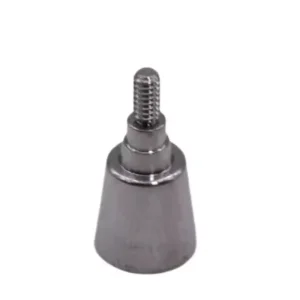
Custom Custom CNC Titanium Abutment Implant Driver & Prosthetic Connector
View Product Details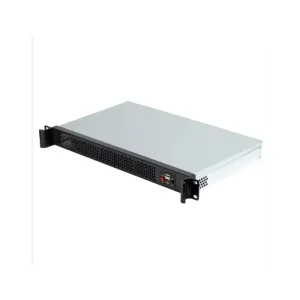
OEM OEMODM 1U Rackmount Server Chassis (Model 1U255) – Custom Sheet Metal & Stamping Enclosure
View Product Details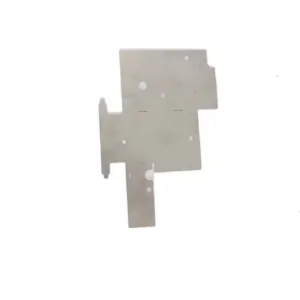
OEM Custom Laser Cut & Welded Heavy Equipment Control Panel Manufacturers, Quotes
View Product Details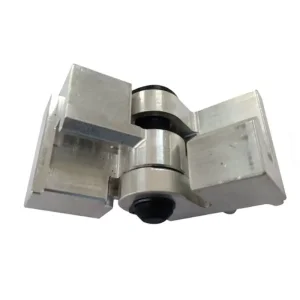
ODM Custom Precision CNC Machined Aluminum Hinge Assembly | Structural Connectors
View Product Details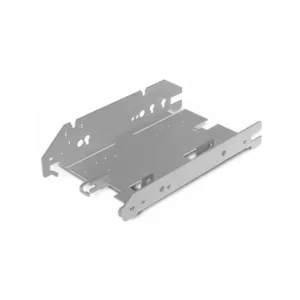
Custom Custom Precision Sheet Metal Brackets & Stamping Parts for Electronic Devices
View Product DetailsState-of-the-Art Impeller Casting: Engineering Fluid Dynamics & Metallurgical Precision
In high-performance fluid machinery, the impeller serves as the mechanical core responsible for energy conversion. Converting rotational energy into kinetic fluid head demands exceptional hydrodynamic accuracy, near-zero internal porosity, and flawless surface finish. Modern industrial pumps, chemical agitators, marine thrusters, and aerospace turbomachinery operate under extreme operational stress—including severe fluid shear, corrosive chemical attack, thermal shock, and high-frequency cavitation.
As a premier custom impeller casting service provider and exporter, Sunmy Hardware leverages high-precision investment casting (silica sol process), vacuum die casting, low-pressure casting, and 5-axis CNC finish machining to deliver impellers engineered for maximum hydraulic efficiency (up to 92% centrifugal pump efficiency curves) and extended mechanical lifespans. Our operational standard integrates computational fluid dynamics (CFD) simulation validation directly with real-world metallurgical quality control.
Achieving operational longevity requires resolving the classic dilemma of impeller manufacturing: balancing complex 3D curved blade geometries (such as backward-curved, Francis-type, or closed shroud designs) with internal metallurgical integrity. Minor wall-thickness variations or subtle blade angle deviations can trigger localized Net Positive Suction Head Available (NPSHa) drops below NPSHr, inducing violent cavitation bubbles that erode metal surfaces within hundreds of operating hours. Our integrated manufacturing protocol addresses these hydraulic risks at the foundry level.
Core Impeller Casting Processes & Metallurgical Selection
Selecting the optimal casting methodology depends heavily on impeller size, blade geometry complexity, production volume, dynamic loading, and fluid characteristics. Below is an engineering comparison of the casting techniques utilized in our facility:
Silica Sol Investment Casting
Ideal for closed impellers with intricate internal channels, thin blade tips (down to 1.5mm), and high aesthetic/hydrodynamic requirements. Uses temperature-controlled wax patterns and multi-layered refractory ceramic shells. Yields dimensional tolerances within ISO 8062 CT4-CT6 and surface roughness down to Ra 3.2 – Ra 1.6 μm.
Vacuum Die & Low-Pressure Casting
Designed for high-volume aluminum alloy pump and blower impellers (A356, C355). Vacuum evacuation eliminates gas porosity during mold filling, ensuring superior mechanical strength, pressure tightness under hydro-testing, and high thermal stability under elevated rotational RPMs.
Precision Resin Sand Casting
Suited for large-scale industrial impellers (diameters from 500mm up to 2500mm) used in municipal waterworks, mining slurry pumps, and power generation. Furan resin sand molds offer rigid cavity stability, handling heavy grey iron, ductile iron, and heavy stainless steel pours with lower tooling investment.
Engineering Material Specification Matrix
| Material Class | Standard Grades | Key Performance Characteristics | Primary Industrial Application |
|---|---|---|---|
| Austenitic Stainless Steel | 316L, 304L, ASTM A351 CF8M / CF3M | Excellent general corrosion resistance, high ductility, superior weld repairability. | Chemical processing pumps, food & beverage sanitary impellers. |
| Duplex & Super Duplex | 2205 (UNS S31803), 2507 (UNS S32750), 4A / 5A | High PREN (>42), extreme chloride pitting resistance, double the yield strength of 316L. | Desalination plants, offshore oil platforms, marine seawater pumps. |
| Nickel-Aluminum Bronze | NAB C95800, C95500, Cu3 | Outstanding cavitation erosion resistance, anti-fouling bio-properties in seawater. | Naval ship propulsion, bow thrusters, offshore fire-fighting pumps. |
| Superalloys (Nickel-Base) | Hastelloy C276, Inconel 718, Monel K500 | Exceptional resistance to hot concentrated acids, extreme thermal stability up to 700°C. | Petrochemical refining, turbocharger turbine wheels, aerospace APUs. |
| Aluminum Alloys | A356-T6, AlSi10Mg, C355 | High strength-to-weight ratio, low rotational inertia, excellent thermal conductivity. | Automotive compressors, HVAC blowers, drone propulsion fans. |
The Strategic Advantage of Sourcing Impellers from China Factories
Global OEM procurement officers face tightening budgets, strict carbon footprint mandates, and accelerating product development cycles. Partnering with a specialized Chinese exporter like Sunmy Hardware provides significant strategic and technical advantages over traditional Western foundries:
Complete Ecosystem Integration
Our production facility is embedded in Guangdong’s high-tech manufacturing cluster. We integrate tooling pattern design, 3D printed wax pattern rapid prototyping, spectral melt analysis, precision casting, heat treatment, 5-axis CNC machining, dynamic balancing, and NDT testing within a tightly coordinated local radius. This cuts lead times for prototype impellers from months to just 14 days.
Advanced Quality Control & NDT Infrastructure
Quality is non-negotiable for high-RPM impellers. Sunmy Hardware deploys in-house optical emission spectrometers (OES) to verify batch chemistry prior to pouring. Every structural impeller undergoes X-ray digital radiography (RT) per EN 12681 standards, dye penetrant inspection (PT) for surface integrity, and CMM laser scanning to map 3D blade deviations against native CAD files.
Capital & Cost Efficiency Without Compromise
By leveraging amortized tooling techniques, modular wax dies, and optimized multi-cavity investment shell configurations, we reduce capital expenditure (CapEx) on custom tooling by 40–60%. Furthermore, our advanced 5-axis machining centers reduce post-cast grinding labor, translating directly into lower unit procurement costs for global buyers.
Macro Industry Trends & Next-Generation Fluid Machinery Solutions
The global fluid handling sector is undergoing a massive transformation driven by industrial automation, the green hydrogen transition, seawater desalination scaling, and stringent energy efficiency mandates (such as the EU ErP Directive for pump efficiency). Micro-structural perfection and hydraulic optimization in impellers are now central focus areas.
Green Energy & Hydrogen
Cryogenic impellers engineered for liquid hydrogen (-253°C) and LNG transfer pumps demand ultra-low temperature toughness without embrittlement. Special austenitic alloys and Hastelloy investment castings are rigorously tested for impact strength at cryogenic levels.
Seawater Reverse Osmosis
Desalination plants operate high-pressure booster pumps 24/7 in severe chloride environments. Super Duplex 2507 impellers cast with zero ferrite phase imbalance prevent premature pitting corrosion, maintaining system uptime.
High-Speed Micro-Turbines
Next-gen distributed power generation uses high-RPM micro-gas turbines. Inconel 718 vacuum investment cast impeller wheels withstand thermal stresses up to 750°C while rotating at speeds exceeding 100,000 RPM.
Digital Twin & Additive Tooling
Direct 3D printing of PMMA/wax patterns enables fast iteration of complex impeller designs without hard tooling, accelerating R&D validation cycles for customized pump applications.
Localized Application Scenarios & Engineering Solutions
Impellers are specialized engineered components tailored to specific fluid characteristics. Sunmy Hardware manufactures customized impellers for diverse operational environments:
Mining Slurry & Wastewater Handling
Challenge: Severe solid-particle abrasion and rags clogging traditional enclosed impellers.
Engineering Solution: Semi-open and vortex (recessed) impellers cast in High-Chromium White Iron (27% Cr) or ASTM A532. Hardened to >60 HRC to resist quartz slurry abrasion, featuring heavy back vanes to cut sealing pressure.
Sanitary Food & Pharmaceutical Mixing
Challenge: Strict FDA hygiene requirements prohibiting surface crevices or bacterial traps.
Engineering Solution: 316L stainless steel silica sol investment cast open impellers. Complete 5-axis CNC machining followed by electropolishing to reach a mirror surface finish of Ra < 0.4 μm, fully sterilizable via CIP/SIP routines.
Marine Commercial & Military Thrusters
Challenge: Continuous high-load cavitation erosion and bio-fouling in salt water.
Engineering Solution: Nickel-Aluminum Bronze (NAB C95800) investment cast impellers. Precision dynamic balancing to ISO 1940 Grade G1.0 minimizes shaft vibration and acoustic signatures for stealth vessel operation.
Global Procurement Guide: Essential Quality & Verification Checklist
When evaluating a custom impeller casting supplier, international procurement leaders must verify technical capability beyond simple price-per-kilogram quotes. High-RPM impellers are critical points of failure; a casting defect can cause cataclysmic pump failure. We recommend integrating the following verification standards into your RFQ packages:
1. Dynamic Balancing Certification
Unbalanced mass distributions generate severe radial forces ($F = m \cdot \omega^2 \cdot r$), destroying bearings and mechanical seals. Demand dual-plane dynamic balancing reports according to ISO 1940-1 (Grade G2.5 for general pumps, Grade G1.0 for high-speed turbomachinery).
2. NDT Defect Acceptability
Specify non-destructive testing requirements clearly: Radiographic Testing (RT) per ASTM E446 / E192 to detect gas holes and shrinkage, Liquid Penetrant Testing (PT) per ASTM E165 for surface cracks on blade root radii.
3. Material Traceability 3.1 Certificate
Ensure every batch of impellers includes a mill test report (MTR) compliant with EN 10204 3.1, detailing heat melt chemical composition, tensile strength, yield point, elongation, and Charpy impact values.
Frequently Asked Questions (FAQ)
Comprehensive technical answers regarding custom impeller casting design, manufacturing, lead times, and quality control.
The silica sol investment casting process (lost wax method) offers the highest precision and smoothest surface finish, typically achieving Ra 3.2 μm to Ra 1.6 μm as-cast. This minimal surface roughness reduces hydraulic friction drag across the impeller blades, directly improving pump efficiency without requiring extensive manual grinding.
Impellers feature severe cross-sectional changes between the heavy central boss (hub) and thin outer blades. We utilize MAGMA-simulation software to model solidification cooling fronts, strategically placing insulated ceramic risers, chill blocks, and vacuum-assisted pouring systems to guarantee directional solidification toward the feeder hub, eliminating internal porosity.
All finished impellers undergo dynamic balancing on computerized balancing rigs according to ISO 1940-1 standards. Standard industrial pump impellers are balanced to Grade G2.5. High-speed turbocompressor, aerospace, and marine propulsion impellers are balanced to Grade G1.0, with material weight removal precisely milled from non-critical shroud locations.
Yes. For low-volume orders, functional prototypes, or rapid engineering redesigns, we use 3D printed wax or SLA PMMA patterns. These burnout patterns bypass aluminum mold production, allowing us to pour fully metal-tested custom impellers in under 10–14 days for quick CFD design validation.
After investment or sand casting, the impeller bore, wear ring seats, and shaft keyways are precision machined using 5-axis CNC machining centers. Critical shaft fits are held within H7/g6 tolerances, ensuring concentricity and zero shaft runout during assembly.
For high-wear slurry applications (e.g., mining tailings, dredging), we recommend High-Chromium Alloys (such as ASTM A532 Class III Type A, 27% Cr) or Duplex Stainless Steels (CD4MCu / 2205). High-chrome irons offer hardness values exceeding 60 HRC, resisting micro-plowing and abrasive wear from suspended sand and ore particles.
Complementary Precision OEM Products & Assemblies
Discover our broader manufacturing capabilities spanning heat sinks, 5-axis robotics components, die-cast housings, and precision stampings.
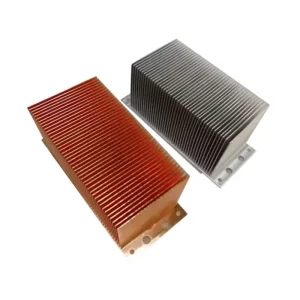
OEM Custom High-Performance Square Aluminum & Copper Skived Fin Heat Sink
View Product Details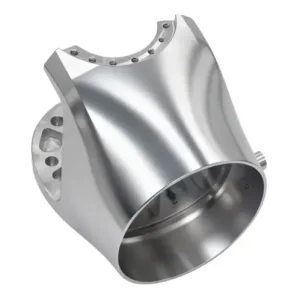
ODM High-Precision Custom 5-Axis CNC Machined Robot Joints & Housing Parts
View Product Details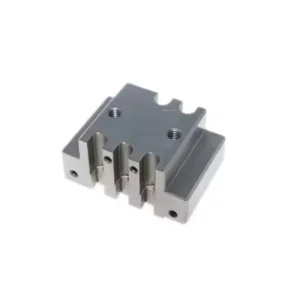
Custom OEM Precision CNC Machining Aluminum Parts - Custom Industrial Components
View Product Details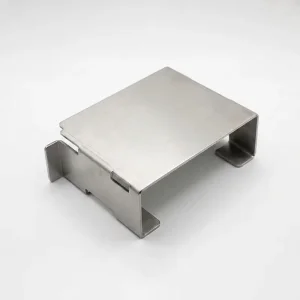
High-Quality Custom Stainless Steel Mounting Bracket from China Suppliers
View Product Details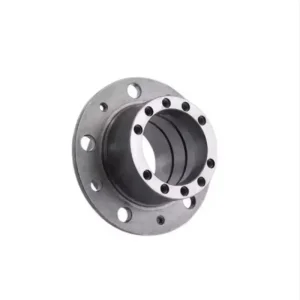
OEM Custom OEM Iron & Steel Sand Casting Wheel Hub Suppliers, Exporter
View Product Details
China Custom TPE and ABS Double Color Injection Molding & Overmolding Supplier
View Product Details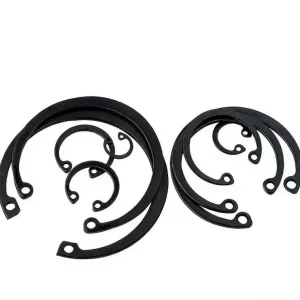
OEM Premium DIN 471 C-Type External Retaining Rings Supplier, Manufacturers
View Product Details