Precision Castings & Machined Sub-Assemblies
Explore our core engineering capabilities for critical flight components, structural housings, and electronic hardware solutions.
Next-Generation Aerospace Investment & Precision Casting Engineering
Modern commercial aviation, defense, and space propulsion systems demand structural metals capable of maintaining mechanical integrity under extreme thermal gradients, vibrational stress, and corrosive atmospheres. As premier custom aerospace casting manufacturers, our facility integrates advanced lost-wax investment casting, vacuum-assisted low-pressure die casting, and 5-axis post-machining to deliver flight-critical components engineered to zero-defect standards.
From turbine blades crafted from single-crystal nickel superalloys to lightweight structural airframe fittings poured in high-strength A356 aluminum and Ti-6Al-4V titanium, our foundry processes are designed to satisfy stringent AS9100D operational requirements. By combining automated ceramic shell building with vacuum induction melting (VIM), we control alloy grain structures, minimize inclusions, and guarantee void-free porosity metrics.
Key Metallurgical Capabilities
Our integrated foundry and machining infrastructure supports end-to-end aerospace manufacturing:
- Vacuum Induction Melting (VIM): Prevents oxidation of reactive elements like Titanium, Aluminum, and Yttrium in superalloys.
- Hot Isostatic Pressing (HIP): Eliminates micro-porosity to enhance fatigue life by up to 300%.
- Sub-Micron Tolerances: Multi-axis CNC finishing post-casting achieves dimensional accuracy down to ±0.005 mm.
- Nadcap NDT Inspection: Digital Radiography (X-Ray), Fluorescent Penetrant Inspection (FPI), and CMM dimensional auditing.
Quantifiable Foundry Performance & Quality Metrics
Empirical evidence of our precision casting capacity, structural yield rates, and international delivery compliance.
Aerospace Casting Metallurgical Routes & Alloy Matrix
Comprehensive technical breakdown of alloy selection, casting methodologies, and structural integrity controls for aerospace applications.
Investment Casting (Lost-Wax)
Ideal for intricate geometries such as turbine guide vanes, fuel nozzles, and impellers. Utilizes automated robot shell dipping, dewaxing autoclaves, and directional solidification (DS) to eliminate grain boundaries.
Vacuum Low-Pressure Die Casting
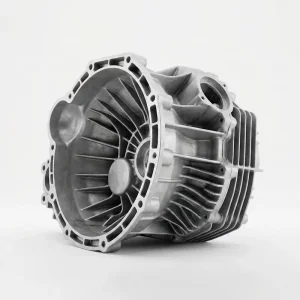
Specifically engineered for thin-walled structural aluminum airframe brackets, electronics enclosures, and heat sinks. Vacuum drawdown eliminates gas entrapment, yielding smooth surface finishes down to Ra 1.6 µm.
Titanium & Superalloy Foundry
Processing reactive materials like Ti-6Al-4V, Inconel 718, and René 41 in high-vacuum induction skull melting (ISM) systems. Guarantees extreme oxidation resistance and high-temperature creep strength up to 1050°C.
Localized Aerospace Casting Application Scenarios
Deployment of custom cast components across mission-critical aerospace, defense, and space flight sectors.
1. Aero-Engine Hot Sections & Propulsion Systems
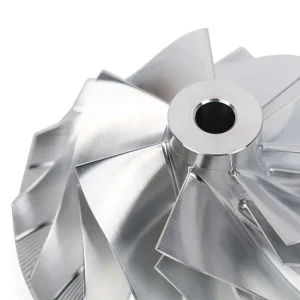
High-pressure compressor blades, combustor swirlers, turbine exhaust housings, and turbocharger compressor impellers require extreme thermal stability. Our lost-wax nickel superalloy castings withstand continuous rotational velocity and thermal shock inside modern turbofan and turboprop engines.
2. Airframe Structural Joints & Flight Controls
Critical load-bearing structural members including wing-to-fuselage attachments, door hinges, landing gear brackets, and actuator housings. Cast from high-strength aluminum alloys (A357/A356) and heat-treated to T6 condition for optimal strength-to-weight optimization.
3. Avionics Enclosures & Satellite Assemblies
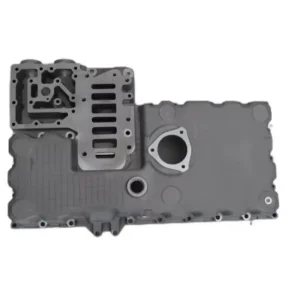
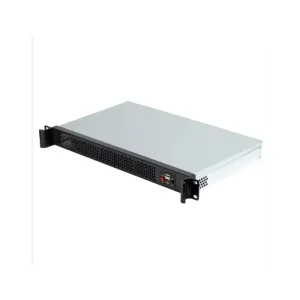
Hermetically sealed electronic control housings, thermal management oil pans, EMI/RFI shielded boxes, and radar chassis. Produced via vacuum-assisted die casting to ensure ultra-low porosity, perfect EMI attenuation, and high thermal conductivity.
4. Spaceflight & Missile Guidance Systems
Rocket engine manifold valves, gimbal rings, satellite thruster nozzles, and flight control fins. Manufactured using titanium investment casting to handle cryogenic temperatures down to liquid hydrogen levels without brittle fracture.
Aerospace Casting Innovations & Future Outlook
The global aerospace manufacturing industry is undergoing a paradigm shift toward hybrid production models. Our R&D roadmap directly aligns with industry-wide modernization trends, combining traditional investment casting with digital innovation to unlock higher efficiency and performance.
Additive Pattern Manufacturing
Direct 3D printing of SLA/PMMA sacrificial wax patterns removes traditional tooling lead times, allowing rapid prototyping of complex turbine geometries in under 5 business days.
AI-Powered Defect Prediction
Integration of mold-filling simulation software combined with real-time sensor monitoring to predict shrinkage porosity, cold shuts, and inclusions prior to molten metal pouring.
Ultra-Lightweight TiAl Alloys
Developing advanced Titanium Aluminide (TiAl) casting techniques to replace heavy nickel superalloys in low-pressure turbine sections, reducing overall engine weight by up to 20%.
China Factory Supply Chain Efficiency & Eco-System Synergies
Navigating global aerospace hardware procurement requires balancing uncompromising precision with commercial feasibility. Our Shenzhen-based manufacturing hub leverages China’s comprehensive industrial infrastructure to deliver unmatched lead-time agility and supply chain resilience.
By controlling the complete vertical integration cycle—from raw material alloy smelting, mold making, and precision casting to 5-axis CNC machining, heat treatment, and surface finishing—we minimize operational handoff delays and eliminate middleman markup.
- End-to-End Raw Material Traceability: Direct partnerships with ISO-certified ingot smelters ensuring full chemical heat-lot verification.
- Agile Tooling & Mold Production: In-house CNC die carving accelerates mold development by 40% compared to Western regional suppliers.
- Scalable Production Flex: Seamless capacity transition from prototype short-runs to mass production exceeding 50,000 units annually.
Supply Chain Comparison Matrix
Localized Engineering Support & Global Compliance Assurance
Rigorous multi-stage quality control protocols validating every cast component prior to international dispatch.
DFM & Metallurgical Simulation
Preliminary CAD review, solidifying wall thickness, parting lines, draft angles, and running Magmasoft casting solidification simulations.
Spectrographic Chemical Analysis
Optical emission spectrometry (OES) verifying chemical heat compositions against ASTM, AMS, and DIN aerospace specifications.
Nadcap Non-Destructive Testing
Class 1 X-ray radiographic testing identifying subterranean voids, alongside Fluorescent Penetrant Inspection (FPI) for surface cracks.
CMM & FAI Documentation
3D Zeiss Coordinate Measuring Machine dimensional mapping providing complete AS9102 First Article Inspection (FAI) reports.
Frequently Asked Questions
Direct responses to key engineering, quality assurance, and commercial inquiries from global buyers.
We cast a wide spectrum of aerospace-grade materials, including aluminum alloys (A356, A357, C355), stainless steels (17-4PH, 316L), nickel superalloys (Inconel 625, Inconel 718, Hastelloy), cobalt-based alloys (Stellite), and titanium alloys (Ti-6Al-4V Grade 5). All melt lots are accompanied by full material test reports (MTR) meeting EN 10204 3.1 certification.
As-cast investment tolerances conform to ISO 8062-CT4 to CT6 standards. For critical mating surfaces, bore concentricity, and fine threads, our in-house 5-axis CNC machining centers routinely achieve precision tolerances down to ±0.005 mm (5 microns) with surface roughness down to Ra 0.8 µm.
To eliminate internal gas and shrinkage porosity, we implement Vacuum Induction Melting (VIM), low-pressure vacuum pouring, and post-cast Hot Isostatic Pressing (HIP). HIP subjects castings to high inert gas pressure (up to 200 MPa) at elevated temperatures, effectively healing micro-voids. Every critical part undergoes 100% X-ray radiographic inspection.
We operate under AS9100D and ISO 9001:2015 certified quality systems. Each shipment can include full AS9102 First Article Inspection (FAI) reports, CMM dimensional measurement data, heat-treatment chart logs, Nadcap NDT (FPI/Radiography) test documentation, and RoHS/REACH compliance certificates.
Yes. Using additive manufacturing wax-pattern 3D printing (SLA/PMMA), we can produce prototype investment castings directly from your CAD files in 7 to 10 days without building hard tooling. This allows functional flight testing and design iteration prior to committing to production dies.
We sign strict, legally binding Non-Disclosure Agreements (NDAs) prior to receiving any technical files. All customer engineering data is hosted on encrypted internal servers with restricted access control. As a direct factory, your technical data is never transferred to third-party brokers.
Industrial & High-Precision Mechanical Parts
Explore our broader manufacturing capabilities spanning semiconductor carriers, valve bodies, precision turned shafts, and complex impellers.