
Featured Precision Molded & Machined Components
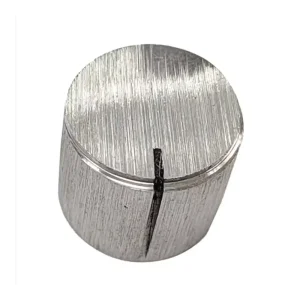
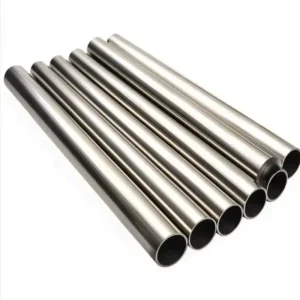
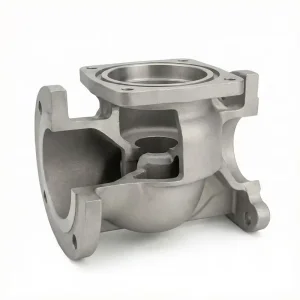
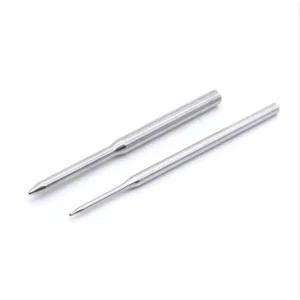
Verified manufacturing capabilities spanning custom plastic injection molding, LSR silicone components, CNC machining, and specialized alloy fabrication.



Engineering Rigor in Custom ABS Plastic Molding
A comprehensive technical analysis of Acrylonitrile Butadiene Styrene (ABS) polymer mechanics, tooling design parameters, and dimensional stability for OEM procurement leads.
Material Polymer Dynamics & Alloy Performance
Acrylonitrile Butadiene Styrene (ABS) represents an optimal terpolymer engineering matrix. The Acrylonitrile component contributes chemical resistance, heat stability, and tensile strength; Butadiene imparts elastomer-like impact strength and ductility at low temperatures; while Styrene yields a smooth, lustrous surface finish and superb processability during injection liquefaction.
When selecting premier custom ABS molding exporters, OEM engineers must evaluate raw resin compounding formulations. Standard high-impact ABS grades exhibit tensile yields ranging from 40 to 53 MPa, flexural moduli of 2.1 to 2.7 GPa, and Izod impact strengths exceeding 200 J/m. For thermal-critical enclosures, modified flame-retardant (UL94 V-0 rated) and PC/ABS alloy blends expand heat deflection temperatures (HDT) up to 115°C under 1.8 MPa loads.
DFM Guidelines & Moldflow Optimization
Achieving defect-free ABS components requires rigorous Design for Manufacturability (DFM) verification before steel cutting. Mold cavities designed by China factory experts utilize predictive Moldflow® finite element simulation to optimize gate location, thermal runner balancing, and vent layout.
- Wall Thickness Uniformity: Recommended baseline wall thickness is 2.0mm – 3.5mm. Wall transitions must feature gradual tapers (≤ 25% change) to eliminate differential shrinkage.
- Draft Angle Specification: Minimum 1.0° to 2.0° per side for untextured surfaces; 3.0° to 5.0° for heavy VDI/Mold-Tech stippled textures to prevent drag marks.
- Rib & Boss Geometry: Rib base thickness set to 50%-60% of adjacent wall thickness to mitigate surface sink marks; radius root blends kept between 0.5mm and 0.8mm to minimize stress concentrations.
| Thermoplastic Matrix Grade | Tensile Yield (MPa) | Flexural Modulus (GPa) | Izod Impact (J/m) | HDT @ 1.8 MPa (°C) | Mold Shrinkage Rate (%) |
|---|---|---|---|---|---|
| General Purpose ABS (Medium Impact) | 42 - 48 | 2.1 - 2.4 | 160 - 220 | 85 - 92 | 0.4 - 0.7% |
| High Impact ABS (Automotive Grade) | 38 - 44 | 1.8 - 2.2 | 280 - 380 | 82 - 88 | 0.5 - 0.8% |
| Flame Retardant ABS (UL94 V-0) | 45 - 52 | 2.4 - 2.8 | 120 - 180 | 90 - 98 | 0.4 - 0.6% |
| PC/ABS Alloy (High Heat & Toughness) | 55 - 65 | 2.3 - 2.7 | 450 - 600 | 105 - 120 | 0.5 - 0.7% |
| 30% Glass-Reinforced ABS | 75 - 95 | 6.5 - 8.2 | 80 - 120 | 100 - 110 | 0.1 - 0.3% |
China Factory 4.0: Supply Chain Resilience & Production Efficiency
How modern Chinese injection molding factories deploy smart automation, IoT sensor loops, and agile toolmaking to provide unmatched global cost-performance.
Automated Mold Making Ecosystem
Leading Shenzhen and Eastern China tool shops utilize high-speed 5-axis CNC machining centers (Roku-Roku, Makino) running at 30,000 RPM, paired with automated robotic electrode changers for ultra-precise Sink EDM. This integrated toolroom workflow enables sub-micron precision for core and cavity inserts, cutting tooling fabrication cycles by up to 35% compared to Western counterparts.
Real-Time Cavity Monitoring (IoT)
Industry 4.0 ABS molding facilities install piezoelectric in-cavity pressure and temperature sensors (Kistler®). Real-time telemetry dynamically adjusts the injection machine’s hydraulic pressure and hold times cycle-by-cycle. This eliminates flash, short shots, and warp variance caused by ambient humidity shifts or resin lot batch changes.
Resilient Supply Chain & Raw Material Agility
By leveraging China's dense chemical and industrial parks, custom exporters secure direct access to global top-tier resin vendors (Covestro, Chi Mei, Sabic, LG Chem). Domestic raw material stocks coupled with localized tooling logistics allow factories to absorb global supply chain shocks while guaranteeing seamless volume scaling from pilot runs to multi-million part programs.
Macro Industry Application Solutions
Turnkey custom ABS engineering, tooling, and post-processing solutions tailored for stringent sector compliance.
Automotive Interiors & Structural Dash Enclosures
Automotive OEMs mandate stringent low-VOC emission standards (VDA 278 compliance) and high UV resistance for interior components. Factories utilize heat-resistant PC/ABS alloys combined with specialized mold etching (Mold-Tech texture grades) to craft instrument bezels, HVAC ductwork, and seat latch housings that resist warpage under thermal extremes (-40°C to +90°C).
- Zero-gap assembly snaps with integrated sonic welding ribs.
- In-mold decoration (IMD) for premium matte metallic accents.
Medical Equipment Housings & Diagnostic Enclosures
Medical-grade ABS components demand high chemical resistance to harsh disinfestation agents (isopropyl alcohol, quaternary ammonium compounds). Cleanroom injection molding (ISO Class 8) guarantees particulate-free molding for benchtop analyzer chassis, pump housings, and handheld diagnostic housings.
- UL94 V-0 flame-retardant ABS compounds with anti-yellowing UV stabilizers.
- ISO 10993 biocompatibility certified resin traceability per batch.
Smart Home IoT & Consumer Electronics
For smart thermostats, routers, and high-end audio hardware, aesthetic surface perfection is non-negotiable. Custom ABS molders employ dynamic mold temperature control (Rapid Heat Cycle Molding / RHCM) to eliminate weld lines and jetting, delivering high-gloss mirror finishes (SPI A-1) straight from the tool.
- Secondary surface finishing: Soft-touch PU spraying, UV clear coats, and vacuum metallization.
- Precision brass threaded insert overmolding and heat-staking integration.
Industrial Heavy Machinery & Control Instrumentation
Heavy equipment demands impact-resistant, weatherproof control interfaces. Thicker ABS structural components are manufactured using gas-assisted injection molding (GAIM). Gas injection creates internal hollow channels, preventing sink marks on heavy bosses while reducing part weight and cycle time without sacrificing structural rigidity.
- Gas-assist technology yields 30% structural weight reduction.
- High fatigue-life mechanical button mechanisms and gasketed sealing bezels.
ABS Molding Technical Roadmap & Future Outlook
Emerging innovations reshaping the plastic injection molding landscape over the next decade.
1. Bio-Based & Recycled PCR-ABS (ESG Integration)
Driven by global sustainability mandates (EU Green Deal), top China exporters are transitioning from fossil-derived ABS to Post-Consumer Recycled (PCR) ABS blends and bio-based acrylonitrile feedstocks derived from renewable forestry waste. Mechanically upgraded PCR-ABS retains up to 92% of virgin tensile impact strength while reducing product carbon footprint (PCF) by over 45%.
2. Additive Tooling & Conformal Cooling
Traditional straight-drilled cooling channels leave hot spots in deep-cavity ABS molds. The future roadmap centers on 3D-printed metal mold inserts featuring Conformal Cooling Channels produced via Direct Metal Laser Sintering (DMLS). Conformal channels trace complex part curves perfectly, lowering injection cycle times by 20%-40% and eliminating thermal warp distortion completely.
3. Micro-Molding & Multi-Material Overmolding
Miniaturization in medical wearables and electronics necessitates micro-injection ABS techniques capable of shot weights below 0.1 grams with micron-level feature resolution. Concurrently, 2K (two-component) co-injection overmolding of rigid ABS substrates with soft TPE/LSR elastomeric grips removes manual assembly steps, creating IP67 waterproof hermetic seals in a single automated process.
Enterprise Procurement Demands & Quality Assurance
Protecting your supply chain with disciplined quality control protocols, transparent DFM reporting, and clear Total Cost of Ownership (TCO) benchmarks.
4-Stage ISO Quality Control Matrix
Direct factory procurement eliminates middleman markups while enforcing rigorous quality gates:
- IQC (Incoming Material Quality Check): Spectrographic melt-flow index (MFI) and moisture content analysis on every resin lot before hoppers are loaded.
- IPQC (In-Process Quality Control): Automated vision inspection and hourly CMM dimensional checks during active molding runs.
- FQC (Final Quality Control): Functional fit test, color spectrophotometer matching (Delta E < 0.5), and cross-hatch adhesion testing on painted/plated parts.
- OQC (Outgoing Quality Control): Palletized drop testing, ISPM-15 export wooden crate packaging, and MIL-STD-105E sampling verification.
Standard Documentation Deliverables
Every custom tooling program ships complete with engineering compliance packages required by global enterprise auditors:
- PPAP Level 3 Dossier: Process Flow Diagram, PFMEA, Control Plan, Dimensional Results, and Gauge R&R studies.
- Full CMM Metrology Inspection Report: 100% critical dimension measurement maps against 3D CAD files.
- Material Certifications & RoHS/REACH SVHC Data: Chemical composition test sheets traced to raw resin lots.
- Tooling Maintenance Guarantee: SPI Class 101 molds backed by a lifetime in-house maintenance guarantee during production.
Global Logistics, Localized Engineering Support & Compliance
Frictionless international procurement backed by bilingual technical project managers, regional engineering hubs, and end-to-end import compliance.
24/7 DFM Response & English Fluent Engineering
Eliminate time-zone lag. Engineering project managers deliver thorough DFM reports, gate design feedback, and tool progress photos/videos within 24 hours of CAD receipt, bridging technical communication between Western procurement offices and shop-floor machinists seamlessly.
IP Protection & Legal NDA Security
Protecting client proprietary designs is our foundational mandate. Strict Non-Disclosure Agreements (NDAs) governed by local and international jurisdiction are signed prior to drawing review. Internal digital asset access is segmented via encrypted enterprise servers, ensuring zero leakages of 3D IP.
Seamless Door-to-Door (DDP) Shipping Logistics
Leveraging direct partnerships with air, ocean, and express logistics networks (DHL, FedEx, Maersk), custom ABS exporters handle customs clearance, import tariff classification (HS Code 3926.90), and duty prepayments to deliver boxed assemblies directly to your factory dock.
Additional Custom Precision Hardware & Component Capabilities
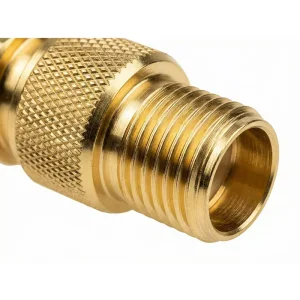
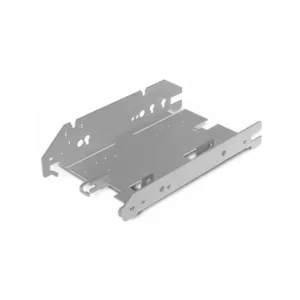
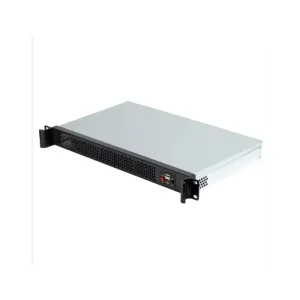
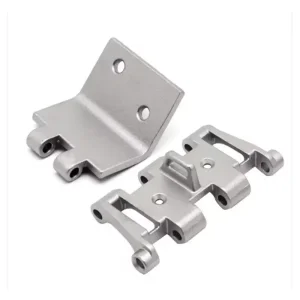
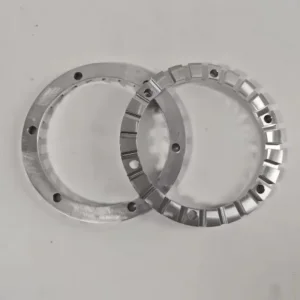
Explore our broader custom manufacturing portfolio spanning brass connectors, sheet metal enclosures, titanium medical hardware, and server chassis.
Custom ABS Injection Molding FAQ & Technical Reference
In-depth answers to critical technical and commercial questions raised by global hardware engineers and procurement leaders.
What shrinkage rate should be budgeted into tooling for custom ABS parts?
Standard unfilled ABS resins exhibit a volumetric mold shrinkage rate of 0.4% to 0.7% (0.004 to 0.007 mm/mm). However, when specifying glass-reinforced ABS (e.g., 30% GF), shrinkage drops significantly to 0.1% – 0.3%. Shrinkage rates vary based on cavity injection pressure, melt temperature, and mold wall cooling uniforms. China toolmakers precisely adjust EDM electrode sizing and core dimensions based on Moldflow shrink predictions tailored to the exact polymer grade brand specified in your BOM.
How do China ABS factories prevent sink marks on thick structural bosses and ribs?
To eliminate surface sink marks on aesthetic exterior walls, toolmakers adhere to the 60% Rule: the nominal thickness of internal reinforcing ribs must not exceed 50% to 60% of the main wall thickness to which they attach. For heavy structural sections where wall thickness exceeds 4.0mm, factories deploy Gas-Assisted Injection Molding (GAIM) or core-out engineering to maintain structural rigidity while hollowing out the internal core, preventing thermal mass contraction during cooling.
What surface finish standards (SPI/VDI) can be achieved on molded ABS components?
ABS is an exceptional substrate for high-grade surface finishing. Exporters offer full compliance with international surface standards:
- SPI A-1, A-2, A-3 (Diamond Lens Mirror Polish): Used for high-gloss optics, display windows, and piano-black consumer bezels.
- SPI B-1, B-2, B-3 (Paper Polish): Medium polish ideal for parts requiring smooth matte or semi-gloss industrial paint application.
- SPI C-1 to C-3 (Grit Stone Finish): Removes tool marks, offering economical matte textures for internal structural brackets.
- VDI 3400 / Mold-Tech Texturing: Spark-erosion stippling and chemical graining for leather-like automotive interior grips and anti-slip tool handles.
Which flame-retardant ABS grades are available for UL94 certification compliance?
For electronic housings and medical diagnostic devices, factories mold fire-rated ABS compounded with halogen-free or brominated flame retardants. Standard grades meet UL94 V-0 at 1.5mm wall thickness, halting vertical burning within 10 seconds without dripping flaming particles. Material trace sheets and UL yellow cards are provided with FAI submission packages.
What are the typical lead times from CAD approval to initial T1 production samples?
For standard single-cavity prototype tooling (SPI Class 103 aluminum or P20 steel), T1 sample lead time ranges from 15 to 20 calendar days. High-volume multi-cavity hardened steel tooling (NAK80 or S136 hardened to 48-52 HRC, SPI Class 101) typically takes 25 to 35 days, inclusive of full DFM review, electrode fabrication, CNC cutting, and preliminary CMM dimensional testing.
How are weld lines (knit lines) controlled in complex multi-gate ABS molds?
Weld lines occur where two melt fronts converge around holes or cutouts. To maximize mechanical strength and eliminate cosmetic blemishes, engineers utilize Moldflow analysis to position submarine or valve gates strategically, forcing knit lines into non-visual or low-stress internal areas. Additionally, sequential valve gating (SVG) dynamically opens injection nozzles in cascade fashion, allowing a single continuous melt front to flow seamlessly across large complex enclosures.
Can ABS plastic parts be overmolded or secondary finished with metallic plating?
Yes. ABS is one of the few engineering thermoplastics that can be readily electroless-plated with real chrome, satin nickel, or gold due to the butadiene phase enabling microscopic mechanical keying during chemical etching. Additionally, ABS forms an exceptional rigid core for 2K overmolding with thermoplastic elastomers (TPE/TPU) and liquid silicone rubber (LSR), generating unbreakable chemical bonds without secondary adhesives.
Accelerate Your Custom ABS Molding Project Today
Upload your 3D STEP/IGES files for a complimentary DFM analysis, Moldflow evaluation, and comprehensive factory-direct quote within 24 hours.
Request Engineering DFM & Quote