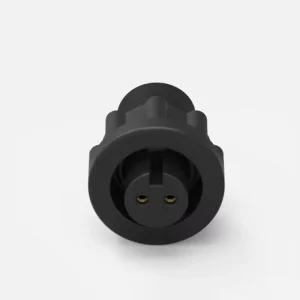
Precision Stamped & CNC Machined Components
Explore our top-tier precision manufactured parts engineered for high reliability, tight tolerances, and scalable global OEM distribution.
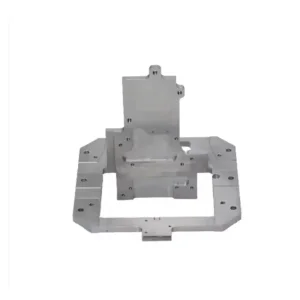
High-Quality Custom CNC Machined Metal Brackets & Structural Frames
View Technical Details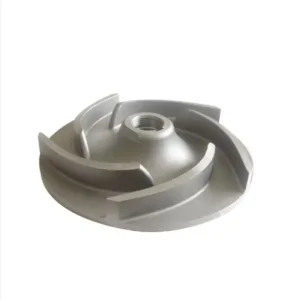
Custom Centrifugal Slurry Pump Stainless Steel Investment Casting Open Impeller
View Technical Details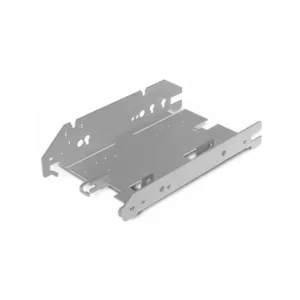
OEM Custom Precision Sheet Metal Brackets & Stamping Parts for Electronic Devices
View Technical Details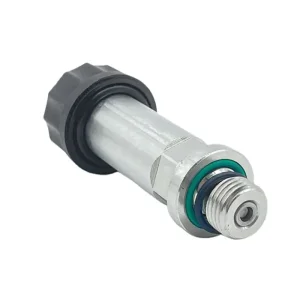
High-Performance Hydraulic Solenoid Valve Core - Precision CNC Turned Parts
View Technical Details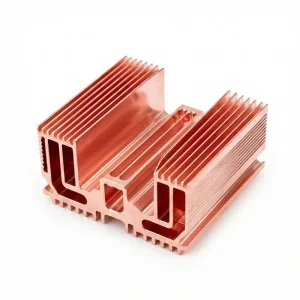
Custom High-Performance Copper Heatsink Products & Thermal Solutions
View Technical Details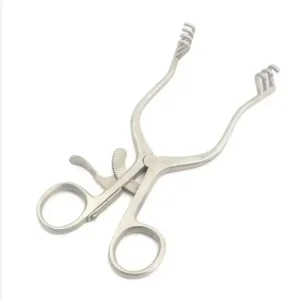
High-Quality Custom Stainless Steel Surgical Retractor Medical Instruments
View Technical Details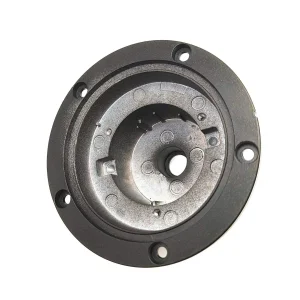
China Custom Die-Cast Aluminum Motor End Bell Housing Assembly
View Technical Details
OEM High-Quality Stainless Steel Surgical Retractor Hardware Component
View Technical DetailsGlobal Sourcing Dynamics for Precision Metal Stamping
How tier-1 OEMs and enterprise buyers leverage China's advanced stamping infrastructure to optimize Total Cost of Ownership (TCO), secure supply chain resiliency, and maintain sub-micron dimensional repeatability.
Total Cost of Ownership (TCO) Optimization
Modern precision metal stamping procurement goes far beyond raw unit price. Leading global manufacturers in North America and Europe evaluate suppliers on press run efficiencies, material scrap recovery rates, progressive die lifecycle management, and landed cost models. Chinese manufacturers have integrated vertical raw material sourcing and in-house tool construction, cutting initial die lead times by up to 40% while preserving high tooling longevity.
Supply Chain Resiliency & Dual-Sourcing Strategies
Navigating global market volatility requires scalable manufacturing partners capable of quick production ramping. Premier metal stamping facilities in Shenzhen and Guangdong operate advanced multi-station high-speed press lines (ranging from 25 to 1,000 tons). This tooling redundancy ensures uninterrupted delivery schedules, allowing global OEMs to establish risk-mitigated dual-sourcing programs backed by strategic safety stocks.
Rapid Prototype to Mass Production Transitions
Bridging the gap between early stage product design and multi-million-unit mass production is a critical barrier. Utilizing advanced DFM (Design for Manufacturability) analysis, Wire EDM prototype tooling, and modular soft tooling, top-tier Chinese stamping factories allow hardware startups and established enterprise teams to validate bend allowances, springback ratios, and material grain orientation before committing to permanent carbide progressive dies.
Engineered Stamping Solutions across Critical Sectors
From micro-miniature electronic contacts to heavy-duty automotive structural pressings, explore how precision tooling resolves severe industrial challenges.
Automotive & Electric Vehicle (EV) Power Systems
The rapid transition to Electric Vehicles demands ultra-precise copper busbars, high-voltage battery cell interconnects, and structural chassis brackets. Stamping automotive components requires strict compliance with IATF 16949 standards, zero-defect quality control, and selective plating (tin, nickel, silver) for optimal conductivity and corrosion resistance. Progressive dies with integrated in-die tapping and sensor verification ensure fastener insertion occurs directly inside the press, drastically lowering downstream assembly labor.
- High-current laminated copper and aluminum busbar stamping
- Precision battery module enclosures and thermal management brackets
- Continuous reel-to-reel electrical terminal stamping with 100% vision control
Electronics, Telecom & Semiconductors
Consumer electronics, 5G infrastructure, and optical communication modules demand extreme miniaturization. Micro-precision metal stamping achieves intricate pin pitches down to 0.3mm while maintaining planar flatness and spring tension. Materials such as Beryllium Copper (BeCu), Phosphor Bronze, and Stainless Steel 301 are precisely stamped, heat-treated, and plated to maintain low contact resistance over millions of insertion cycles.
- Board-to-board micro-connectors, shield cans (RFI/EMI), and lead frames
- Ultra-thin heat dissipation fins and thermal copper spreaders
- High-speed continuous stamping for fiber optic housing frames
Medical Devices & Surgical Instrumentation
Medical-grade metal stamping operates under uncompromising quality mandates. Componentry manufactured for surgical retractors, endoscopic clips, and implantable device housings requires ISO 13485 procedural adherence, cleanroom handling, and biocompatible material handling (316L Stainless Steel, Titanium Grade 5, Nitinol). Passivation treatments and electropolishing are systematically integrated to eliminate surface contaminants and micro-burrs.
- Burr-free surgical blades, stapler components, and retractor arms
- Biocompatible titanium implants and diagnostic device housings
- Passivated, ultrasonic cleaned, and cleanroom-packaged assemblies
Industrial Automation & Heavy Machinery
Industrial machinery components face extreme operational stresses, thermal cycles, and corrosive environments. Deep drawing and heavy-gauge stamping processes convert structural steel, high-strength alloy sheets, and brass into durable solenoid housings, hydraulic valve plates, and motor end bells. In-house heat treatment (annealing, hardening) and surface conversion coatings (black oxide, zinc-nickel plating) guarantee long-term operational durability.
- Heavy-gauge deep drawn motor end bell covers and pump housings
- Hydraulic solenoid valve plates and excavator structural brackets
- Corrosion-resistant powder-coated or anodized machinery frames
Progressive Die vs. Transfer Pressing vs. Deep Drawing
Selecting the optimum metal forming methodology is pivotal to balancing tooling investment, cycle speeds, material yield, and part complexity.
| Manufacturing Parameter | Progressive Die Stamping | Transfer Press Stamping | Deep Drawing Fabrication |
|---|---|---|---|
| Primary Geometry | Flat to medium 3D formed parts, high detail | Large 3D structural shells, complex frames | Cylindrical, box-shaped, or conical vessels |
| Production Speed | Ultra-High (200 - 1,200+ SPM) | Medium to High (20 - 80 SPM) | Moderate (15 - 50 SPM) |
| Material Utilization | Requires continuous strip carrier web | High (Blanked sheet optimization) | Optimal for seamless tubular shapes |
| Tooling Complexity | Extremely High (Multi-station integrated) | High (Independent die sets) | High (Punch, draw ring & pressure pad) |
| Best Volume Suitability | 100,000 to Multi-Million units | 25,000 to 500,000 units | 50,000 to 1,000,000+ units |
| Typical Applications | Terminals, shielding cans, brackets | Automotive doors, appliance panels | Solenoid sleeves, battery cans, pump shells |
Technical Insight: Managing Springback in High-Strength Materials
Forming high-tensile materials (such as Stainless Steel 304/316 or Advanced High-Strength Steels) introduces severe elastic recovery, commonly known as springback. Advanced China metal stamping engineers utilize finite element simulation software (AutoForm / Pam-Stamp) to accurately predict material strain limits. By engineering over-bending stations, bottoming steps, and stretch-forming geometry directly into the progressive die, final part dimensions consistently fall within ±0.010mm tolerances without secondary manual adjustment.
Rigorous Metrology & Material Traceability Protocol
How leading China precision metal stamping factories maintain zero-defect manufacturing through complete process visibility, certified raw materials, and automated inspection systems.
Raw Material Metallurgical Validation
Every coil of raw metal—whether aluminum, brass, copper, stainless steel, or beryllium copper—undergoes strict incoming inspection. Optical Emission Spectrometry (OES) verifies chemical composition, while digital hardness testers and tensile testing machines measure yield strength, elongation, and temper uniformity. Mill Test Reports (MTR) are linked to batch tracking numbers for 100% material traceability.
First Article Inspection (FAI) & CMM Verification
Prior to initiating high-speed mass production runs, First Article Inspection (FAI) reports are compiled in full alignment with AS9102 / PPAP Level 3 standards. Multi-sensor Coordinate Measuring Machines (CMM), optical profile projectors, and 3D laser scanners inspect key characteristics, geometric dimensioning and tolerancing (GD&T) callouts, and hole center distances.
In-Line High-Speed Vision System Monitoring
Human visual inspection cannot keep pace with high-speed press lines producing 600 parts per minute. Modern Chinese stamping lines feature press-integrated AI vision sensors. These high-speed optical cameras continuously inspect 100% of outgoing stamped parts for burr height exceedance, plating scratches, missing pierces, or form distortion, automatically triggering press shutdown upon defect detection.
Seamless Logistics, Customs Compliance & Localized Support
Streamlining international trade complexities through strategic packaging, duty optimization, and flexible inventory management frameworks.
Export-Grade Protective Packaging
Precision metal stamped parts—especially delicate connector terminals—are highly susceptible to oxidation, bending, and inter-part tangling during ocean transit. Factories utilize custom continuous tape-and-reel packaging, vacuum-sealed anti-tarnish VCI (Vapor Corrosion Inhibitor) bags, and heavy-duty reinforced corrugated export crates to ensure pristine condition upon destination warehouse arrival.
Flexible Incoterms (DDP, FOB, CIF) & Tariff Guidance
Navigating customs tariffs, Harmonized System (HS) code classifications, and import documentation can burden procurement teams. Leading China metal stamping suppliers offer complete DDP (Delivered Duty Paid) shipping solutions. By managing customs clearing, tariff filing, and inland trucking directly to your factory door, administrative friction is completely eliminated.
VMI & Buffer Stock Agreements
To shield global buyers against demand spikes and shipping lead time fluctuations, top suppliers establish Vendor-Managed Inventory (VMI) programs. By maintaining a 30-to-60-day safety buffer of finished stamped components in regional warehouses, customers achieve true Just-In-Time (JIT) manufacturing flexibility.
Frequently Asked Questions by Global Engineering Buyers
Get authoritative, direct engineering answers regarding tooling lead times, tolerances, material selection, and quality documentation.
What is the typical lead time for custom progressive die tooling in China?
Standard lead times for custom progressive stamping dies range from 3 to 6 weeks, depending on part complexity, total station count, and material hardness. Simple blanking or single-stage bending dies can be produced in as little as 10 to 14 days. During the tool build, First Article Samples (T1) are delivered with full CMM dimensional reports for customer verification prior to mass production release.
What dimensional tolerances can your metal stamping presses achieve?
Standard metal stamping tolerances are held to ±0.02mm (±0.0008 inches). However, for micro-precision electronic terminals, shim stock, and high-precision aerospace washers, critical features can be maintained down to ±0.005mm (±0.0002 inches) utilizing high-speed Swiss punches, carbide die inserts, and temperature-controlled press environments.
How do you protect customer Intellectual Property (IP) and proprietary CAD designs?
IP protection is legally enforced via binding Non-Disclosure Agreements (NDAs) executed prior to receiving any 3D CAD files or production drawings. Reputable Chinese factories store all technical documentation on secure, encrypted internal servers with restricted file access. Your designs and custom dies are strictly proprietary and will never be shared, cataloged, or sub-contracted to third parties.
Which secondary surface finishing and plating services are available?
We provide a comprehensive range of in-house and audited secondary finishing operations, including continuous reel-to-reel plating, barrel plating, electro-polishing, passivating, heat treating (annealing, case hardening), powder coating, anodizing, silk-screening, and ultrasonic degreasing to meet aerospace, medical, and automotive standards.
Can you assist with Design for Manufacturability (DFM) to reduce unit cost?
Yes. Our senior tooling engineers conduct a thorough DFM review on every project. We evaluate corner radii, hole-to-edge distance ratios, strip layout material yield, and bend allowances. By recommending subtle design tweaks, we frequently help clients eliminate secondary machining operations, optimize scrap recovery, and lower total unit cost by 15% to 30%.
What quality documentation is provided with international shipments?
Every shipment is accompanied by complete quality dossier packages, including Material Mill Test Reports (MTR), Chemical & Physical Composition Certificates, First Article Inspection (FAI) reports, CMM Dimensional Inspection Data, RoHS/REACH Compliance Declarations, and Salt-Spray Test Reports upon request.
High-Precision CNC Turned & Custom Molded Components
Discover specialized engineering hardware, optical housings, hydraulic valve cores, and medical connectors manufactured for global industry leaders.
High-Performance Hydraulic Solenoid Valve Core - Precision CNC Turned Excavator Spare Parts
View Technical Details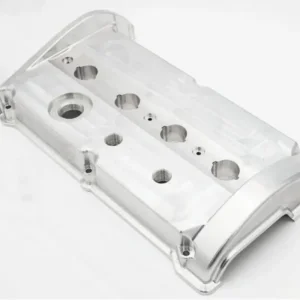
High-Precision CNC Machined 7075 Aluminum Valve Cover Custom Performance Component
View Technical Details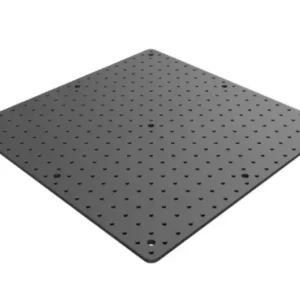
Custom Precision CNC Machining Solid Aluminum Optical Breadboard Platform
View Technical Details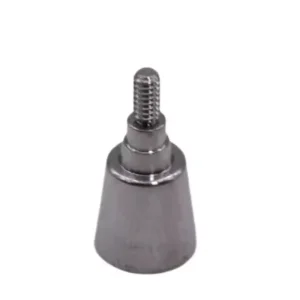
Custom CNC Titanium Abutment Implant Driver & Prosthetic Connector Medical Hardware
View Technical Details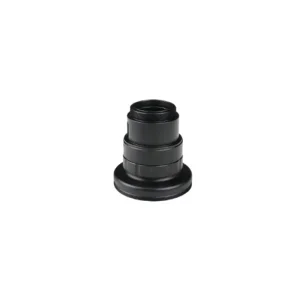
ODM Custom Black Anodized Aluminum Lens Barrel & Optical Housing Components
View Technical Details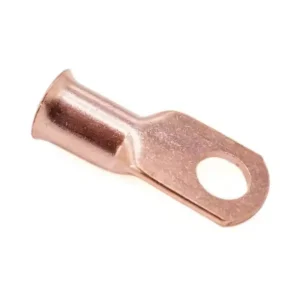
OEM Custom Tinned Copper Lug Ring Crimp Terminal Wire Connector Stamping Plug
View Technical Details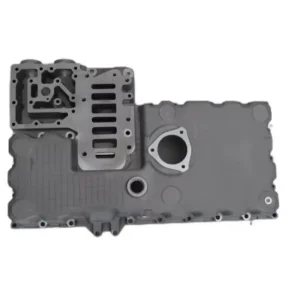
Low-Pressure Cast Aluminum Alloy Clutch Oil Pan for Transmission Retarder
View Technical Details