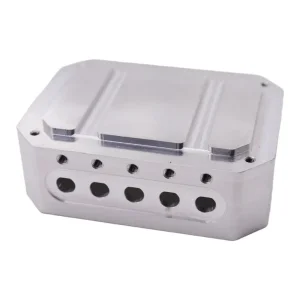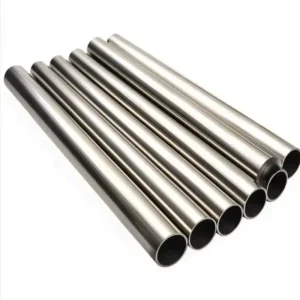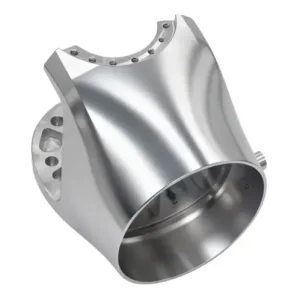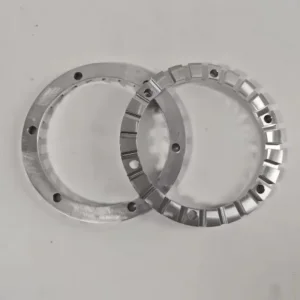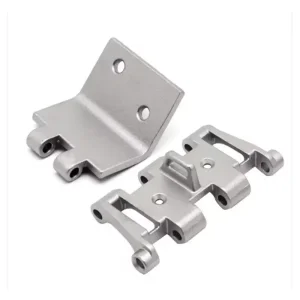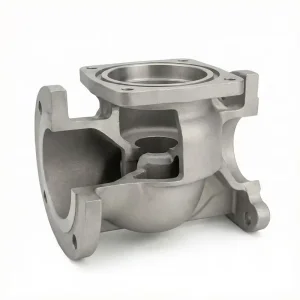
Featured OEM Precision Components
Engineered components manufactured to ISO 9001:2015 and IATF 16949 standards, ready for global export.

Global Industrial Landscape & Precision Aluminum Demand Analysis
In modern high-tech manufacturing, aluminum alloys have evolved from lightweight alternative metals into foundational structural elements for high-performance computing, advanced robotics, electric vehicle powertrains, aerospace systems, and next-generation medical devices. As international original equipment manufacturers (OEMs) face pressure to enhance thermal efficiency, lower component payload, and maintain tight dimensional tolerances, sourcing high-precision custom aluminum components from audited Chinese suppliers has become a strategic advantage.
Lightweighting & Energy Efficiency
Across EV and aerospace sectors, every gram of weight reduction directly improves battery range and payload capacity. Precision-machined aluminum alloys provide an unparalleled strength-to-weight ratio compared to structural steel, offering yield strengths up to 505 MPa (7075-T6 grade) while reducing total assembly mass by up to 65%.
Thermal Management Supremacy
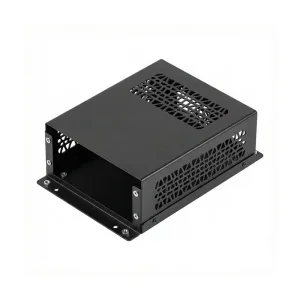
As semiconductor densities increase and RF modules transition to high-frequency 5G/6G bands, thermal dissipation is a primary bottleneck. Precision CNC aluminum heat sinks, liquid-cooling cold plates, and finned enclosures leverage aluminum's high thermal conductivity (160–200 W/m·K) to protect sensitive microelectronics.
Geometric Dimensioning & Tolerancing (GD&T)
Modern automated assembly lines demand absolute interchangeability. Chinese precision exporters utilize multi-axis CNC machining centers equipped with optical probes to enforce strict GD&T standards (ASME Y14.5), ensuring planar flatness, true position, and concentricity down to single-digit micron thresholds.
Industrial Grade Precision Aluminum Alloy Specification Matrix
Selecting the optimal aluminum alloy is crucial for balancing machinability, mechanical strength, corrosion resistance, and total cost of ownership. The table below outlines the core metallurgical properties and engineering applications of primary aluminum grades processed in our Shenzhen facility.
| Alloy Grade | Tensile Strength (MPa) | Yield Strength (MPa) | Thermal Cond. (W/m·K) | Anodizing Response | Primary Industrial Applications |
|---|---|---|---|---|---|
| Aluminium 6061-T6 | 310 | 276 | 167 | Excellent (Type II & III) | Structural frames, automation components, electronics housings, marine hardware. |
| Aluminium 7075-T6 | 572 | 504 | 130 | Good (Clear & Hardcoat) | Aerospace structural ribs, robotics joint links, high-stress military arms, racing components. |
| Aluminium 2024-T3 | 483 | 345 | 121 | Fair (Chromate Conversion) | Aircraft structural skins, tension fittings, high-fatigue structural fasteners. |
| Aluminium 5052-H32 | 230 | 193 | 138 | Excellent (Decorative) | Sheet metal chassis, marine fluid tanks, electronic control panels, busbars. |
| ADC12 (Cast Alloy) | 310 | 160 | 96 | Moderate (Powder Coat Rec.) | High-pressure die-cast motor housings, automotive brackets, luminaire shells. |
| A380 (Cast Alloy) | 320 | 160 | 96 | Moderate (E-Coating) | Mass-produced power tool gearboxes, electronic heat dissipation chassis. |
China Factory Supply Chain Resilience & Shenzhen Manufacturing Density
The Pearl River Delta (Shenzhen-Dongguan-Guangzhou industrial cluster) represents the densest precision hardware ecosystem globally. Sourcing custom precision aluminum components directly from audited Chinese manufacturers unlocks unparalleled agility, speed-to-market, and total cost efficiency.
Compressed NPI to Mass Production Velocity
In traditional Western manufacturing hubs, procuring raw aluminum extrusions, specialized cutting tooling, custom anodizing, and heat treatment often requires working across 4 to 6 separate vendors with 8–12 week lead times. In Shenzhen, the entire supply chain—from extrusion billet casting to CNC milling, sandblasting, SurTec 650 passivation, and anodizing—is geographically situated within a 30-kilometer radius. Rapid NPI (New Product Introduction) prototypes can be executed in under 72 hours.
Vertical Integration under One Roof
By operating in-house 5-axis CNC machining, high-speed Swiss lathes, sheet metal stamping, and die-casting lines, our facility eliminates third-party markups and communication friction. Every step—from initial DFM (Design for Manufacturability) analysis to post-machining CMM verification—is controlled by a single dedicated engineering group, guaranteeing unified quality tracking.
Raw Material Integrity & Traceability
All aluminum stock is sourced directly from tier-1 mills (such as Chalco) with full chemical composition and mechanical test certificates (EN 10204 3.1). We perform internal X-ray fluorescence (XRF) spectrographic analysis on incoming billets to prevent alloy mix-ups or sub-standard material insertion, providing fully traceable documentation for aerospace and medical clients.
Advanced Technical Roadmap: 5-Axis Milling, Vacuum HPDC & Automation
Meeting the demands of next-generation physical AI systems, autonomous vehicles, and deep-space instruments requires continuous advancement in machining technology. Our facility has implemented a multi-stage technical roadmap to stay ahead of geometric complexity requirements.
Simultaneous 5-Axis Trunnion Milling
By leveraging high-precision 5-axis CNC machining centers equipped with direct-drive trunnion tables, complex 3D contoured surfaces, undercut features, and compound angle mounting holes can be machined in a single setup. This eliminates fixture stacking errors, achieving position tolerances down to ±0.005 mm while reducing cycle times by 40%.
- High-speed spindles up to 24,000 RPM for mirror finish surface quality (Ra 0.4 µm).
- Dynamic Tool Path Optimization to prevent thermal distortion in thin-walled housings.
- In-process Renishaw optical probing for real-time part alignment and offset adjustment.
Vacuum-Assisted High-Pressure Die Casting (HPDC)
For high-volume production, traditional die casting can introduce micro-porosity, limiting structural strength and post-casting heat treatment options. Our high-tonnage vacuum die-casting presses draw air out of the mold cavity prior to shot injection, drastically reducing gas entrapment.
- Enables T6 heat treatment on die-cast parts for maximum tensile yield.
- Produces leak-tight enclosures suitable for liquid cooling and IP67 sealing.
- Substantially cuts per-unit costs for production runs exceeding 1,000 units.
Precision Aluminum Parts: High-Tech Localized Application Scenarios
Our custom-machined aluminum parts are engineered to perform in demanding operational environments across critical global industries. Below are primary deployment scenarios engineered by our technical team.
1. Aerospace & Avionics Housings
Machined from aerospace-grade 7075-T6 billet, our avionics flight controller boxes and satellite mounting brackets undergo Type III hardcoat anodizing. The structural design incorporates internal ribbing to withstand random vibration profiles up to 20G while minimizing component weight.
2. Electric Vehicle (EV) Powertrain & Battery Systems
We supply precision aluminum cold plates, inverter heatsinks, and motor housing end bells to leading EV tier-1 suppliers. Integrated internal liquid channels are friction-stir welded (FSW) and helium leak-tested to ensure maintenance-free cooling under continuous 400V–800V fast-charging thermal loads.
3. Semiconductor Manufacturing Equipment
Ultra-High Vacuum (UHV) chamber lids and electrostatic chuck (ESC) cooling bases machined from stress-relieved 6061-T651 aluminum. Finished with nickel plating or SurTec 650 chromate passivating to prevent particle contamination inside plasma etching and chemical vapor deposition (CVD) tools.
4. Humanoid Robotics & Physical AI Hardware
Lightweight joint link housings, harmonic drive flexspline mounts, and structural finger components. Precision CNC turned and 5-axis milled to minimize inertial mass, allowing high-torque motor actuators to achieve maximum dynamic responsiveness without positional backlash.
5. Telecom 5G/6G Remote Radio Units (RRU)
Outdoor IP67 weatherproof antenna enclosures with complex pin-fin heat sink arrays die-cast from ADC12 aluminum. High surface area geometry allows passive convection cooling, protecting RF power amplifiers operating in extreme ambient temperatures (-40°C to +85°C).
6. Surgical Robotics & Diagnostic Imagers
Ergonomic surgical tool bodies and MRI-compatible non-magnetic aluminum brackets. Finished with bead-blasting and clear anodizing to withstand chemical sterilization cycles (Autoclave & Hydrogen Peroxide plasma gas) without surface pitting.
Quality Assurance Protocols, Certification & IP Protection
Delivering precision hardware across international borders requires rigorous quality control systems and absolute data security. Our facility strictly adheres to E-E-A-T (Experience, Expertise, Authoritativeness, and Trustworthiness) standards to ensure zero-defect shipments.
Metrology & Inspection Hardware
Our temperature-controlled inspection laboratory operates 24/7, equipped with high-accuracy metrology tools:
- Coordinate Measuring Machines (CMM): Hexagon CMM with volumetric accuracy down to 1.5 + L/350 µm.
- Optical Profile Projectors & 3D Laser Scanners: Non-contact scanning for full surface deviation heatmaps.
- Surface Roughness & Film Thickness Gauges: Verifying anodizing layer thickness (8µm to 50µm) and surface finish (Ra).
Traceable Quality Documentation
Every shipment is delivered with a complete quality document bundle required by tier-1 procurement teams:
- First Article Inspection (FAI) Report: Formatted to AS9102 aerospace standards covering 100% of blueprint dimensions.
- Material Mill Certificate: Raw material heat number traceability compliant with EN 10204 3.1.
- RoHS, REACH & Conflict Minerals Declarations: Complete regulatory environmental compliance documentation.
Strict IP & Data Security Protection
We respect our clients' proprietary IP and enforce strict corporate data governance:
- Bilateral Non-Disclosure Agreements (NDA) executed prior to drawing collection.
- Air-gapped CAD servers with role-based file access permissions.
- Physical security access control on high-precision machining project lines.
Frequently Asked Questions: Technical Sourcing & Manufacturing
Clear answers to key engineering and procurement queries regarding custom aluminum part fabrication, lead times, tolerances, and surface treatments.
What are your standard machining tolerances for custom precision aluminum parts?
How do you account for anodizing build-up when machining tight-tolerance threads and bores?
Which surface finishes can be applied to custom aluminum parts in your factory?
- As-Machined: Ra 0.8µm to Ra 3.2µm.
- Bead Blasting: Media blasting (Glass bead #8 to #12) for a uniform matte finish.
- Anodizing (Type II & Type III Hardcoat): Clear, Black, Red, Blue, Gold, and custom RAL color matching.
- Chemical Passivation: SurTec 650 / MIL-DTL-5541 Chromate conversion for conductive anti-corrosion protection.
- Electroless Nickel Plating: High wear resistance and uniform thickness inside deep internal cavities.
- Powder Coating & E-Coating: Heavy-duty environmental protection for outdoor housings.
What is the minimum order quantity (MOQ) and production lead time?
How do you prevent distortion when CNC machining thin-walled aluminum components?
- Utilizing pre-stress-relieved material grades (e.g., 6061-T651 billet).
- Rough machining all sides, followed by a thermal stress-relief annealing cycle before final finishing cuts.
- Utilizing custom vacuum chuck fixtures to evenly distribute clamping forces without mechanical deformation.
- High-speed light-depth tool paths to minimize cutting heat generation.
What CAD file formats do you require for a Design for Manufacturability (DFM) quotation?
Precision Turned, Cast & Machined Products
Explore additional OEM component series exported to over 40 countries worldwide.