
Featured OEM & Precision Hardware Solutions (Part I)
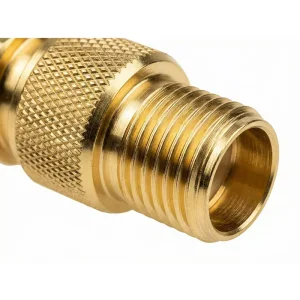
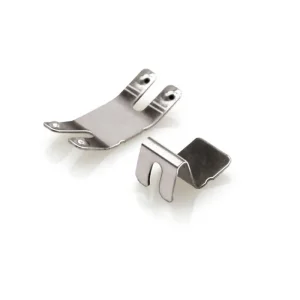
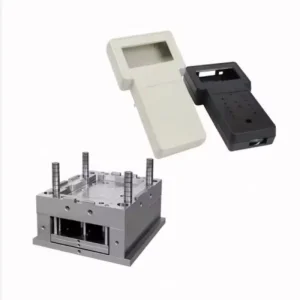
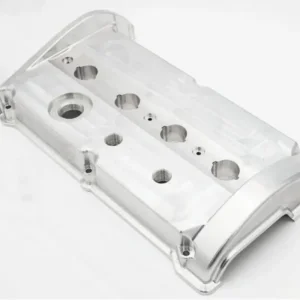
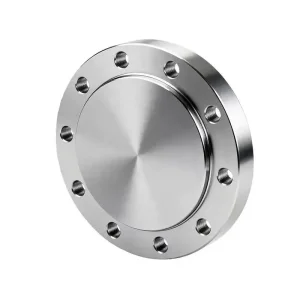
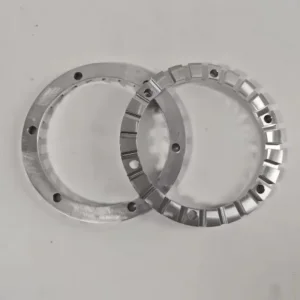
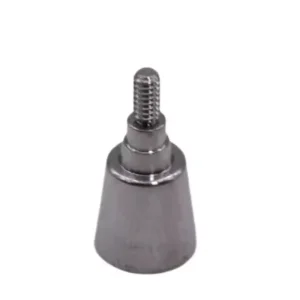
Explore our top-grade OEM component manufacturing capabilities, covering custom knurled brass, stamped clips, POS housings, CNC aluminum valve covers, and structural flanges.

1. The Macro-Industrial Paradigm Shift to Magnesium Die Casting
Analyzing the metallurgical advantages, strength-to-weight metrics, and global structural demand driving the adoption of high-pressure magnesium alloy components.
Lightweighting Mechanics & Density Advantage
Magnesium represents the lightest structural metallic material utilized in modern engineering applications today. With a structural density of approximately 1.74 g/cm³, magnesium is 33% lighter than aluminum (2.70 g/cm³) and 75% lighter than cast steel or iron (7.87 g/cm³). As global industries aggressively pursue carbon neutrality, vehicle electrification, and energy conservation, transitioning from legacy aluminum cast components to advanced magnesium high-pressure die casting (HPDC) yields immediate structural payload efficiencies without sacrificing dimensional stability.
Vibration Damping & EMI Shielding Capacity
Beyond raw weight reduction, magnesium alloys possess an unparalleled internal friction mechanism that provides up to 10 times higher vibration damping capacity than conventional aluminum alloys. This inherent property absorbs micro-shocks, acoustic resonance, and mechanical flutter in high-RPM electric vehicle drive units and precision optics. Furthermore, magnesium provides exceptional Electromagnetic Interference (EMI) and Radio Frequency Interference (RFI) shielding effectiveness, safeguarding delicate electronic control units (ECUs) and high-frequency communication modules.
Thermal Conductivity & Heat Dissipation
In dense electronic housings, computing enclosures, and LED heat-sink frameworks, thermal management is paramount. Die-cast magnesium alloys (such as AZ91D) maintain a favorable thermal conductivity range of 54 to 96 W/m·K. Coupled with superior moldability into complex thin-walled cooling fins, magnesium components rapidly dissipate heat away from critical power electronics, power inverters, and high-performance computing chipsets.
China's Supply Chain Resilience & Manufacturing Capacity
Leveraging vertical integration from raw primary magnesium reserves to automated high-pressure die casting foundries, China commands unmatched global delivery benchmarks.
1. Raw Material Reserve & Cost Stability
China holds the world's most dominant reserves of dolomite ore and primary magnesium production infrastructure. By sourcing directly from localized refineries in Shaanxi and Shanxi provinces, Chinese suppliers mitigate geopolitical supply chain shocks and offer long-term pricing stability to global procurement partners in Europe and North America.
2. Vacuum-Assisted HPDC & Thixomolding
Modern Chinese manufacturing facilities utilize advanced Vacuum-Assisted High Pressure Die Casting (HPDC) and semi-solid Thixomolding technology. By evacuating mold cavity air prior to high-velocity injection, internal gas porosity is virtually eliminated, enabling heat treatment (T6) and superior pressure-tight structural integrity.
3. Automated Post-Processing & MAO Surface Finishing
Addressing historical concerns regarding magnesium oxidation, Chinese factories deploy fully automated Micro-Arc Oxidation (MAO) / Plasma Electrolytic Oxidation (PEO), electrophoretic coating (E-coat), and fluoropolymer sealing. These advanced surface treatments provide over 1,000 hours of neutral salt spray corrosion resistance (ASTM B117 standards).
Magnesium Alloy Selection & Metallurgical Matrix
Select the optimal magnesium alloy grade tailored to your specific mechanical, thermal, and ductility performance targets.
| Alloy Grade | Composition Profile | Tensile Strength (MPa) | Yield Strength (MPa) | Elongation (%) | Key Engineering Applications |
|---|---|---|---|---|---|
| AZ91D | Mg-9Al-1Zn | 230 - 250 | 150 - 160 | 3.0 - 5.0% | Most popular commercial HPDC alloy. High strength, superior castability, corrosion resistant. Used in electronic housings & brackets. |
| AM60B | Mg-6Al-0.3Mn | 220 - 240 | 130 - 140 | 8.0 - 12.0% | High ductility & impact absorption. Preferred for automotive crash-relevant structural components, steering wheels, instrument panel beams. |
| AM50A | Mg-5Al-0.3Mn | 210 - 230 | 120 - 130 | 10.0 - 15.0% | Ultra-high elongation and energy absorption capacity. Ideal for complex thin-walled safety components subjected to severe mechanical strain. |
| AS41B | Mg-4Al-1Si-0.3Mn | 210 - 230 | 130 - 140 | 4.0 - 6.0% | Enhanced thermal creep resistance up to 150°C. Specified for crankcases, transmission housings, and engine sub-assemblies. |
| WE43 (Rare Earth) | Mg-4Y-3RE-0.5Zr | 250 - 300 | 180 - 200 | 4.0 - 8.0% | High-temperature stability up to 300°C. Aerospace structural components, defense systems, and high-performance racing gearboxes. |
Design for Manufacturability (DFM) Rules for Die-Cast Magnesium
Achieving zero-defect mass production requires strict adherence to specialized design parameters during the early 3D CAD modeling stage:
- Minimum Wall Thickness: Magnesium fluid mobility permits ultra-thin walls down to 1.0mm - 1.5mm over large surface areas, reducing overall component mass significantly.
- Draft Angles: Standard draft angles of 1.5° to 3.0° on internal cores and 1.0° on exterior walls ensure rapid mold release without surface galling or dragging.
- Ribbing & Radius Transitions: Uniform wall transitions with minimum fillets of 1.5mm prevent localized stress concentrations, sink marks, and thermal cracking.
Industrial Sector Integration & Real-World Use Cases
Magnesium die castings deliver transformative performance advantages across diversified mission-critical global industries.
Automotive & Electric Vehicles (EV)
Extensively deployed in EV battery pack frames, cross-car IP beams, steering wheel skeletons, motor housings, and seat subframe assemblies. Magnesium reduces curb weight, boosting range per charge while passing stringent automotive crash safety standards.
Aerospace & eVTOL Urban Air Mobility
Utilized in commercial aircraft interior seating structures, gearboxes, drone chassis, and urban electric vertical takeoff (eVTOL) airframes where every gram of weight saved correlates directly to increased payload capability and extended flight range.
AI Edge Hardware & Electronics
High-end laptop unibody chassis, AR/VR smart glasses structural hinges, gimbal arms, power tool casings, and server blade heat sink modules benefit from magnesium’s light weight, metallic tactile finish, and rapid heat dissipating traits.
Featured OEM & Precision Hardware Solutions (Part II)
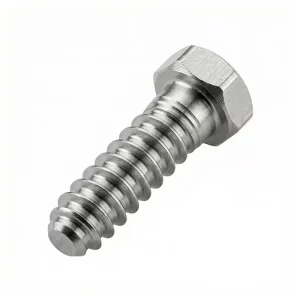
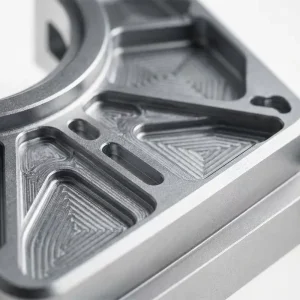
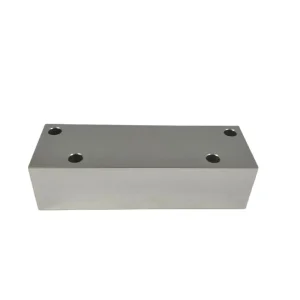
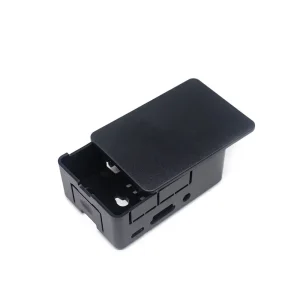
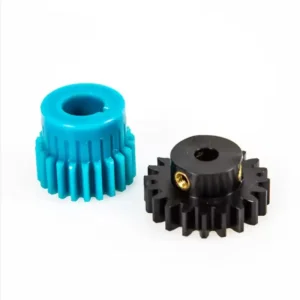
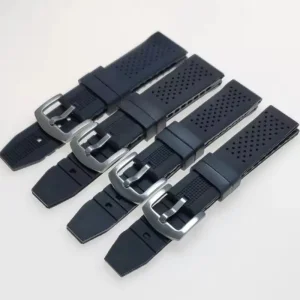
Discover our specialized medical, aerospace, semiconductor, optical, and industrial component manufacturing solutions.
Frequently Asked Questions (FAQ) for Engineering Procurement
Detailed answers addressing critical questions on tolerances, corrosion protection, prototyping, tooling lead times, and intellectual property.
How does China Magnesium Die Casting compare with Aluminum Die Casting in terms of total cost?
While raw magnesium alloy ingots generally carry a higher price per ton than raw aluminum ingots, magnesium's lower density means you require 33% less material mass to yield identical volume components. Furthermore, magnesium dies offer up to 2x-3x longer tool life (often exceeding 150,000 to 300,000 shots) due to magnesium's lower affinity for iron dragging and lower casting temperature. When factoring in reduced machining cycle times, extended mold longevity, and energy savings during melting, magnesium die casting provides highly competitive total cost of ownership (TCO) for medium-to-high volume production runs.
How is galvanic corrosion prevented when joining magnesium parts to steel or aluminum?
Galvanic corrosion occurs when magnesium comes into direct electrochemical contact with dissimilar metals (like steel or copper) in the presence of an electrolyte. To counteract this, we apply Micro-Arc Oxidation (MAO) or Electrophoretic E-coating to isolate the surface non-conductively. Additionally, engineers should specify zinc-plated or aluminum-coated fasteners, non-hygroscopic elastomeric gaskets, and isolation washers during final structural assembly.
What internal porosity standards and NDT inspection methods are available?
We implement Vacuum-Assisted High Pressure Die Casting (HPDC) to pull mold cavity vacuum pressures below 50 mbar prior to metal injection. For critical automotive and aerospace parts, we conduct 100% real-time Industrial X-Ray Computed Tomography (CT) / Non-Destructive Testing (NDT) to inspect micro-porosity levels per ASTM E505 standards, verifying structural pressure tightness.
What tight dimensional tolerances can be held post-casting?
As-cast dimensional tolerances typically adhere to ISO 8062-3 Grade DCTG 4 to 6. For critical mating surfaces, bearing bores, and threaded holes, post-machining is executed on multi-axis CNC machining centers holding tolerances down to ±0.005 mm, fully verified via automated Coordinate Measuring Machines (CMM) and First Article Inspection (FAI) reports.
How is proprietary customer IP protected during the quote and manufacturing phase?
Prior to receiving any 3D CAD files (STEP, IGES, SolidWorks), we sign legally binding non-disclosure agreements (NDAs). All design assets are handled exclusively through secure encrypted servers with direct factory-engineering oversight, bypassing middleman brokers and unverified third parties.