Precision Cast & Machined Product Lines (Part I)

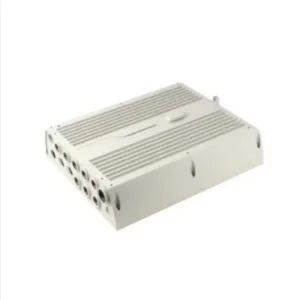
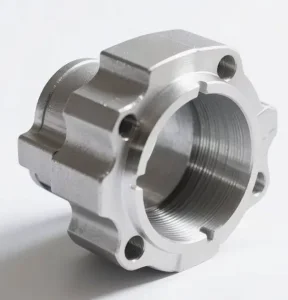
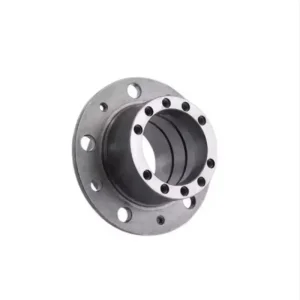
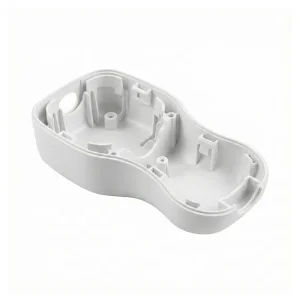
The global automotive sector is undergoing its most profound structural paradigm shift in over a century. Driven by the rapid acceleration of Electric Vehicles (EVs), strict carbon-neutrality mandates, and the imperative for light-weighting, procurement managers and lead mechanical engineers face unprecedented technical challenges. Sourcing high-integrity automotive castings requires deep metallurgical control, optimized Design for Manufacturability (DFM), and rigid supply chain traceability.
Information Gain: Information & Purchasing Advantage
Unlike generic manufacturing directories, this technical guide consolidates empirical engineering data, advanced metallurgical chemistry comparisons, and step-by-step Request for Quotation (RFQ) evaluation parameters. Sourcing automotive castings from top-tier Chinese manufacturers no longer means trading quality for price—modern China Industry 4.0 facilities deliver aerospace-grade repeatability, fully integrated zero-defect methodologies, and seamless global logistics support.
As vehicle powertrains transition from Internal Combustion Engines (ICE) to Hybrid and Battery Electric Vehicles (BEV), casting methodologies must adapt to complex geometric integrated structures, superior thermal management pathways, and high strain-energy absorption profiles.
1. Integrated Gigacasting (HPDC)
Ultra-large High-Pressure Die Casting (HPDC) units ranging from 6,000 to over 12,000 tons are revolutionizing body-in-white (BIW) manufacturing. By replacing 70+ stamped and welded sheet metal parts with a single monolithic aluminum structural casting, OEMs drastically reduce weight, assembly floor footprints, and robot automation maintenance. China is leading the global deployment of Gigacasting machinery and heat-treatment-free aluminum alloy development.
2. Heat-Treatment-Free Alloys
Traditional structural castings demand T6 thermal processing (solution heat treatment followed by artificial aging) to achieve high yield strength and ductility. However, T6 causes thermal distortion in massive thin-walled parts. Advanced Chinese foundries utilize specialized Al-Si-Mg-Mn and Al-Mg-Si alloys that achieve mechanical yields exceeding 150 MPa and elongations above 10% in the as-cast (F status) state, bypassing dimensional distortion entirely.
3. Rheocasting & Semi-Solid Metal (SSM)
To combat gas porosity and shrinkage defects in safety-critical components (such as steering knuckles and suspension control arms), semi-solid slurry casting techniques are expanding. By processing molten alloy within its globular solid-liquid temperature window, turbulent air entrapment is virtually eliminated, enabling complete heat treatability, superior fatigue limits, and pressure-tight fluid passages.
From ICE powertrain downsizing to EV e-axle integration, Chinese casting suppliers engineer customized alloy matrix solutions tailored to rigorous environmental, thermal, and dynamic stress profiles.
| Automotive Subsystem | Key Casting Process | Material Grade Preferred | Critical Engineering Metrics & Solution |
|---|---|---|---|
| EV Battery Enclosures & Trays | Gigacasting / LPDC | AlSi10MnMg / AlSi7Mg0.3 | High crash-energy absorption, zero helium-leakage porosity, electromagnetic shielding (EMI). |
| E-Axle & Electric Drive Housings | Vacuum HPDC | ADC12 / EN AC-46000 | NVH sound dampening, complex internal cooling jackets, tight precision bearing bore tolerances. |
| Suspension Knuckles & Arms | Low-Pressure / Rheocasting | A356-T6 / A357-T6 | High yield strength (>260 MPa), zero internal voiding, extreme cyclic fatigue resistance. |
| Engine Turbochargers & Manifolds | Investment / Shell Mold Sand | SiMo Ductile Iron / Stainless Steel | Thermal shock endurance up to 1050°C, resistance to high-temperature oxidation and creep. |
| Automotive Optical & Lidar Covers | Precision HPDC + CNC | Magnesium AZ91D / AlSi9Cu3 | Lightweight structural rigidness, high thermal dissipation for optical sensor electronics. |
NVH Mitigation via Thin-Wall Casting
Noise, Vibration, and Harshness (NVH) is a paramount concern in silent EV cabins. Cast aluminum transmission covers and motor frames utilize strategically ribbed wall variations modeled via finite element analysis (FEA) to shift resonant natural frequencies away from motor operating RPMs.
Thermal Management Integration
By utilizing lost-foam or soluble core investment casting, Chinese engineers create intricate multi-pass internal liquid cooling channels directly within inverter housings and power electronics cold plates, eliminating external leak-prone piping.
Structural Weight Reduction (Lightweighting)
Substituting cast iron structural components with high-purity magnesium alloys (e.g., AM60B) or optimized aluminum structural die castings delivers a weight reduction of up to 40-50%, directly extending battery range per charge cycle.
China’s ecosystem offers an unmatched competitive moat: a completely localized value chain spanning raw ingot smelting, rapid mold making, automated casting cells, 5-axis CNC post-machining, surface finishing, and on-site testing.
Moldflow Simulation
Comprehensive pre-casting simulation analyzing liquid metal velocity, thermal gradients, solidification fronts, air trap pockets, and residual strain before cutting steel.
Automated Production
Robotic ladling, automatic sprayer dosing, press extraction, and real-time closed-loop parameter monitoring maintain zero batch-to-batch variation.
In-House Tooling Fabrication
Dedicated CNC tooling centers equipped with high-speed milling and Wire EDM cut mold development cycles down from 12 weeks to as short as 3 to 4 weeks.
Digital Twin Metrology
Integrated 3D optical scanning and automated CMM (Coordinate Measuring Machine) verification sync directly with CAD digital twins for 100% inspection pass rates.
Navigating international automotive procurement demands absolute trust in quality documentation. Leading Chinese casting manufacturers operate strictly under global automotive quality management standards.
IATF 16949:2016 System Compliance
Rooted in continuous improvement, defect prevention, and reduction of variation and waste in the automotive supply chain. Every production run follows APQP (Advanced Product Quality Planning) protocols, featuring fully mapped FMEA (Failure Mode and Effects Analysis) and dynamic Control Plans.
PPAP Level 1 to Level 5 Submissions
Full Production Part Approval Process (PPAP) capabilities available upon request. Submissions routinely include dimensional measurement results, material chemical composition spectrographic analysis, mechanical pull testing, non-destructive X-ray flaw detection reports, and process capability metrics ($C_{pk} \ge 1.67$).
Environmental & Material Compliance
Complete compliance assurance for international environmental regulations: REACH, RoHS, Conflict Minerals reporting (CMRT), and IMDS (International Material Data System) registration. All raw ingot batches are 100% traceable via lot-specific mill test certificates.
Obtaining a rapid, highly accurate, and competitive quotation from a Chinese casting manufacturer requires providing clear technical data. Below is the recommended engineering checklist for your RFQ package.
1. 3D/2D Engineering Package
- STEP, IGES, or Parasolid (X_T) native files.
- 2D PDF with GD&T (Geometric Dimensioning & Tolerancing) callouts.
- Identification of critical-to-quality (CTQ) surface interfaces.
- Draft angle allowances and allowable parting line offsets.
2. Material & Mechanical Specs
- Exact alloy standard (e.g., ISO, ASTM, DIN, JIS, GB).
- Target heat treatment specification (e.g., As-Cast, T5, T6, T7).
- Density requirements and porosity limits (ASTM E505 rating).
- Pressure test parameters (bar rating, leak rate in cc/min).
3. Commercial Volume & Tooling
- Estimated Annual Volume (EAV) and batch order size.
- Expected die lifecycle (e.g., 100k vs 500k shots).
- Surface finishing specs (e.g., E-coat, anodizing, shot blast).
- Target delivery terms (FOB, CIF, DDP Incoterms 2020).
Addressing procurement, technical engineering, and quality control queries for global supply chain leaders.
Standard prototype die casting tooling typically requires 3 to 4 weeks. High-volume multi-cavity production tooling (constructed from premium H13 or Dievar steel) takes 6 to 8 weeks, including initial T1 sample shot generation, CMM dimensional reporting, and preliminary DFM optimization.
Zero-porosity internal structures are achieved by deploying high-vacuum-assisted die casting (cavity pressure reduced below 30 mbar prior to injection), combined with real-time hydraulic squeeze pins during solidification. Furthermore, 100% X-ray inspection (per ASTM E505 standards) and helium mass spectrometer leak detection are applied to pressure-critical parts.
Yes. Modern facilities feature dedicated magnesium casting lines equipped with SF6/N2 cover-gas protection systems to handle AZ91D and AM60B alloys safely. For large structural EV parts, heat-treatment-free aluminum alloys (such as Castasil-37 or proprietary equivalent formulations) are routinely cast to prevent heat-treatment warping.
IP security is enforced through binding bi-lingual Non-Disclosure Agreements (NDAs). Customer 3D CAD data is encrypted, stored on isolated local servers with strict role-based access control, and used exclusively for DFM simulation, tooling manufacture, and CNC machining programming.
A complete suite of automotive-grade surface finishes is available, including shot blasting, vibratory deburring, chromate conversion (RoHS compliant TCP/Passivation), electrocoating (E-coat), exterior-grade powder coating, hard-coat anodizing, and impregnation sealing for porous castings.
Precision Cast & Machined Product Lines (Part II)
-
-
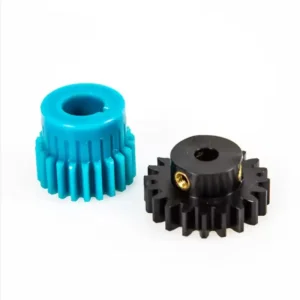
China Custom Precision Injection Molded POM Plastic Gears Manufacturers, Products
-
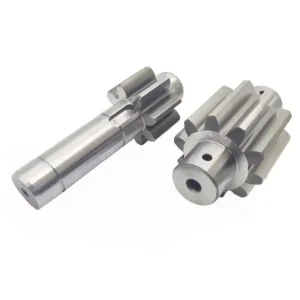
ODM Automotive Transmission System Custom CNC Machined Spur Gear & Gear Shaft Products, Quotes
-
-

Custom Custom Medical Grade Liquid Silicone Rubber (LSR) Components Supplier, Exporter
-
-
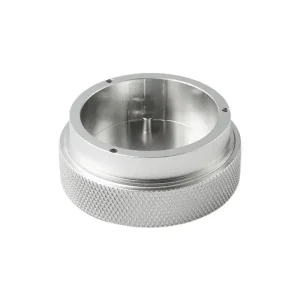
Custom Premium Custom CNC Machined Aluminum Control Knobs Exporter, Quotes
-