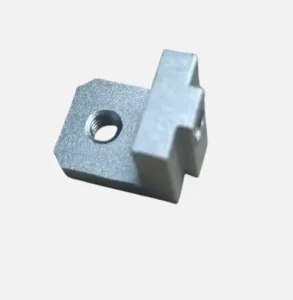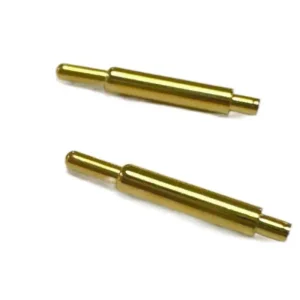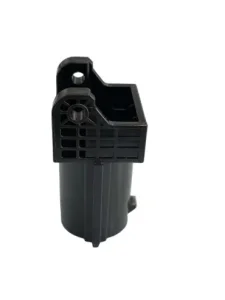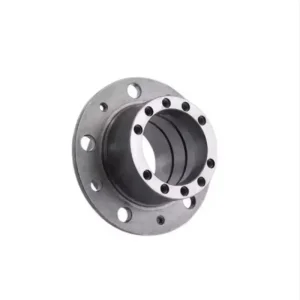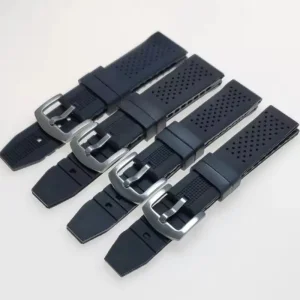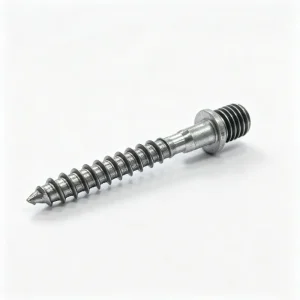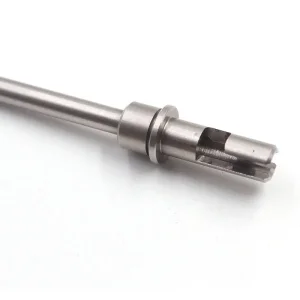
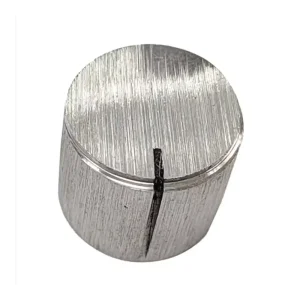
Featured Industrial Products Series (Part I)
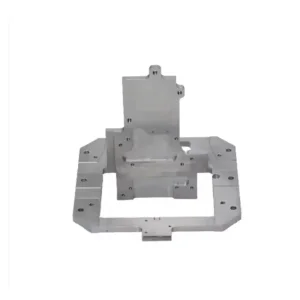
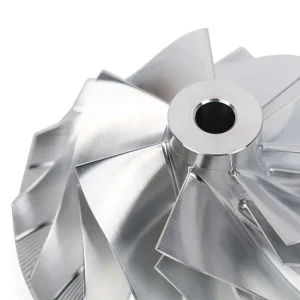
Engineered OEM/ODM solutions engineered for high tolerance, structural integrity, and multi-sector applications.


Architecting Precision: China’s Aluminum Alloy Casting Ecosystem
A comprehensive analysis of advanced casting processes, thermal management integration, structural lightweighting, and global OEM procurement standards.
The global manufacturing ecosystem is experiencing a monumental paradigm shift toward high-strength, lightweight, and thermally efficient structural components. As electric mobility (EV), telecommunications infrastructure (5G/6G), industrial robotics, and aerospace technology advance, the demand for precision aluminum alloy casting has reached unprecedented volumes. Operating at the heart of this global transformation, a leading China aluminum alloy casting supplier & factory provides international original equipment manufacturers (OEMs) and tier-1 systems integrators with a critical competitive edge: the integration of world-class metallurgical science, cutting-edge automated tooling, high-pressure die casting (HPDC), low-pressure die casting (LPDC), investment casting, and multi-axis CNC post-machining.
Far beyond serving as simple manufacturing contractors, top-tier Chinese aluminum foundries act as end-to-end co-development engineering partners. Utilizing advanced Design for Manufacturability (DFM) simulation toolkits, real-time molten metal spectroscopy, automated vacuum degassing, and CMM-backed dimensional verification, modern Chinese production hubs overcome classic metallurgical challenges such as shrinkage porosity, gas entrapment, and thermal deformation. This technical whitepaper explores the macro commercial environment, technical alloy selection matrices, process thermodynamics, localized regulatory compliance frameworks, and long-term engineering roadmaps for global procurement executives and senior engineering leaders.
Macro Economic Drivers & Aluminum Casting Market Dynamics
Analyzing supply chain resilience, carbon neutrality mandates, and technical demands across international markets.
Automotive EV Lightweighting
Electric vehicle architectures demand drastic mass reduction to extend battery range. Large-scale structural die castings, integrated battery tray housings, and motor end bells manufactured in China reduce multi-component assemblies into single-piece gigacastings, slashing weight by up to 40% while raising structural rigidity.
AI Compute & 5G Thermal Management
Next-generation artificial intelligence server farms and high-frequency 5G/6G outdoor base stations generate tremendous thermal density. High-thermal-conductivity aluminum alloys (e.g., modified Al-Si-Fe systems) engineered through vacuum casting achieve dissipations up to 180-210 W/m·K, preserving core chip performance.
Decarbonization & Green Alloys
Global buyer specifications now mandate low-carbon supply chains. Leading Chinese casting factories utilize secondary aluminum scrap closed-loop recycling, renewable hydropower smelting, and eco-friendly non-silicon release agents to drastically minimize Scope 1 and Scope 2 emissions under EU CBAM frameworks.
Comparative Matrix of Aluminum Casting Processes
Selecting the optimal casting methodology based on geometry, mechanical load, surface requirements, and production volume.
| Process Route | Suitable Alloys | Tolerance Range | Min. Wall Thickness | Tensile Strength (MPa) | Best Application Use-Case |
|---|---|---|---|---|---|
| High-Pressure Die Casting (HPDC) | ADC12, A380, AlSi9Cu3, AlSi10Mg | ±0.03 mm – ±0.1 mm | 1.2 mm | 230 – 320 MPa | High-volume automotive brackets, telecom heat sinks, gearboxes. |
| Low-Pressure Die Casting (LPDC) | A356, A357 (Heat treatable to T6) | ±0.15 mm – ±0.3 mm | 2.5 mm | 290 – 380 MPa | Structural wheel rims, safety-critical suspension arms, pressure vessels. |
| Vacuum-Assisted HPDC | AlSi7Mg0.3, Custom Ductile Alloys | ±0.02 mm – ±0.08 mm | 1.0 mm | 300 – 400 MPa (Post-T6) | Weldable EV battery housings, structural crash nodes, thin-wall frames. |
| Precision Investment / Lost-Wax | A356, 6061 equivalent cast, 7075 cast | ±0.05 mm – ±0.15 mm | 0.8 mm | 250 – 350 MPa | Complex aerospace brackets, internal fluid impellers, medical components. |
| Sand & Resin Mold Casting | ZL101, ZL104, Al-Cu Series | ±0.5 mm – ±1.2 mm | 4.0 mm | 180 – 260 MPa | Prototype development, low-volume heavy machinery blocks, large housings. |
Tailored Industry Solutions & Localized Deployments
Deploying specialized casting technologies across critical global industry verticals.
Automotive Powertrain & Structural Assemblies
Supplying Tier-1 automotive integrators in North America and Europe with structural engine mounts, transmission cases, inverter covers, and electric motor stators. Utilizing vacuum-sealed high-pressure casting ensures micro-porosity levels below 1% per ASTM E505 standards, permitting leak-free oil channels and high dynamic strength.
- Zero-leakage internal oil and coolant passages
- Automated CMM 100% critical feature inspection
- Traceable batch heat treatment certification
Telecommunications & Remote Outdoor Cabinets
Engineered outdoor active antenna units (AAU) and heat exchangers designed for harsh climatic exposures ranging from Arctic freeze to Saharan heat. Using high-purity Al-Si binary alloys with specialized chromate-free conversion coatings and polyester powder spraying ensures 1,500+ hours of neutral salt spray (ASTM B117) corrosion protection.
- High pin-fin density for maximum natural convection
- IP67 and IP68 environmental sealing surfaces
- Electromagnetic shielding (EMI/RFI protection)
Precision Industrial Robotics & Automation
Manufacturing robot arm joints, base pedestals, and end-effector grippers requiring high strength-to-weight ratios and minimal inertia. Precision 5-axis CNC post-machining aligns bearing seats, gearboxes, and mounting flanges to tight geometric tolerances (GD&T true position within 0.015mm).
- Low rotational inertia for high-speed dynamic movements
- Integrated wire-harness routing channels
- High torsional stability under heavy shock loads
Medical Imaging & Surgical Equipment
Delivering bio-compatible, ultra-clean aluminum structural housings for CT scanners, mobile X-ray arms, and surgical robotics. Fully dense castings undergo rigorous X-ray inspection to guarantee zero void defects prior to sterile medical-grade polyurethane coating.
- Medical-grade chemical resistant surface finishes
- Strict compliance with ISO 13485 quality protocols
- Ergonomic lightweight designs for mobile carts
Rigorous Quality Assurance & DFM Simulation Workflow
Preventing defects before tool steel is cut through physics-based numerical modeling and total quality control.
MAGMAsoft® DFM Flow Analysis
Prior to mold manufacturing, our engineering office executes comprehensive numerical fill, thermal solidification, and stress distribution simulations. Potential cold shuts, air pockets, and shrinkage hot spots are identified and corrected by altering runner channels, overflow wells, and cooling lines.
Real-Time Spectrometric Melt Control
Molten aluminum chemistry is monitored continuously before every furnace ladling sequence using optical emission spectrometers (OES). Hydrogen gas levels are actively controlled via rotary argon degasification systems to maintain gas porosity below 0.15 cm³/100g of metal.
Full Non-Destructive Testing (NDT)
Critical structural parts undergo 100% industrial X-ray fluoroscopy to detect subsurface voids, micro-cracks, and inclusions. High-precision coordinate measuring machines (CMM) and laser scanning systems verify complex geometric tolerances against native 3D STEP files.
Next-Generation Casting Technologies (2026–2035)
Strategic technology developments driving the future of Chinese aluminum foundry engineering.
1. Ultra-Large Integrated Gigacasting
Scaling high-pressure die casting machinery up to 12,000-ton clamping force. Replacing over 70 stamped sheet-metal body-in-white components with a single heat-treatment-free cast structure, drastically cutting OEM factory floor footprint and assembly robot investments.
2. AI-Driven Smart Melt Control
Integrating IoT thermal imaging and neural network algorithms to dynamically regulate mold temperature zones during continuous production. AI-driven thermal balancing eliminates micro-fracturing and extends mold life up to 150,000 shots.
3. Additive Sand Printing Hybrid Casting
Fusing 3D sand printing (3DSP) with traditional gravity sand casting. Rapidly producing complex internal core geometries without expensive hard tooling, reducing prototype delivery cycles from 12 weeks to just 5 working days.
Seamless International Procurement & Localized Support
Bridging Chinese manufacturing capability with Western operational compliance and supply chain security.
Regulatory Compliance & IP Safeguards
Sourcing from an established China aluminum alloy casting supplier & factory requires total confidence in intellectual property protection and international trade compliance. Tier-1 Chinese suppliers enforce strict Non-Disclosure Agreements (NDAs), localized secure data transfers, and dedicated project segregation.
Every shipment is fully compliant with global chemical and environmental standards including EU RoHS (2011/65/EU), REACH (EC 1907/2006), and Conflict Mineral reporting mandates. Detailed First Article Inspection (FAI) reports per AS9102 protocols, raw material mill test certificates (EN 10204 3.1), and PPAP Level 3 documentation are delivered routinely prior to mass production clearance.
Global Door-to-Door Logistics & Buffer Stocking
To mitigate international supply chain volatility, structured stocking programs (VMI / Consignment Stock) are maintained in localized fulfillment hubs across Europe and North America. Sea freight (FCL/LCL), air express, and multimodal rail options are fully managed under DDP (Delivered Duty Paid) Incoterms.
Whether servicing fast-turnaround low-volume prototype programs or multi-year high-volume OEM programs, our engineering teams provide 24/7 technical support, rapid DFM revisions within 24 hours, and transparent milestone tracking throughout the mold build and casting lifecycle.
Frequently Asked Questions (FAQ) for Engineering Buyers
In-depth technical responses regarding material properties, tooling, tolerances, and procurement options.
Which aluminum casting alloy offers the best balance of mechanical strength and thermal conductivity?
For applications demanding high thermal dissipation alongside robust structural strength (such as 5G enclosures and EV motor housings), modified A356 (AlSi7Mg0.3) and AlSi10Mg under T6 heat treatment provide optimal performance. A356-T6 delivers yield strengths upwards of 240 MPa with thermal conductivity around 160-180 W/m·K. If high-volume high-pressure die casting (HPDC) is preferred, ADC12 (AlSi9Cu3) offers superior fluidity and mold filling for thin walls down to 1.2mm, while providing thermal conductivity around 96-100 W/m·K.
How does your factory prevent gas porosity and shrinkage defects during high-pressure casting?
Porosity mitigation is achieved through a multi-tiered engineering approach: First, MAGMAsoft® flow simulation optimizes runner gate positions and air vents. Second, high-vacuum valve systems reduce cavity pressure down to under 30 mbar prior to liquid metal injection, eliminating gas entrapment. Third, real-time squeeze pins apply secondary compaction pressure to thick wall sections during solidification to counteract micro-shrinkage voids.
What are the standard lead times for aluminum casting tooling and initial FAI sample delivery?
Standard lead times for high-precision HPDC steel tooling (using premium H13 or Dievar tool steel) typically range from 25 to 35 calendar days depending on mold complexity and slide mechanisms. Rapid prototype sand castings or 3D printed sand molds can deliver functional First Article Inspection (FAI) physical samples within 7 to 10 working days for urgent design validation.
Can die-cast aluminum parts be weldable and anodized?
Conventional HPDC castings made with high-silicon ADC12 or A380 alloys are difficult to weld and display dark discoloration when anodized due to silicon phase precipitates. However, by utilizing specialized vacuum-assisted die casting combined with low-silicon, low-iron ductile alloys (such as Silafont-36 or Castasil-37), components become fully weldable (TIG/MIG/Laser) and can achieve smooth protective decorative or hard-coat anodized finishes.
What quality documentation is provided with international shipments?
Every shipment is accompanied by a full Quality Inspection Dossier including: EN 10204 3.1 Chemical Spectroscopy Material Certificates, CMM Dimensional Inspection Reports (with ballooned engineering drawings), X-ray Non-Destructive Porosity Inspection Data, Surface Roughness (Ra) Measurement Logs, and RoHS/REACH Compliance Certificates. PPAP Level 3 documentation is available upon request for automotive and industrial clients.
What is the typical mold life expectancy for aluminum die casting tools?
Using premium certified imported H13 tool steel with proper heat treatment and surface nitriding, standard production mold life ranges from 100,000 to 150,000 shots for aluminum casting. For ultra-high volume programs, advanced tooling inserts made of Bohler Dievar or Uddeholm Orvar extend tool life beyond 200,000 shots. Routine preventative maintenance and stress-relief tempering are performed in-house after every 25,000 production cycles.
Featured Industrial Products Series (Part II)
Explore our extended catalog of precision turned components, mounting brackets, and specialized assemblies.