
Core Turned Components Specified for Faro Engineering Programs
Engineered to sub-micron tolerances (down to ±0.005 mm) for optics, fluidics, oceanographic sensors, and heavy equipment active across Southern Portugal.
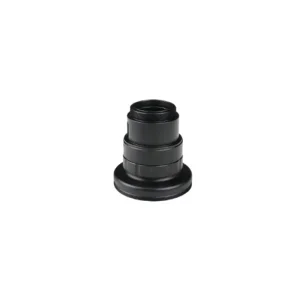
ODM Custom Precision CNC Turned Black Anodized Aluminum Lens Barrel & Optical Housing Components Manufacturer, Service
Request Technical Quote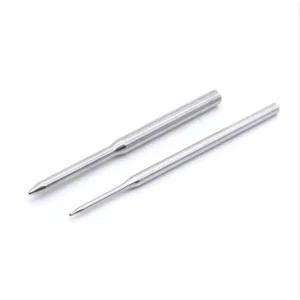
ODM Custom Stainless Steel Waterproof Sensor Probe Housing / Thermowell (OEM Support) Manufacturers, Product
Request Technical Quote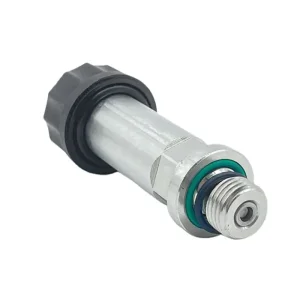
High-Quality High-Performance Hydraulic Solenoid Valve Core – Precision CNC Turned Excavator Spare Parts Suppliers, Manufacturers
Request Technical QuoteThe Evolving Landscape for Precision Turned Parts in Faro, Portugal
Analyzing Southern Portugal’s technological transition from traditional maritime operations to advanced oceanographic engineering, aerospace research, and high-precision OEM assembly.
The municipality of Faro, situated at the core of Portugal’s Algarve region, is undergoing a profound industrial transformation. Historically celebrated for maritime trade, tourism, and fisheries, Faro has rapidly positioned itself as a key technological springboard for Southern Europe. Fueled by strategic investments in the University of Algarve’s Research Centers (such as CCMAR), expansion at the Faro Airport Logistics Park, and growth across nearby industrial hubs in Loulé, Olhão, and Portimão, the regional demand for high-spec engineering hardware has reached unprecedented levels.
Modern engineering operations in Faro require components that meet rigorous European Union standards (CE, REACH, RoHS) while enduring challenging environmental stresses—ranging from corrosive marine salinity along the Atlantic coast to high-pressure thermal cycles in automated agricultural and solar energy installations. Precision turned parts serve as the vital mechanical foundation for these advanced systems.
Marine & Oceanographic Tech
Subsea monitoring instrumentation, autonomous underwater vehicle (AUV) assemblies, and seawater-resistant probe housings demand 316L stainless steel thermowells and titanium connectors turned to zero-leak tolerances.
BioTech & Medical Devices
Collaborative research initiatives at Faro’s university incubators drive demand for biocompatible titanium implant drivers, micro-screws, and specialized stainless capillary tubing with micro-bores (OD 1mm–8mm).
Renewable Energy & Agritech
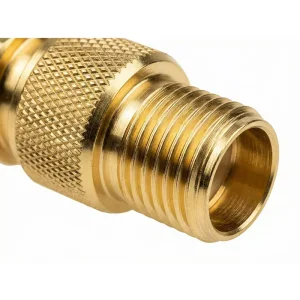
Solar tracking infrastructure and automated irrigation flow-control manifolds require knurled brass insert connectors, hydraulic valve cores, and anodized aluminum sleeves designed for 24/7 continuous operation.
Global Precision Turned Component Dynamics & Technology Standards
Bridging international manufacturing breakthroughs with local engineering implementation in Faro and across the Iberian Peninsula.
| Machining Methodology | Ideal Application Scenario | Achievable Tolerance | Surface Roughness (Ra) | Best Fit Material |
|---|---|---|---|---|
| Swiss-Type CNC Turning | Slender micro-components, medical micro-screws, capillary sleeves | ±0.005 mm | Ra 0.4 µm | Titanium Grade 5, Stainless 316L, Brass C36000 |
| Multi-Axis CNC Milling/Turning | Complex optical lens barrels, fluidic housings, sensor thermowells | ±0.010 mm | Ra 0.8 µm | Aluminum 6061-T6 / 7075-T6, Stainless Steel |
| High-Speed Lathe Turning | High-volume threaded connectors, knurled pins, filter sleeves | ±0.015 mm | Ra 1.2 µm | Free-Cutting Brass, Carbon Steel, Aluminum Alloys |
| Micro-Drilling & Honing | Precision hydraulic valve cores, perforated filter sleeves | ±0.008 mm | Ra 0.2 µm | Hardened Alloy Tool Steel, Stainless 17-4PH |
Advanced Metallurgical Capabilities & Precision Turning Engineering
Providing OEM engineering teams in Faro with complete control over material grade selection, structural integrity, and custom surface finishing treatments.
Alloy Selection & Integrity
We work with marine-grade 316L stainless steel for salt resistance, aerospace 7075-T6 aluminum for high strength-to-weight ratio, lead-free brass for drinking water compliance, and Grade 5 Titanium for biomedical implants.
Surface Treatments & Coatings
From Type III Hard Anodizing (MIL-A-8625) for non-reflective optical lens barrels to Electropolishing, Passivation (ASTM A967), PVD coating, and PTFE-impregnated sealing rings for high-vacuum devices.
Geometrical & Thread Precision
Single-point threading and thread rolling capabilities for Imperial, Metric, NPT, G-thread, and custom micro-threads. Concentricity, runout, and cylindrical error held within micro-meters.
Precision Turned Components in Action Across Faro Projects
Examining practical engineering deployments where custom turned hardware solves critical operational challenges in Southern Portugal.
1. Marine Oceanographic Probes along the Ria Formosa & Atlantic Shelf
Environmental research vessels and oceanographic monitoring buoys operating around Faro’s coastal estuaries face severe chemical attack from coastal waters. Standard off-the-shelf turned fittings degrade quickly, resulting in salt-water ingress and destruction of internal sensor electronics.
Our Solution: Precision CNC turning of ODM Custom Stainless Steel Waterproof Sensor Probe Housings / Thermowells (Product #3) using AISI 316L stainless steel. By applying precision CNC thread cutting followed by chemical passivation, these thermowells guarantee hermetic seals rated up to IP68, preserving internal electronic assemblies over multi-year deployments.
2. Optical Sensing & Astronomical Equipment at Algarve Observatories
High-end optical research institutes and airborne camera systems require lens barrels that prevent internal light scatter and withstand thermal fluctuations without mechanical distortion.
Our Solution: Production of ODM Custom Precision CNC Turned Black Anodized Aluminum Lens Barrels & Optical Housings (Product #2). Machined from solid aerospace 6061-T6 billet on 5-axis turned-milling centers, these parts undergo deep matte-black hard anodizing, eliminating stray reflection while maintaining strict internal bore concentricity (within 0.008 mm).
Zero-Defect Quality Control & Full European Compliance
Providing transparent documentation, First Article Inspection (FAI), and CMM verification to support Faro procurement teams.
CMM Dimensional Reports
Every critical turned diameter, thread pitch, and shoulder distance is validated using Zeiss Coordinate Measuring Machines (CMM) and optical shadow graph comparators, included with FAI reports.
Material Traceability
Full spectroscopic material certification (EN 10204 3.1) is furnished for all raw metals, guaranteeing chemical composition compliance for stainless steel, brass, titanium, and aluminum alloys.
Direct Delivery to Faro Hubs
Streamlined express shipping directly to Faro Industrial Parks, Port of Faro, or Faro International Airport (FAO) cargo terminals with DDP (Delivered Duty Paid) options available.
Future-Proof Turning Technologies & Industry 4.0 Roadmap
How continuous investments in closed-loop automated machining elevate part quality for next-generation systems in Portugal.
As smart manufacturing initiatives accelerate across Southern Europe, precision turned component fabrication is evolving beyond standard automated lathes. Our manufacturing facility integrates real-time adaptive machining controls, automated tool-wear sensor telemetry, and laser-guided micro-inspection inside the CNC turning chamber.
This closed-loop system automatically adjusts offset coordinates when thermal expansion is detected during continuous high-volume turned part runs. For engineering partners in Faro, this eliminates batch-to-batch variation, ensuring that part #1 and part #100,000 exhibit identical dimensional characteristics.
Extended Portfolio of Precision Turned Parts Available in Faro
Discover specialized turned sleeves, titanium implants, brass inserts, and capillary tubing built to custom OEM drawings.
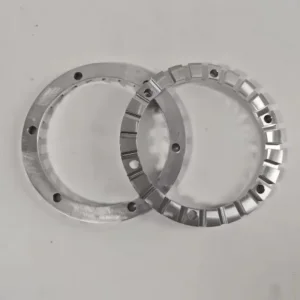
ODM Custom CNC Machined Anodized Sealing Rings for Semiconductor & Optical Instruments Suppliers, Product
Request Technical Quote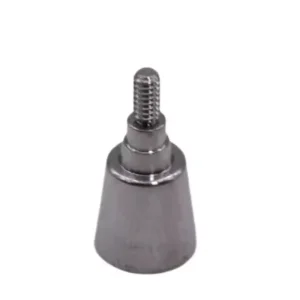
ODM Custom CNC Turned Titanium Abutment Implant Driver & Prosthetic Connector Suppliers, Exporter
Request Technical Quote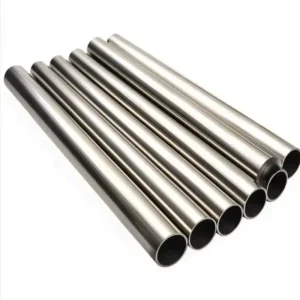
ODM Custom Precision Capillary Stainless Steel Pipe / Tube (OD 1mm - 8mm) Products, Factories
Request Technical Quote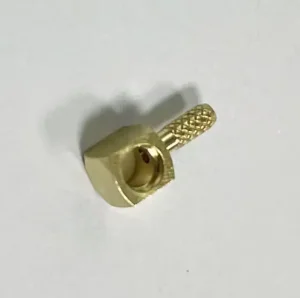
ODM Custom CNC Machining Brass Insert Connector with Knurled Pin OEM Service, Exporter
Request Technical Quote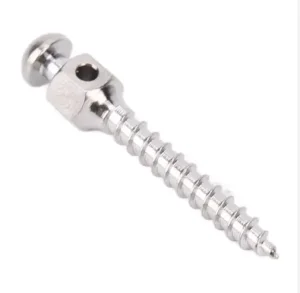
Custom Custom Precision Titanium Orthodontic Micro Implant Screws Products, Quotes
Request Technical Quote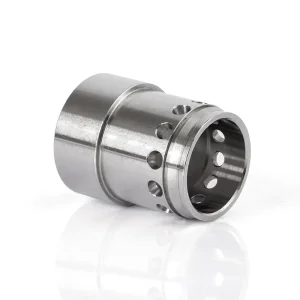
OEM Custom CNC Precision Turned Stainless Steel Filter Sleeve (OEM/ODM Industrial Grade) Manufacturers, Quotes
Request Technical Quote
OEM Custom CNC Stainless Steel Drilled Filter Sleeve & Flow Control Valve Component Product, Quotes
Request Technical Quote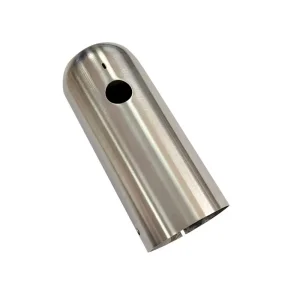
Frequently Asked Questions for Turned Parts in Faro
Clear, authoritative responses on engineering specifications, delivery terms, and custom manufacturing capabilities.
What precision tolerances can be held on custom turned parts for Faro engineering projects?
Our Swiss-type precision CNC lathes and multi-axis turning centers can hold tolerances as tight as ±0.005 mm (5 micrometers) on outer diameters and critical bore features. Standard manufacturing tolerances are typically maintained at ±0.01 mm to ±0.02 mm depending on drawing requirements, material grade, and component geometry.
How are precision turned parts shipped to Faro, Portugal, and what customs documentation is supplied?
We supply parts directly to Faro-based clients using air express (DHL/FedEx/UPS) or dedicated ocean freight under DDP (Delivered Duty Paid) terms. All shipments arrive fully customs-cleared with complete commercial documentation, including EN 10204 3.1 Material Certificates, RoHS/REACH compliance documentation, and detailed CMM dimensional inspection reports.
Which stainless steel grades are recommended for marine-exposed components used around Faro's coastline?
For applications directly exposed to marine environments or salt air around Faro and the Algarve coastline, we strongly recommend AISI 316L (1.4404) or Duplex Stainless Steel (UNS S31803 / 1.4462). These alloys offer superior resistance to pitting and crevice corrosion compared to standard 304 stainless steel. Chemical passivation (ASTM A967) is also applied to optimize corrosion protection.
Can you handle prototype runs as well as high-volume production of knurled brass connectors?
Yes. We support single-piece prototype development through low-volume initial manufacturing (10–100 pieces) using multi-axis turning centers. Once your engineering design is validated, we scale seamlessly to automated high-volume production runs exceeding 500,000 pieces per month with high-speed multi-spindle lathes.
How do you ensure IP (Intellectual Property) protection for CAD designs originating from Portugal?
We strictly protect client IP by executing binding Non-Disclosure Agreements (NDAs) prior to receiving 2D/3D CAD models. All design documentation is securely stored in encrypted databases accessible only to authorized project engineers, ensuring your proprietary designs remain completely confidential.
What file formats are accepted for DFM (Design for Manufacturability) analysis?
Our engineering team accepts standard 3D CAD formats including STEP (.stp), IGES (.igs), SolidWorks (.sldprt), as well as 2D PDF or DWG/DXF drawings for GD&T (Geometric Dimensioning and Tolerancing) specification review. We provide a full DFM feedback report within 24 hours of submission.
Ready to Elevate Your Precision Component Manufacturing in Faro?
Send us your technical drawings or project specifications today. Our senior engineering team provides comprehensive DFM evaluation, tolerance review, and competitive factory-direct pricing within 24 hours.
Send Inquiry Now