Featured Precision Castings for Seoul Industry
Explore our top-tier precision-cast components engineered to hold tight tolerances and meet rigid metallurgical benchmarks.
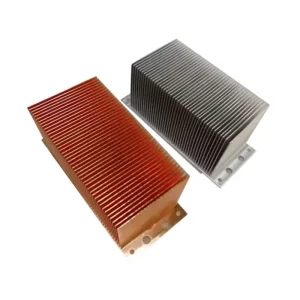
Seoul's Industrial Transformation & Demand for Advanced Casting
The Seoul Capital Area (including Incheon and Gyeonggi Province) stands as one of the world's most concentrated hubs for high-technology manufacturing, next-generation mobility, and precision robotics. As traditional heavy manufacturing relocates to secondary hubs, Seoul has evolved into an elite center for high-value engineering design, R&D prototyping, and zero-defect component integration.
Gasan & Guro Digital Complexes
Once dedicated to basic light assembly, the Gasan Digital Complex (GIDC) now houses thousands of specialized technology hardware firms. The demand here centers on rapid-turnaround aluminum die-cast housings, custom RF shielding enclosures, and ultra-compact structural cast brackets for IoT equipment.
Pangyo & Suwon Tech Corridors
Situated in the adjacent metro zone, Pangyo Techno Valley and Suwon act as the brain center for South Korea's semiconductor toolmakers and autonomous vehicle developers. Precision investment castings in SUS316L stainless steel and vacuum die castings are vital for their cleanroom-grade valve bodies and sensor mounts.
Seongsu Precision Clusters
Seongsu-dong retains a deep-rooted legacy of micro-machining and tooling expertise. Modern Seoul engineering teams rely on Seongsu's secondary post-machining networks to perform micro-boring, grinding, and surface passivation on raw casting blanks delivered from optimized production foundries.
Information Gain Insight: Sourcing custom castings for Seoul-based OEM programs requires meeting strict weight-reduction targets and stringent X-ray porosity standards (ASTM E155 Class 1/2). Modern Korean buying teams demand integrated casting-plus-5-axis machining solutions to minimize supply chain touchpoints.
Localized Casting Solutions Across Key Korean Industries
Engineered to excel under demanding thermal, mechanical, and chemical stress environments common in South Korea's high-tech manufacturing ecosystems.
1. Semiconductor Processing & Vacuum Chambers
South Korea leads global memory chip manufacturing. Semiconductor gas distribution lines and etch chamber manifolds demand investment castings made from ultra-pure SUS316L and Hastelloy. Our lost-wax casting technology ensures zero internal void defects, smooth internal passages (Ra ≤ 0.8μm after electropolishing), and total resistance to corrosive precursor gases.
2. Electric Mobility & E-Axle Power Modules
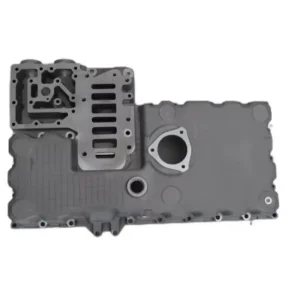
Suppliers serving the Seoul-Hwaseong automotive cluster require low-pressure aluminum die-cast (LPDC) oil pans and high-pressure die-cast (HPDC) motor housings. Utilizing A356-T6 aluminum alloys, we manufacture structural battery brackets and inverter housings that pass 100% helium leak detection tests and deliver high thermal conductivity for power electronics.
3. Surgical & Service Robotics Components
Seoul's medical district and surgical robotics developers mandate lightweight, bio-compatible cast links. We utilize micro-investment casting for titanium and specialized aluminum alloys to yield complex robotic joint skeletons, reducing end-effector inertia while maintaining high yield strength under cyclical stress.
4. Industrial Automation & Pneumatics
Smart factories operating across South Korea's industrial backbone rely on high-frequency pneumatic actuators and valve control units. Zinc and aluminum die casting allows for ultra-thin wall profiles (≤ 1.2mm) with integral mounting bosses, significantly lowering unit mass and simplifying automated assembly lines.
Casting Methodology & Metallurgical Engineering Comparison
Selecting the proper casting process is vital to balancing dimensional precision, mechanical properties, tool life, and total unit cost.
| Casting Process | Primary Alloys Used | Dimensional Tolerance | Surface Roughness (Ra) | Ideal Economic Lot Size |
|---|---|---|---|---|
| High-Pressure Die Casting (HPDC) | ADC12, A380, AlSi9Cu3, Zamak 3/5 | ±0.02mm – ±0.05mm | 1.6μm – 3.2μm | 1,000 to 500,000+ pcs |
| Investment Casting (Lost Wax) | SUS304, SUS316L, 17-4PH, Carbon Steel | ±0.01mm – ±0.03mm | 0.8μm – 1.6μm | 100 to 50,000 pcs |
| Low-Pressure Die Casting (LPDC) | A356, A357 (Heat-treated T6) | ±0.03mm – ±0.08mm | 3.2μm – 6.3μm | 500 to 20,000 pcs |
| Resin Sand / Shell Mold Casting | Ductile Iron (FCD450/600), FC250 Cast Iron | ±0.10mm – ±0.25mm | 6.3μm – 12.5μm | 50 to 5,000 pcs |
Simulation & Moldflow Analysis
Before cutting steel for molds, our engineers perform finite-element solidification and fluid flow simulations (ProCAST). This eliminates cold shuts, porosity pockets, and air entrapment early in the design stage.
Precision 5-Axis CNC Post-Machining
Castings are post-processed on 5-axis DMG MORI CNC milling centers. Critical bearing seats, seal grooves, and threaded mounting holes achieve tolerances down to ±0.005mm.
Advanced Surface Treatments
We provide full-spectrum finishing compliant with Korean standards, including hard-coat anodizing (Type III), chromate conversion (MIL-DTL-5541), electrocoating (E-coat), and hydrophobic powder coating.
China Manufacturing Efficiency × Seoul Engineering Speed
How Shenzhen Sunmy Hardware empowers Seoul-based procurement directors with rapid delivery, 35-45% cost savings, and uncompromised quality control.
Ultra-Fast Tooling & Prototyping Speed
Local Korean mold shops often face heavy capacity backlogs, driving lead times up to 8-10 weeks for production tooling. Utilizing Shenzhen's high-density toolmaking ecosystem, Sunmy Hardware delivers fully validated T1 sample castings in as few as 18 days. This accelerated cycle enables Seoul technology firms to compress their overall Time-to-Market (TTM).
Structural Cost Efficiency Without Quality Compromise
By leveraging integrated raw material supply chains, automated high-pressure die casting cells, and lower secondary tooling costs in China, we deliver production piece-prices 35% to 45% below domestic Korean quotes—giving Seoul OEMs a decisive margin advantage in competitive export markets.
Seamless Express Logistics to Seoul Metro Area:
With direct sea freight routes from Shenzhen/Nansha/Ningbo to Incheon Port (2-3 days transit) and express air freight to Gimpo/Incheon International Airport (24-hour customs clearance), working with Sunmy Hardware feels as responsive as sourcing from a local supplier in Gyeonggi-do.
Technology Roadmap: Next-Gen Smart Foundries (2026–2030)
Our ongoing investments in Industry 4.0 casting innovations match Seoul's roadmap toward digital twin manufacturing and carbon-neutral production.
AI-Driven Digital Twin Quality Systems
We are integrating IoT sensor networks across our casting machines to monitor thermal profiles, molten metal pressure, and plunger speed in real time. Machine learning algorithms automatically adjust parameters to eliminate defect trends before they manifest.
Low-Carbon Recycled Alloy Castings
To assist Korean exporters in meeting European Carbon Border Adjustment Mechanism (CBAM) rules, we offer secondary aluminum alloys processed in green-powered foundries, reducing embodied carbon by up to 65% per cast component.
Additive Manufacturing Mold Inserts
Using 3D metal printing (SLM) for mold inserts allows us to build conformal cooling channels into complex die casting dies. This reduces cycle times by 20% and prevents hot-spot thermal distortion in thick-walled sections.
Localized Compliance, Inspection & Certification
We adhere to rigorous international and Korean national standards to provide complete traceability with every shipment delivered to Seoul.
Full Inspection Traceability
Every lot arrives backed by complete documentation: SPECTRO alloy chemical composition analysis, CMM dimensional inspection reports, tensiometer mechanical property verification, and First Article Inspection (FAI) sign-offs.
Korean & Global Compliance
Our casting materials comply strictly with South Korea's KS (Korean Industrial Standards) equivalents, JIS standards, ISO 9001:2015 quality management systems, IATF 16949 automotive guidelines, RoHS, and REACH directives.
Robust IP Protection Protocol
Intellectual Property security is vital when working with innovative tech hardware. We execute non-disclosure agreements (NDAs) under standard international legal frameworks before reviewing customer 3D CAD files or production prints.
Custom Casting Services in Seoul: Technical FAQ
Get fast answers to key questions asked by engineering leads, quality managers, and procurement officers.
How do you ensure zero-porosity castings for high-pressure fluid applications in Seoul?
We utilize Vacuum-Assisted High-Pressure Die Casting (HPDC) and real-time X-ray non-destructive testing (NDT). By drawing a vacuum in the mold cavity prior to shot injection, we reduce internal gas porosity to under 0.8%, ensuring structural tightness that comfortably passes helium leak detection and high-pressure hydraulic tests.
What is the typical turnaround lead time for sample castings delivered to Seoul?
For rapid CNC-machined prototype castings or silicone pattern castings, sample delivery to Seoul takes 5 to 7 calendar days. For hard tooling (die casting molds or investment casting dies), T1 initial samples are typically produced within 18 to 25 days, with 3-day door-to-door express shipping via DHL or air freight.
Can Sunmy Hardware convert welded multi-piece assemblies into single-piece castings?
Yes. Converting complex welded sheet metal or multi-part machined assemblies into a single integrated investment casting or die casting is one of our primary DFM cost-reduction specialties. This process improves structural rigidity, reduces weight, and eliminates secondary welding and assembly steps.
What dimensional tolerances can your post-casting CNC machining hold?
While raw investment castings hold ISO 8062 CT4-CT6 tolerances and aluminum die castings hold CT3-CT5, our in-house 5-axis precision CNC machining centers achieve critical feature tolerances down to ±0.005mm for bearing bores, shaft alignments, and critical sealing surfaces.
How are customs clearance and import tariffs handled for shipments entering South Korea?
We provide full DDP (Delivered Duty Paid) or FOB shipping terms depending on your preference. Under DDP terms, our logistics partners handle all Korean Customs Service (KCS) declarations, HS Code classification, and duty processing directly into your warehouse in Seoul, Incheon, or Gyeonggi-do without administrative delay.
Which CAD file formats are preferred for DFM design reviews?
We accept native 3D STEP (.stp, .step), IGES (.igs), SolidWorks (.sldprt), Parasolid (.x_t), and 2D engineering drawings in PDF or DWG/DXF format with complete GD&T callouts.
Explore Our Full Range of Custom Casting Products
Discover specialized castings engineered for high-reliability applications across automotive, fluid handling, communications, and heavy industry.
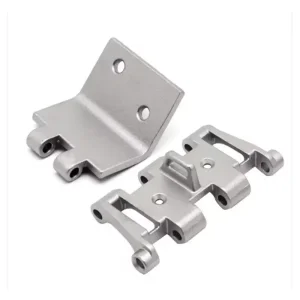
Custom Stainless Steel Investment Casting & Machined Parts for Seoul Industry
View Product Details →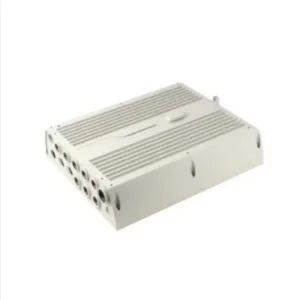
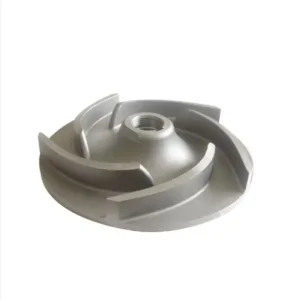
Centrifugal Slurry Pump Stainless Steel Open Impeller for Seoul Plant Engineering
View Product Details →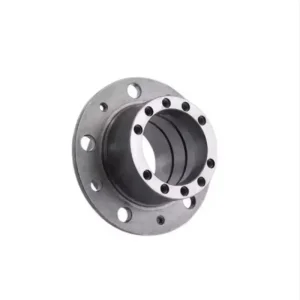
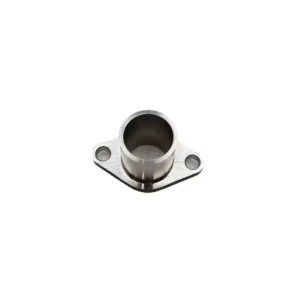
Stainless Steel Investment Cast Water Valves & Pipe Fittings for Seoul Infrastructure
View Product Details →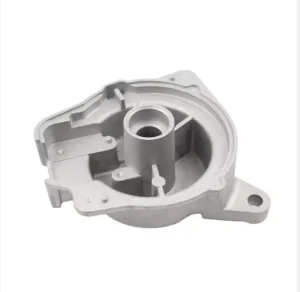
Cast Aluminum Alloy Pneumatic Actuator Covers & Brackets for Seoul Smart Factories
View Product Details →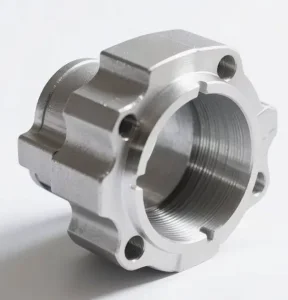
High-Performance Non-Ferrous Alloy Die-Cast Components for Seoul Fluid Systems
View Product Details →Ready to Optimize Your Casting Supply Chain in Seoul?
Upload your CAD files today for a confidential DFM manufacturability evaluation and detailed itemized quote within 24 hours.
Send Inquiry Now