
High-Demand Precision Turned Hardware for Nigeria
Engineered for high-stress operational environments across Lagos, Port Harcourt, Kano, and Abuja industrial hubs.
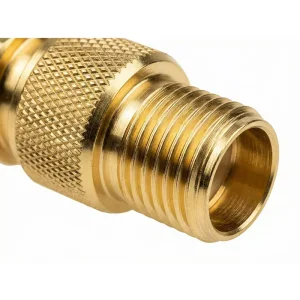
Custom Precision Knurled Brass Threaded Connector for Nigeria Electrical & Plumbing Systems
Request Component Quote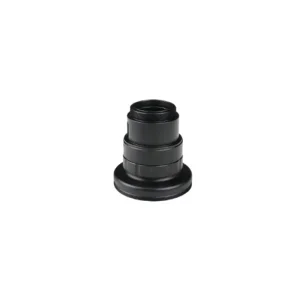
Precision CNC Turned Black Anodized Aluminum Lens Barrel & Optical Housing for Telecom & Security Devices
Request Component Quote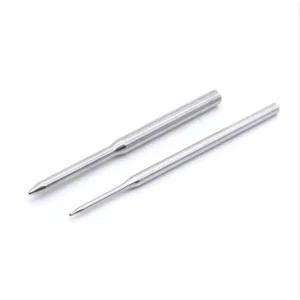
Stainless Steel Waterproof Sensor Probe Housing / Thermowell for Port Harcourt Offshore Processing
Request Component Quote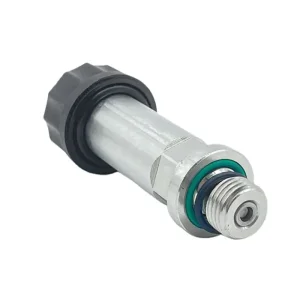
High-Performance Hydraulic Solenoid Valve Core – Turned Spare Parts for Construction & Mining Machinery
Request Component QuoteMacro-Industrial Demand for Precision Turned Parts in Nigeria
Strategic insights into West Africa’s largest economy, local manufacturing bottlenecks, and the China-Nigeria OEM hardware supply chain synergy.
As Nigeria undergoes an aggressive industrial transformation—accelerated by major macro-projects such as the Dangote Petrochemical Complex in Lekki, the expansion of off-grid solar mini-grids across rural states, and the modernization of agricultural food processing hubs in Kano and Ogun—the demand for ultra-reliable mechanical hardware has scaled exponentially. Precision turned parts serve as the quiet backbone for this economic expansion, providing critical mechanical interfaces, fluid sealing assemblies, electrical contacts, and structural fasteners.
Historically, Nigerian original equipment manufacturers (OEMs), maintenance engineers, and industrial procurement buyers faced a severe structural dilemma. On one hand, domestic machine shops often lack multi-axis CNC Swiss lathes, optical comparators, and automated heat-treatment infrastructure needed to deliver high-volume components with sub-hundredth millimeter tolerances. On the other hand, importing precision turned parts from Western Europe or North America incurs unsustainable capital expenditure, compounded by extended lead times and volatile foreign exchange spreads.
Information Gain: Why Guangdong Precision Turning Machinery Leads Global Exports
By shifting procurement to direct-factory Chinese manufacturers located in Shenzhen and Dongguan, Nigerian enterprise buyers unlock direct access to advanced 5-axis turning-milling centers, high-speed Swiss automatic lathes, and rigorous in-house quality assurance labs (equipped with Zeiss CMMs, Keyence optical gauges, and X-ray fluorescence alloy analyzers) at factory-direct pricing scales.
Key Drivers of Precision Turning Demand Across Nigerian States
Understanding local geographic and sector-specific requirements allows Chinese OEMs to customize alloy selections and post-machining surface treatments tailored specifically to environmental stressors in West Africa:
Port Harcourt & Rivers State: Oil & Gas Downstream
Requires high-nickel turned stainless steel (316L, Duplex 2205) and brass valve fittings designed to resist marine atmospheric pitting and high-pressure sour gas (H2S) corrosion across refineries and offshore platforms.
Lagos & Ogun State: Energy, Solar & Telecom
Demands millions of custom turned knurled brass electrical inserts, copper transformer studs, and anodized aluminum sensor housings for telecommunications towers, solar battery management systems (BMS), and power metering grid infrastructure.
Kano, Kaduna & Middle Belt: Agro-Industrial Machinery
Requires heavy-duty turned carbon steel shafts, hardened hydraulic valve cores, and excavator bushing sleeves capable of handling abrasive dust, agricultural harvesting loads, and intensive mechanical fatigue.
Abuja (FCT): Healthcare & Precision Devices
Scales the import of medical-grade titanium (Ti-6Al-4V ELI) turned micro-screws, surgical bushings, and laboratory diagnostic housings meeting ISO 13485 biocompatibility parameters.
Technical Capabilities & Material Selection Matrix
Comprehensive engineering specifications optimized for turned hardware longevity in tropicalized industrial environments.
Precision turning involves removing material from a rotating workpiece via non-rotational single-point cutting tools on high-speed lathes. In our Shenzhen production facility, we deploy state-of-the-art multi-axis CNC turning-milling composite machines, enabling complex features—such as cross-drilled radial holes, eccentric keyways, precision threading, and deep axial knurled grooves—to be executed in a single operational setup.
| Material Category | Specific Alloy Grades | Key Engineering Properties | Typical Nigerian Industry Applications |
|---|---|---|---|
| Brass Alloys | C36000 (Free-Cutting Brass), HPb59-1, C37700 | Exceptional machinability, excellent thermal/electrical conductivity, low friction coefficient. | Smart electricity meter terminals, plumbing inserts, solenoid valve bodies, cable glands. |
| Stainless Steel | AISI 304, 316L, 17-4PH, 420 Martensitic | Superior pitting resistance in saline environments, high tensile strength, extreme pressure rating. | Port Harcourt oilfield thermowells, chemical pump shafts, fuel injectors, food processing valves. |
| Aluminum Alloys | Al6061-T6, Al7075-T6, Al2024 | High strength-to-weight ratio, excellent anodizing capability, rapid thermal dissipation. | Telecom optical housings, drone components, automotive sensor brackets, LED heat-sink sleeves. |
| Titanium Alloys | Grade 2 (Commercially Pure), Grade 5 (Ti-6Al-4V) | Ultra-lightweight, extreme temperature resistance, 100% medical biocompatibility. | Orthopedic micro-screws, dental abutments, specialized downhole oil & gas telemetry probes. |
| Engineering Plastics | PEEK, POM (Delrin), PTFE (Teflon), Nylon 66 | Self-lubricating, chemical inertness, high dielectric strength, vibration damping. | Insulating bushings for power distribution boxes, chemical fluid rings, food conveyor rollers. |
Advanced Surface Finishing for Nigerian Climate Protection
Nigeria’s coastal industrial regions (such as Lekki, Apapa, and Port Harcourt) feature high relative humidity combined with airborne salt spray, which can rapidly oxidize unprotected metal components. To ensure long-term service life, our factory integrates automated post-machining surface treatment lines:
- Hard Anodizing (Type III): Creates a thick, micro-hard aluminum oxide layer (up to 50 microns) on aluminum turned parts, providing dielectric isolation and scratch resistance for optical housing barrels.
- Electroless Nickel Plating (ENP): Deposits a uniform nickel-phosphorus alloy over complex turned internal threads and bores, providing extreme wear resistance for hydraulic valve cores.
- Passivation (ASTM A967): Removes free iron particles from turned stainless steel thermowells, maximizing the passive chromium oxide film to prevent pitting in oilfield fluid streams.
- Precision Electropolishing: Yields a mirror-smooth surface finish (Ra < 0.1 µm) on turned stainless capillary tubes, preventing bacterial accumulation in medical and beverage processing equipment.
Seamless Sourcing: From Shenzhen Shop Floor to Nigerian Ports
Eliminating foreign exchange risk, navigating SONCAP compliance, and establishing transparent manufacturing timelines.
Transparent Cost Quotations & FX Optimization
We provide itemized, engineering-backed quotation breakdowns (covering material raw index, machine hourly rate, tooling amortization, and surface treatment costs). We support flexible settlement pathways (USD, EUR, RMB) tailored for Nigerian companies managing Central Bank of Nigeria (CBN) Form M allocations or local domiciliary accounts.
Full SONCAP & Form M Regulatory Assistance
Navigating the Standards Organisation of Nigeria Conformity Assessment Program (SONCAP) is essential to avoid port clearance delays at Apapa, Tincan Island, or Onne. We furnish fully certified Product Certificates (PC) and SONCAP Certificates (SC), accompanied by ISO 9001 quality audit documentation and mill test reports.
Strict IP Protection & Direct DFM Analysis
Before receiving any 2D engineering drawings or 3D STEP/IGES files, we execute a legally binding Non-Disclosure Agreement (NDA). Every submitted design undergoes immediate Design for Manufacturability (DFM) review by our senior turned-parts engineers to eliminate cost drivers prior to spindle start.
Multimodal Air & Sea Freight Networks
Whether you require express sample delivery via DHL/FedEx to Murtala Muhammed International Airport (LOS) in 4–6 business days, or cost-effective full container load (FCL/LCL) sea freight to Lagos or Port Harcourt within 28–35 days, our export logistics team manages the entire process end-to-end.
Frequently Asked Questions: Sourcing Turned Parts from China to Nigeria
Addressing engineering tolerances, quoting turnaround, SONCAP verification, and batch quantity options.
How fast can I get a precision turned parts quotation for my Nigerian company?
Our engineering team typically delivers a complete, itemized DFM feedback report and commercial quotation within 24 hours of receiving your 3D CAD files (STEP, IGES, STL) or 2D dimensioned drawings (PDF, DWG). For urgent project tenders in Nigeria, expedited 6-hour quotation windows are available upon request.
What dimensional tolerances can your CNC turning centers achieve for custom parts?
Our standard CNC turning tolerance is ±0.01 mm (0.0004 in). For high-precision applications—such as hydraulic valve spools, medical bushings, or optical lens housings—we hold tight tolerances down to ±0.005 mm (0.0002 in) using multi-axis Swiss automatic lathes and Zeiss Coordinate Measuring Machines (CMM).
How do you ensure turned parts comply with Nigerian SONCAP regulations?
We work closely with accredited international inspection agencies (such as SGS, Intertek, and Cotecna) to provide Product Certificates (PC) and SONCAP Certificates (SC). Every shipment is accompanied by chemical raw material mill certificates (EN 10204 3.1), CMM dimensional reports, and First Article Inspection (FAI) documentation necessary for smooth Nigerian Customs clearance.
What is the Minimum Order Quantity (MOQ) for custom precision turned hardware?
We support the entire product development cycle: from single-piece engineering prototypes for R&D testing in Lagos, to low-volume initial batch runs (50–500 units), up to mass production orders exceeding 100,000+ turned components per month. Our multi-spindle automatic lathes make high-volume production extremely cost-effective.
Can you manufacture turned components matching physical samples without CAD drawings?
Yes. If your original equipment drawing is unavailable or outdated, you can ship a physical sample to our Shenzhen factory. Our reverse-engineering laboratory will scan the part using high-accuracy 3D laser scanners and optical comparators, generate fully dimensioned 3D CAD models, and present DFM recommendations before starting production.
How are turned parts protected against damage and moisture during sea freight to West Africa?
All turned parts undergo automatic ultrasonic cleaning and drying before packaging. Precision threaded zones and critical seal surfaces are protected with custom plastic caps or mesh sleeves. Parts are then vacuum-sealed with desiccant sachets in anti-corrosion VCI bags and packed into heavy-duty export plywood cases designed to withstand humid tropical sea transport to Apapa or Port Harcourt.
Additional Precision Turned Parts Solutions for Nigeria
Explore our extended series of turned components spanning semiconductor, medical, fluid control, and micro-fastener categories.
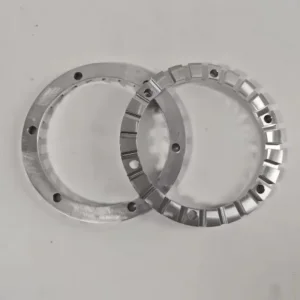
Custom CNC Machined Anodized Sealing Rings for Energy & Optical Instruments in Nigeria
Request Component Quote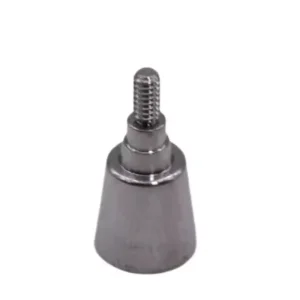
Custom CNC Turned Titanium Abutment Implant Driver & Prosthetic Connector for Medical Importers
Request Component Quote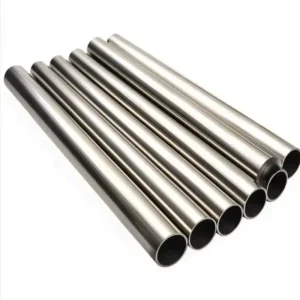
Precision Turned Capillary Stainless Steel Pipe / Tube (OD 1mm - 8mm) for Micro Sensors
Request Component Quote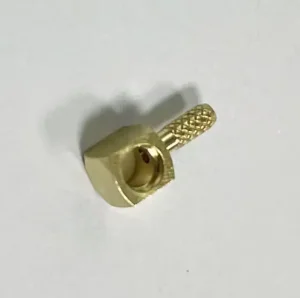
Custom CNC Machining Brass Insert Connector with Knurled Pin for Electronics Industry
Request Component Quote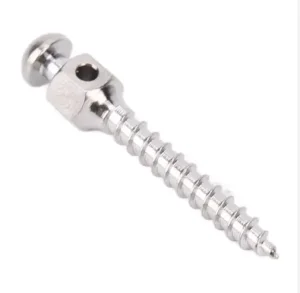
Custom Precision Titanium Orthodontic Micro Implant Screws for Nigerian Healthcare Supply
Request Component Quote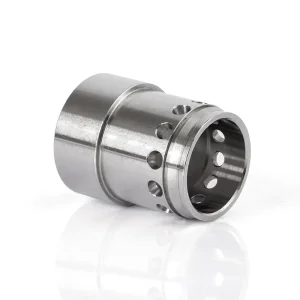
CNC Precision Turned Stainless Steel Filter Sleeve (OEM Industrial Grade) for Petrochemical Plants
Request Component Quote
Stainless Steel Drilled Filter Sleeve & Flow Control Valve Component for Nigeria Pipelines
Request Component Quote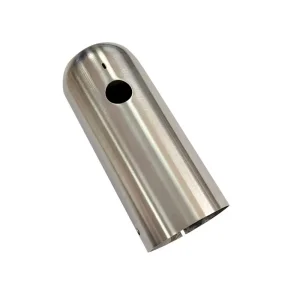
China Custom Precision CNC Turned Medical Sleeve Bushing Service for Hospital Equipment OEMs
Request Component QuoteReady to Accelerate Your Turned Parts Procurement in Nigeria?
Partner directly with China's leading CNC turning hardware facility. Receive a non-disclosure agreement (NDA), rigorous DFM analysis, and an itemized competitive quote within 24 hours.