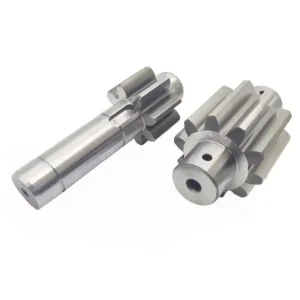
Precision Engineered Stainless Steel & Alloy Products
High-precision turned, cast, and machined parts validated by in-house CMM and FAI protocols.
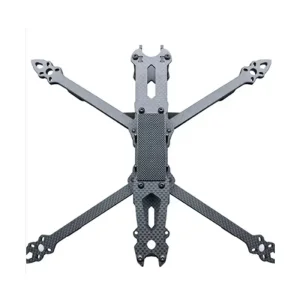
Custom High-Performance Custom CNC Machined Carbon Fiber Drone Frames for Agriculture & FPV
View Product Details
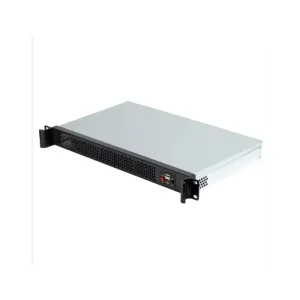
OEM China OEM ODM 1U Rackmount Server Chassis Suppliers – Custom Sheet Metal & Stamping Enclosure
View Product Details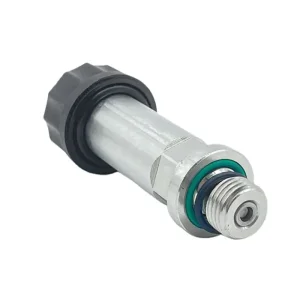
China High-Performance Hydraulic Solenoid Valve Core - Precision CNC Turned Excavator Parts
View Product Details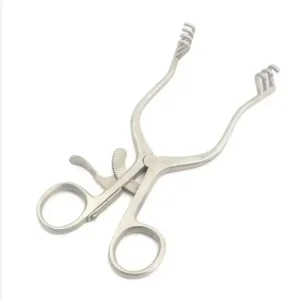
High-Quality Custom Surgical Retractor from China Suppliers - Professional Stainless Steel Instruments
View Product Details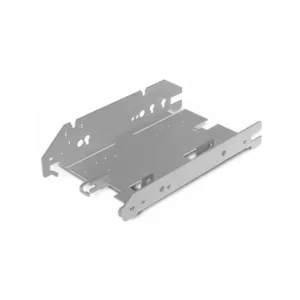
ODM Custom Precision Sheet Metal Brackets & Stamping Parts for Electronic Devices
View Product Details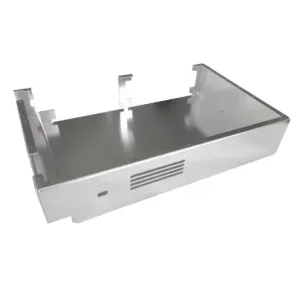
OEM Custom Precision Sheet Metal Fabrication - Stainless Steel & Aluminum Cabinet Enclosures
View Product Details
China High-Performance Hydraulic Solenoid Valve Core - Precision CNC Parts for Excavators
View Product DetailsThe State of ODM Stainless Steel Casting: Technical Rigor & Metrological Excellence
In modern mechanical engineering and industrial design, ODM Stainless Steel Casting represents the gold standard for creating near-net-shape metal components requiring extreme corrosion resistance, dimensional integrity, and high mechanical performance. As global supply chains migrate toward value-driven original design manufacturing (ODM), casting foundries must transcend basic casting techniques. They must embrace integrated Design for Manufacturability (DFM), computational fluid dynamics (CFD) mold flow analysis, and advanced metallurgical engineering.
The silica sol investment casting process (lost-wax process) enables the production of intricate geometries with internal passages, thin wall sections down to 1.5mm, and surface roughness ratings achievable at Ra 3.2 µm to Ra 1.6 µm right out of the mold. For procurement executives and principal design engineers, selecting an ODM manufacturing partner in China is no longer merely a low-cost transaction; it is a strategic engineering alliance aimed at eliminating porosity, mitigating intergranular corrosion, and achieving tight dimensional tolerances of ISO 8062 CT4 to CT6.
China Foundry Cluster Synergy: Engineering Agility & Cost Control
How China's integrated manufacturing ecosystems eliminate bottleneck delays, optimize tooling cycles, and lower Total Cost of Ownership (TCO).
Complete Supply Chain Integration
From raw ingot refining to pattern making, wax injection, ceramic shell construction, vacuum induction melting, and precision 5-axis post-machining, China's industrial hubs in Guangdong and Zhejiang consolidate every step within a 50-kilometer radius.
Advanced Metallurgical Science
Chinese foundries leverage optical emission spectrometers (OES) to inspect heat chemical compositions in real-time, enforcing strict chemical boundaries for 304, 316L, 17-4PH, 2205 Duplex, and Hastelloy before pouring to eliminate batch-to-batch variation.
Rapid Tooling & Rapid Wax Printing
By coupling 3D SLA wax printing with rapid aluminum tooling, Chinese ODM manufacturers can deliver functional stainless steel investment casting prototypes in as few as 7 to 10 working days, shaving months off global launch timelines.
Selecting the Right Stainless Steel Alloy for Investment Casting
Proper alloy selection dictates corrosion behavior, yield strength, machinability, and thermal conductivity. Below is an engineering comparison matrix for ODM casting applications:
| Alloy Grade | UNS / EN Standard | Tensile Strength (MPa) | Yield Strength (MPa) | Corrosion Resistance | Primary Industrial Applications |
|---|---|---|---|---|---|
| AISI 304 / 304L | S30400 / 1.4301 | ≥ 515 | ≥ 205 | Standard Outdoor / Food Grade | Food processing machinery, architectural brackets, general hardware. |
| AISI 316 / 316L | S31600 / 1.4404 | ≥ 485 | ≥ 170 | High (Marine / Acidic) | Subsea valves, chemical pump housings, medical surgical tools. |
| 17-4 PH (AISI 630) | S17400 / 1.4542 | ≥ 930 (H900 condition) | ≥ 790 | Moderate to High | Aerospace structural links, high-load gears, hydraulic actuators. |
| Duplex 2205 | S31803 / 1.4462 | ≥ 655 | ≥ 450 | Extreme (Pitting & SCC) | Offshore oil rigs, desalination impellers, paper pulp digestors. |
| AISI 420 | S42000 / 1.4021 | ≥ 650 | ≥ 440 | Moderate (Martensitic) | Cutlery, wear-resistant nozzle tips, turbine blades, surgical cutters. |
The Evolution of Smart Foundry & Decarbonized Casting Solutions
How modern foundries adapt to global decarbonization, automated quality inspection, and digital twin simulation.
1. AI-Driven AnyCasting Simulation
Before pouring liquid metal, foundries utilize AI casting software to simulate fluid velocity, thermal solidification, shrink pocket formation, and turbulence. This virtual prototyping cuts trial-and-error scrap rates to zero.
2. Green Foundry & Carbon Offsetting
Leading Chinese manufacturers are replacing traditional coal-fired furnaces with clean energy electric induction systems, closed-loop water cooling, and silica sol reclamation systems to help global buyers meet strict Scope 3 ESG targets.
3. Automated Metrology & 3D CT Scanning
Quality control has evolved beyond hand calipers. Modern foundries embed blue-light 3D scanning, Coordinate Measuring Machines (CMM), and Industrial X-ray Computed Tomography to inspect internal cavities without destructive testing.
Where Precision ODM Castings Drive Performance
Sunmy Hardware designs and manufactures custom stainless steel cast products across critical global engineering sectors:
Aerospace & Defense Drones
Lightweight 17-4PH brackets, hinge mounts, motor support bases, and agricultural drone frames engineered for maximum strength-to-weight ratios and high vibration fatigue thresholds.
Medical & Surgical Instruments
Passivated 316L surgical retractors, bone implant drill guides, and endoscopic handle grips featuring ergonomic geometries, biocompatibility, and resistance to repeated autoclave sterilization cycles.
Fluid Control & Hydraulics
Hydraulic solenoid valve cores, high-pressure excavator manifolds, hose barb adapters, and subsea pump housings tested to withstand hydrostatic pressures up to 400 Bar without leakage.
Electronics & Server Infrastructure
1U/2U server chassis brackets, optical lens barrels, heat sink skived fins, and EMI shielding housings requiring tight dimensional flatness and high thermal conductivity.
Automotive Powertrain & Robotics
Precision-machined spur gears, gear shafts, universal joint bases, and finger joint links for autonomous mobile robots (AMRs) demanding wear resistance and low backlash motion.
Industrial Architectural Hardware
Cast 316 stainless steel bridge handles, heavy-duty door hinges, split-type panel bushings, and glass spider clamps finished with mirror polish or electro-polishing treatments.
Rigorous Quality Control Workflow for ODM Sourcing
To guarantee zero defect shipments to customers across North America, Europe, and Asia-Pacific, every ODM production batch moves through a six-stage quality gate:
STEP 01
DFM & Drawing Optimization
Engineering review of STEP/IGES files. Evaluation of draft angles (minimum 0.5° to 1°), shrinkage factors, wall thickness uniformity, and machining allowances.
STEP 02
Raw Material Spectrometry
Incoming ingot verification via German Spectro optical emission analysis. Mill Test Certificates (MTC) to EN 10204 3.1 supplied with every heat number.
STEP 03
In-Process Pouring Inspection
Real-time control of molten metal degassing, liquid temperature (1550°C–1600°C), ceramic shell preheating, and pour speed to prevent cold shuts.
STEP 04
Precision CNC Machining
Post-casting CNC milling, turning, tapping, and Swiss turning on critical sealing surfaces, thread bosses, and bearing seats requiring tolerances down to ±0.005mm.
STEP 05
Full Metrology & CMM Verification
Dimensions, concentricity, runout, and flatness checked on Zeiss CMMs. First Article Inspection (FAI) reports and PPAP Level 3 documentation available upon request.
STEP 06
NDT & Surface Finishing
Dye penetrant inspection (PT), X-ray radiographical porosity checks, passivating, bead blasting, anodizing, or electro-polishing prior to export packaging.
Frequently Asked Questions (FAQ) on ODM Stainless Steel Casting
Addressing technical queries from procurement teams and mechanical design engineers.
What is the difference between Silica Sol Investment Casting and Water Glass Casting?
How does Sunmy Hardware ensure intellectual property (IP) protection for custom drawings?
What are the standard lead times for ODM casting tooling and production samples?
Which non-destructive testing (NDT) reports can be provided with shipments?
- Chemical Composition Analysis (OES): Verifying elemental percentages against ASTM/EN specifications.
- Liquid Penetrant Testing (PT): Checking for surface cracks or micro-voids.
- Radiographic Testing (X-Ray): Inspecting internal soundness for pressure-containing valves.
- CMM Inspection Reports: Documenting critical spatial geometries, hole locations, and geometric tolerances.
- Salt Spray Testing (ASTM B117): Validating corrosion performance post-passivation.
Can cast stainless steel parts be welded or heat-treated?
High-Precision Turned, Molded & Machined Solutions
Explore our full line of custom OEM/ODM components manufactured in Shenzhen, China.
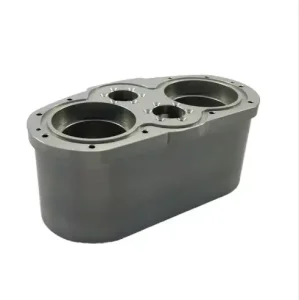
China Factory Custom 5-Axis CNC Machined Steel & Aluminum Universal Joint Base and Gearbox Shell for Robotics
View Product Details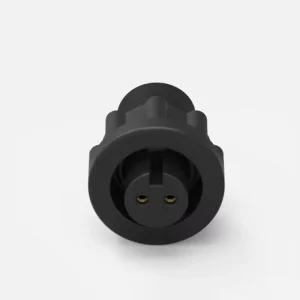
Custom China IP67 2-Pin Waterproof Circular Connector - Durable Nylon Series from Reliable Suppliers
View Product Details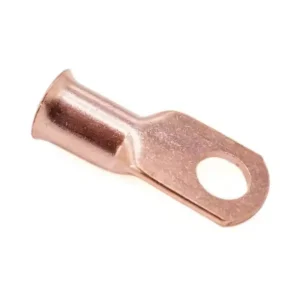
OEM Custom Tinned Copper Lug Ring Crimp Terminal Battery Wire Connector & Metal Stamping Brass Plug
View Product Details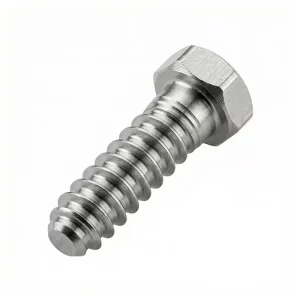
China Bone Screw Suppliers - Premium Titanium Medical Implants from Trusted Factory Exporters
View Product Details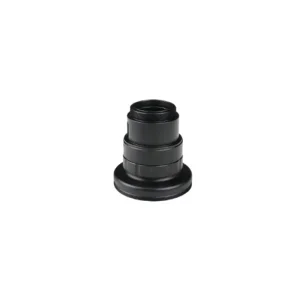
ODM Custom Precision CNC Turned Black Anodized Aluminum Lens Barrel & Optical Housing Components
View Product Details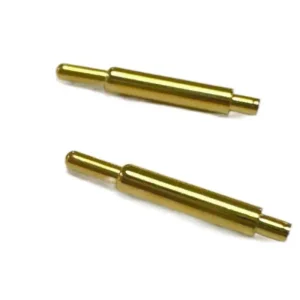
China Custom Gold-Plated Brass Pogo Pins - High Precision Connectors for PCBs Manufacturer
View Product Details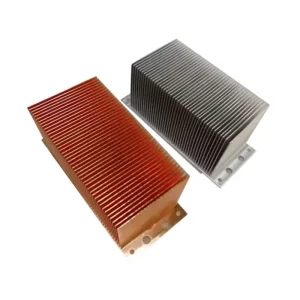
OEM Custom High-Performance Square Aluminum & Copper Skived Fin Heat Sink for LED & Industrial Electronics
View Product Details