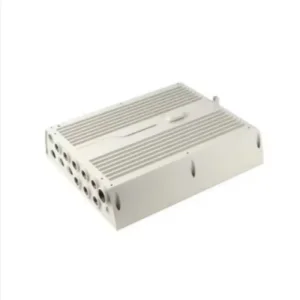
Production Portfolio
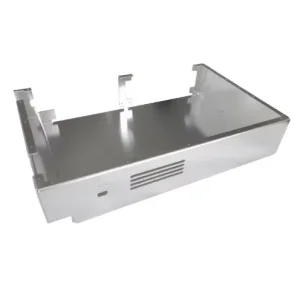
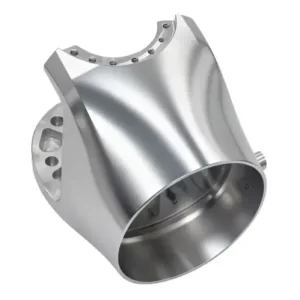
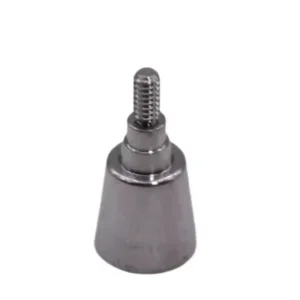
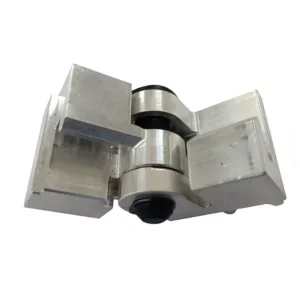
Featured Industrial Components & Cast Enclosures
Engineered hardware delivered to ISO 9001 and IATF 16949 production baselines across Europe, North America, and high-spec industrial regions.
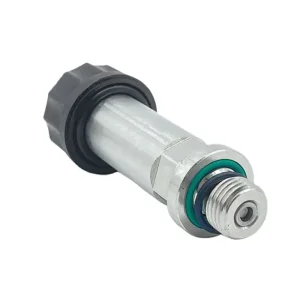
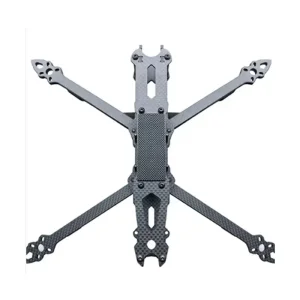
Industry Analysis
Global Landscape: Gravity Die Casting in Modern Advanced Engineering
Transitioning from labor-heavy foundational metallurgy to high-precision permanent mold casting (GDC) for structural soundness, hermetic seals, and mission-critical applications.
Commercial Dynamics & Global Demand
The global permanent mold gravity casting market has shifted drastically toward higher strength-to-weight structural aluminum and copper alloys. Driven by automotive electrification (EV battery trays, motor end-plates), renewable energy fluid conduits, and high-voltage electrical hardware, tier-1 procurement managers are prioritizing gravity casting over high-pressure die casting (HPDC) whenever heat treatability (T5/T6 tempering) and gas-free microstructures are mandatory.
Metallurgical Integrity & Zero Porosity
Unlike conventional high-pressure systems that inject molten alloy at extreme turbulent velocities—frequently trapping air and oxides—gravity die casting relies on continuous gravitational flow, sand core inserts, and tilt-pour automation. The laminar filling dynamic virtually eliminates turbulent air entrainment, facilitating post-cast heat treatments and leak-proof pneumatic or hydraulic manifold housings.
Supply Chain De-risking & Full Traceability
In accordance with global quality guidelines, international OEMs require robust traceability from raw ingot melt chemistry through coordinate measurement machine (CMM) inspection. Sunmy Hardware operates an integrated supply network: verified chemical batch spectroscopy, First Article Inspection (FAI), and precision 3/4/5-axis secondary CNC finishing under one auditable management workflow.
Engineering Evaluation
Comparative Process Architecture: Selecting the Optimum Casting Route
A technical assessment for design engineers and supply chain strategists evaluating mechanical requirements, wall thicknesses, and production economics.
| Evaluation Parameter | Gravity Permanent Mold (GDC) | High Pressure Die Casting (HPDC) | Sand Casting |
|---|---|---|---|
| Internal Microstructure | Dense, Fine-Grained, Dendrite Control | Rapid chill zone, porous core risk | Coarse grain structure, variable cooling |
| Heat Treatment (T5 / T6) | Fully Compatible (No Blistering) | Extremely difficult without vacuum valves | Compatible, requires extensive fettling |
| Pore Freedom & Hermeticity | High pressure tightness; gas pore free | Risk of internal air entrapment | Risk of sand inclusion & shrinkage micro-voids |
| Tooling Investment & Lead Time | Moderate mold cost; reusable steel/iron dies | High tooling capital; hardened H13 tooling | Low pattern tooling cost; single-use sand |
| Target Annual Volumes | 500 to 50,000 units (Highly Flexible) | >20,000 units (Mass Scale) | 1 to 2,000 units (Low Volume / Heavy) |
Advanced Manufacturing Tech
Engineering Roadmap: Tilt-Pour Automation & AI Metrology
Pioneering high-repeatability casting cells through algorithmic thermal modeling, vacuum tilt-pour robotics, and multi-axis in-situ inspection.
10+
Years Global Exporting
±0.005
CNC Tolerance on Critical Features (mm)
5,000t
Annual Metal Production Output
24h
Rapid DFM Engineering Feedback
Thermodynamic Moldflow Simulation
Before steel tooling cut operations, our foundry engineers deploy finite volume casting simulation. By modeling transient mold filling, temperature degradation, and solid-fraction solidification rates, gating systems are mathematically balanced to prevent hot tears, cold shuts, and localized sink cavities.
Programmable Tilt-Pour Robotic Cells
Manual ladling causes velocity spikes. Our facilities utilize robotic tilt-pour mechanisms where the entire die assembly rotates smoothly during liquid introduction. Metal head pressure remains steady, oxidation dross formation is cut by up to 92%, and structural grain alignment remains uniform across every batch.
In-Line Optical & CMM Coordinate Verification
Post-cast cooling, de-gating, and shot blasting transition into high-precision CNC machining fixtures. Critical bearing bores, seal grooves, and locating pins are inspected via automated Renishaw touch-probe CMM systems, certifying dimensional conformance to drawing specifications before export packaging.
Application Ecosystems
Localized Application Scenarios: Where Gravity Casting Outperforms
Cross-industry deployments requiring high mechanical ductility, pressure retention, and structural load capability.
Automotive & Commercial EV
Suspension knuckles, e-motor water jackets, and transmission brackets engineered for fatigue endurance and thermal dispersion under dynamic roadway stress.
High-Voltage Electrical Switchgear
SF6-free gas-insulated switchgear covers, conductive aluminum alloy busway elbows, and high-voltage transmission terminals requiring zero internal porosity.
Hydraulic & Fluid Control
High-pressure fluid distribution blocks, manifold blocks, and pump housings that hold pressure up to 350 bar without weeping or micro-leakage through casting walls.
Robotics & Physical AI Hardware
Joint housings and articulated robot structural arms requiring maximum stiffness-to-weight ratios, fine post-machined bearing pockets, and uniform vibration dampening.
Auditable Standards
Six-Tier Quality Control Workflow for Overseas Procurement
Eliminating supply risk through transparent chemical, dimensional, and metallurgical certification on every delivery.
1. DFM Review & Mold Design
Drawing validation, mold parting layout, draft angle optimization, and chill block placement analysis prior to cutting P20/H13 tooling blocks.
2. Ingot Inbound Spectroscopy
Optical Emission Spectrometry (OES) testing for every master melt batch (A356, AlSi7Mg, ADC12, brass) validating chemical composition.
3. Ultrasonic & X-Ray NDT
Subsurface volumetric non-destructive testing checking for inclusions, internal shrink porosity, or micro-cracks along structural webs.
4. Precision CNC Secondary Machining
In-house 3-, 4-, and 5-axis milling centers turn as-cast blanks into finished components with positional tolerances held to ±0.005 mm.
5. CMM Dimensional Verification
Complete coordinate measurement reports, GD&T validation, and First Article Inspection (FAI) packages delivered prior to bulk release.
6. Clean Cleanroom Packing & Export
Anti-oxidation VCI vapor packaging, customized foam compartmentalization, and sea/air export logistics with complete customs clearance compliance.
Frequently Asked Questions
Procurement & Technical Queries Addressed
Critical engineering considerations regarding tooling longevity, alloys, lead times, and global shipping.
Why choose ODM Gravity Casting instead of High Pressure Die Casting (HPDC)?
Gravity die casting is chosen when components must endure high mechanical loads, require T5 or T6 solution heat treatments, or need pressure-tight fluid containment. HPDC often introduces turbulent gas porosity, making high-temperature heat treating problematic due to blister formation. GDC yields a dense, uniform metallurgical cross-section with lower tooling setup costs, making it ideal for medium-to-large structural components and medium batch sizes.
What raw alloy specifications can be processed in your gravity casting foundry?
We regularly pour premium aluminum casting alloys including A356, AlSi7Mg0.3, A380, AC4C, and 6061-equivalent permanent mold chemistries. Furthermore, we handle selected bronze, copper-base, and zinc alloy permanent mold castings. Inbound alloy shipments are cross-checked via in-house spectrometer testing, and batch material certificates accompany each delivery.
What are typical permanent mold tooling lifespans and lead times?
Permanent cast iron and tool-steel dies (such as H13 or premium Meehanite grades) typically yield 60,000 to 120,000 shots depending on thermal cycling and maintenance protocols. Prototype tooling and initial T0/T1 sample lead times average between 25 and 35 calendar days, including full 3D CAD modeling, DFM confirmation, mold machining, initial sampling, and CMM dimension reporting.
How does Sunmy Hardware safeguard buyer intellectual property (IP)?
All engagements begin with an enforceable Non-Disclosure Agreement (NDA) before client CAD models, 2D prints, or mechanical specifications are reviewed. By dealing directly with our engineering and manufacturing management team, you eliminate the risks associated with third-party brokers distributing drawings across disparate supply tiers.
Can gravity cast parts be post-machined to tight tolerances in-house?
Yes. As-cast components typically achieve dimensional tolerances within ±0.2 mm to ±0.4 mm. Sunmy Hardware operates an integrated CNC machine shop featuring high-speed 3-, 4-, and 5-axis vertical machining centers. Post-machining operations reliably achieve critical feature tolerances down to ±0.005 mm for bearing locations, thread threads, dowel holes, and sealing lands.
What surface treatments are available for export-grade cast components?
We provide a complete spectrum of post-cast surface finishes: shot blasting, bead blasting, chemical conversion coatings (Chromate/SurTec), hard-anodizing, architectural powder coating, electro-polishing, and e-coating. Finished coatings undergo salt-spray chamber testing (ranging from 240 up to 1,000 hours per ASTM B117) to ensure durable resistance in harsh industrial environments.
Manufacturing Output
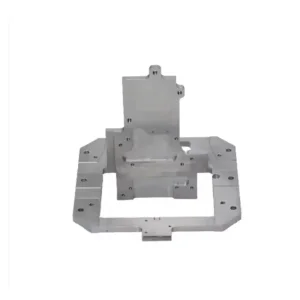
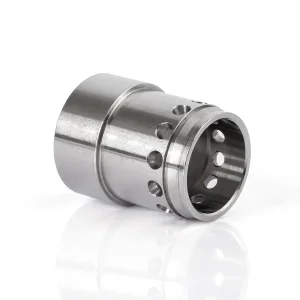
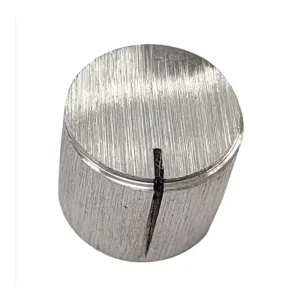
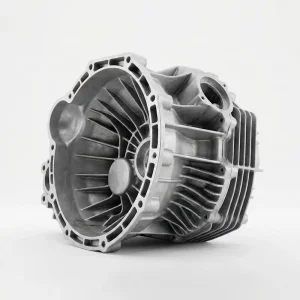
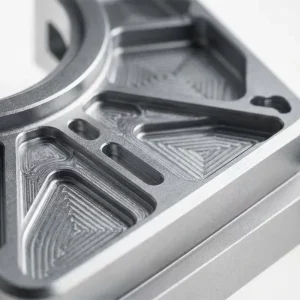
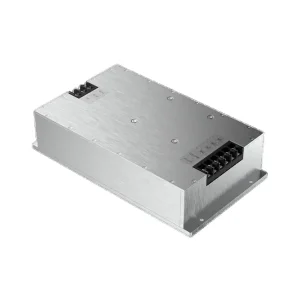
Precision Mechanical Assemblies & Castings
Explore our extended portfolio covering structural framing, industrial electronics enclosures, and hydraulic components manufactured for OEM buyers globally.

Direct Factory Engagement
Launch Your ODM Gravity Casting RFQ Today
Submit your 2D/3D CAD models (STEP, IGES, DXF, DWG) for a comprehensive engineering review, complete with gating analysis, DFM recommendations, and volume-tiered cost structures within 24 hours.