
Precision ODM Hardware & Machined Components
Direct OEM/ODM manufacturing capability featuring customized bead blasting, anodizing, and multi-axis CNC machining.
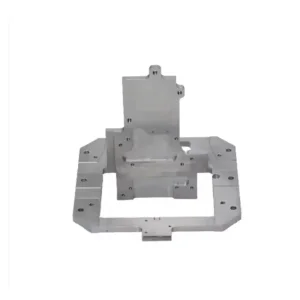
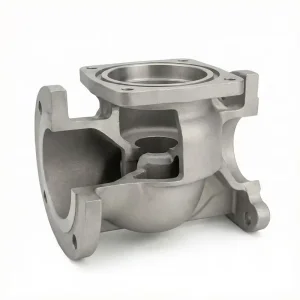
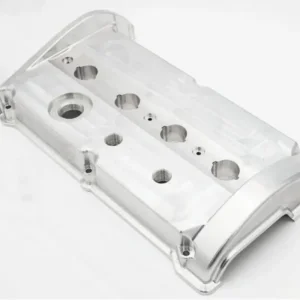
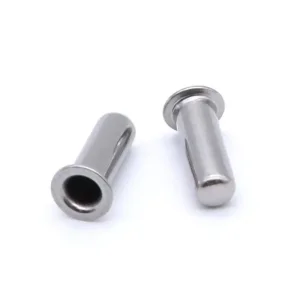
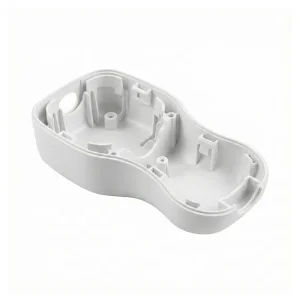
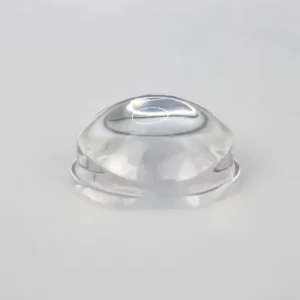
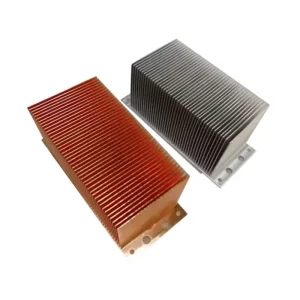
The Physics & Metallurgy of Precision Bead Blasting in Modern ODM Manufacturing
An authoritative breakdown of mechanical impact surface modification, micro-peening compressive stress, and optical light-scattering thermodynamics.
In modern high-precision OEM and ODM manufacturing, surface finish is no longer merely a cosmetic final step—it is a critical functional parameter that determines mechanical fatigue limit, thermal emissivity, anti-galling performance, and optical non-reflectivity. Bead blasting, specifically using high-purity spherical glass beads or engineered ceramic media, stands as the premier non-directional mechanical finishing technique for CNC machined aluminum, stainless steel, titanium, and copper components.
“Information Gain Insight: Unlike angular sandblasting or grit media which cut and slice metal surfaces, spherical glass bead blasting operates via micro-scale plastic deformation. It cold-works the surface micro-structure, imparting compressive residual stress while establishing a uniform matte or satin topography without altering critical dimensional tolerances down to ±0.005 mm.”
Micro-Kinetic Impact Mechanics: Spherical vs. Angular Abrasives
When pressurized air propels media against a metal substrate, the physical shape of the media dictates the surface topography. Angular media (such as aluminum oxide or garnet) acts like millions of microscopic cutting tools, digging micro-grooves and leaving sharp peaks and valleys. Conversely, spherical glass beads strike the surface with uniform hydrostatic pressure, creating tiny semi-spherical dimples (indentations). This process produces two profound engineering advantages:
- Micro-Peening Effect: The localized plastic deformation induces a micro-compressive stress layer on the outer 5 to 15 microns of the part. This residual compressive stress directly counteracts operational tensile stresses, suppressing fatigue micro-crack initiation in high-stress components such as aerospace brackets and automotive valve covers.
- Homogeneous Light Scattering: The randomized dimple pattern eliminates directionality (machining cutter marks, tool paths, and micro-burrs). Incident light is scattered isotropically, resulting in the premium matte or satin finish demanded by optical enclosures, high-end consumer electronics, and medical device housings.
Global Trends: From Manual Blasting to Robotic Automated Finishing
How digital process automation, closed-loop media recycling, and inline acoustic monitoring are redefining ODM surface quality.
Robotic Multi-Axis Automation
6-axis articulated robot arms precisely maintain nozzle standoff distance (100–150 mm), angle of attack (45°–90°), and linear velocity, eliminating human fatigue variance across mass production runs.
Closed-Loop Media Cyclones
Automated cyclone separators continuously extract fractured beads and dust particles, maintaining media size consistency (#80 to #240 mesh) and preventing surface contamination or uneven pitting.
Post-Machining Surface Synergy
Integrating bead blasting immediately after 5-axis CNC milling prepares the substrate for chemical anodizing (Class II Type II/III), doubling corrosion resistance and anodize dye absorption uniformity.
China Industry 4.0: Supply Chain Resilience & Cost-Efficiency Advantages
Global original equipment manufacturers (OEMs) and brand owners face continuous pressures regarding lead times, unit costs, and strict compliance tolerances. Shenzhen Sunmy Hardware leverages the complete industrial infrastructure of the Greater Bay Area—integrating high-speed raw material sourcing, automated tooling, specialized surface post-treatment, and international logistics within a 50-kilometer radius.
Vertical Integration Under One RFQ
From die casting or CNC billet milling to precision glass bead blasting, chemical passivation, laser engraving, and cleanroom packaging—everything is controlled under a single Quality Management System (QMS). Procurement teams eliminate multi-vendor friction, handoff risks, and split shipping costs.
Strict Intellectual Property Protection
Every step of the quotation and engineering workflow is backed by enforceable non-disclosure agreements (NDAs). 3D CAD step files are processed internally using secure, segmented CAD/CAM servers, preventing data leakage to third-party brokers.
Abrasive Media Parameters & Roughness (Ra) Output Matrix
Quantitative reference table for procurement buyers and product designers specifying bead blasting quotes.
| Media Material | Mesh Size / Grit | Air Pressure (PSI) | Target Roughness (Ra) | Primary Substrate Compatibility | Engineering Application Note |
|---|---|---|---|---|---|
| Glass Beads (Fine) | #170 - #325 (45-90 µm) | 35 - 50 PSI | 0.8 – 1.6 µm (32-63 µin) | AL 6061-T6, AL 7075, Stainless 316L | Satin cosmetic finish; ideal for optical lens barrels & consumer electronics. |
| Glass Beads (Coarse) | #60 - #100 (150-250 µm) | 50 - 70 PSI | 1.6 – 3.2 µm (63-125 µin) | Aluminum Die Castings, Structural SS | Pre-coating keying surface; removes light tool marks and heat treating scale. |
| Ceramic Beads (Zirconia) | B60 - B120 (125-250 µm) | 60 - 85 PSI | 1.2 – 2.5 µm (47-100 µin) | Titanium Grade 5, Inconel, Hardened Alloys | Zero metallic contamination; high-durability media for aerospace & implantable medical housings. |
| Aluminum Oxide (Grit) | #80 - #120 (106-180 µm) | 40 - 65 PSI | 3.2 – 6.3 µm (125-250 µin) | Carbon Steel, Machined Tooling | Deep etch matte finish; creates heavy mechanical interlock for powder coating & rubber bonding. |
| Stainless Steel Shot | S70 - S110 (180-280 µm) | 70 - 90 PSI | 2.0 – 4.5 µm (80-175 µin) | Stainless Steel Castings & Valve Bodies | Micro-peening work-hardening; cleans scale while dramatically boosting corrosion resistance. |
Industry-Specific Application Scenarios & Engineering DFM
How specialized ODM bead blasting delivers functional value across critical global sector applications.
Aerospace & Defense Structural Components
High-precision wire EDM and milled 7075-T6 aluminum brackets require glass bead blasting to eliminate sharp internal notch radius micro-stress raisers, increasing operational structural fatigue life under dynamic vibration loading.
Medical Device & Healthcare Housings
Enclosures for surgical electronics and diagnostic monitors are bead blasted using non-contaminating zirconia ceramic media, establishing a non-glare, easily sanitized surface that complies with strict medical ISO 13485 hygiene protocols.
Optoelectronic & Lens Barrel Assembly
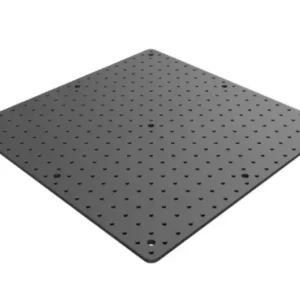
Internal camera housing components and optical breadboards are treated with fine glass bead blasting followed by matte black anodizing. This eliminates internal stray light reflections within high-precision optical paths.
Quality Assurance: Precision Verification & Profilometry
Achieving consistency across production batches of bead-blasted parts requires rigorous, quantifiable inspection metrics. At Sunmy Hardware, every batch undergoes a 4-tier inspection protocol before global shipping:
1. Surface Profilometry
Mitutoyo SJ-210 surface roughness testers verify Ra, Rz, and Rq values across critical planar and curved faces against customer drawings.
2. CMM Inspection
3D Coordinate Measuring Machines check dimensional fidelity post-blast to ensure critical bearing bores and thread fits remain within ±0.005 mm.
3. Spectrophotometry
For anodized bead-blasted products, color consistency (Delta E < 0.8) and gloss levels (GU units) are verified against master visual samples.
4. Ultrasonic Wash
100% of bead blasted parts pass through multi-stage ultrasonic degreasing to guarantee zero residual glass dust remains in blind tapped holes.
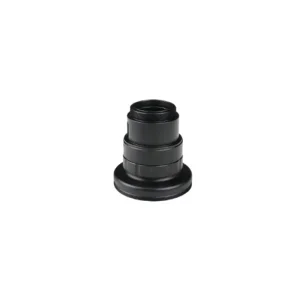
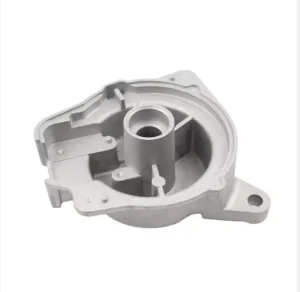
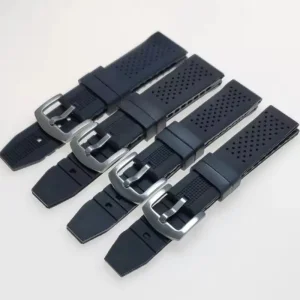
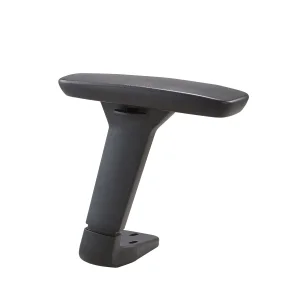
Precision Turned, Molded & Optical Components
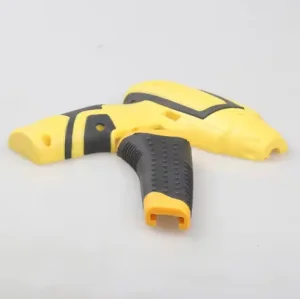
Explore our complete custom manufacturing offerings featuring specialized surface treatments and micro-machining.
Procurement & Engineering Q&A
Comprehensive answers regarding bead blasting parameters, DFM guidelines, quotation structures, and turnarounds.
How does bead blasting affect precision dimensional tolerances?
When executed with spherical glass beads at controlled pressures (35–50 PSI), dimensional removal is negligible (typically less than 0.001 mm to 0.002 mm). For high-precision bearing bores or M2-M8 threaded holes holding tolerances down to ±0.005 mm, custom rubber plug masking or liquid silicon masking is applied prior to blasting to guarantee zero dimensional drift.
What key data points are needed to obtain an instant ODM Bead Blasting Quote?
To provide an exact line-item quotation within 24 hours, our engineering team requires: (1) 3D CAD files (STEP/IGES format), (2) Target Surface Roughness Ra value (e.g., Ra 1.6 µm), (3) Media specification (Glass bead grit size or Ceramic media), (4) Post-treatment requirements (e.g., Anodizing Type II Color Matte), and (5) Batch quantity tiers (e.g., 100, 1,000, 10,000 units).
What is the difference between Bead Blasting and Anodizing?
Bead blasting is a mechanical mechanical pre-finishing process that shapes physical surface texture and roughness. Anodizing is an electrochemical conversion process that grows a protective oxide layer (8–25 microns thick) on aluminum. Combining glass bead blasting before anodizing produces the classic premium matte anodized finish seen on modern laptop bodies and optical housings.
Can bead blasting be performed on plastic injection molded components?
Yes. Engineering polymers such as Polycarbonate (PC), ABS, PEEK, and Nylon can be gently bead blasted using low-pressure micro-fine glass beads or soft organic media (such as walnut shell grit) to remove mold flash, blend mold parting lines, and create a uniform anti-reflective matte texture without thermal degradation.
How does Sunmy Hardware prevent media embedment in soft metals like Aluminum 6061?
Media embedment occurs when broken, sharp abrasive fragments become wedged in softer substrates. We mitigate this by utilizing high-crush-strength virgin glass beads, strict cyclonic separation of fines, controlled impact angles (<60° for soft alloys), and post-blast multi-stage ultrasonic bath washing in deionized water.
Request an ODM Bead Blasting Quote & DFM Review
Send your CAD step files and surface finish requirements to our senior engineering team. Receive an optimized DFM analysis and instant factory-direct quote within 24 hours.
Submit RFQ & Drawing Files