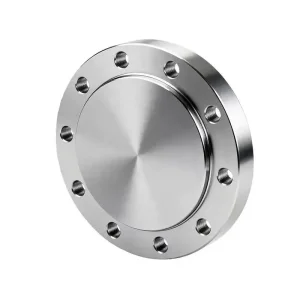
Engineering Next-Generation Industrial Frame Architectures
In modern high-precision capital equipment, industrial robotics, and energy infrastructure, structural frame fabrication is no longer just structural metalwork—it is the foundational baseline for dimensional repeatability, dynamic vibration absorption, and environmental protection.
Structural Integrity & Rigidity
Engineered structural frames using Finite Element Analysis (FEA) to eliminate natural frequency resonance, ensuring high dynamic stiffness under extreme operational loads.
Micron-Level Post-Machining
Combining heavy robotic weldment with large-bed 5-axis CNC portal milling, holding key mounting pads within ±0.015mm geometric tolerances post thermal stress relief.
Full Lifecycle Quality Validation
Integrated Non-Destructive Testing (NDT) including Ultrasonic, Radiographic, and CMM Laser Tracker dimensional verification per ISO and AWS specifications.
Comprehensive Technical Manufacturing Matrix
Our OEM/ODM frame manufacturing processes adhere strictly to global engineering standards, combining raw material traceability, advanced joint preparation, zero-distortion welding, and precise surface finishing.
| Material Category | Supported Alloy Grades | Fabrication Methods | Achievable Tolerances | Typical Applications |
|---|---|---|---|---|
| Structural Carbon Steel | A36, Q235B, Q355B, S235JR, S355J2 | Heavy Plate Laser Cutting, Robotic MAG Welding, Thermal Annealing | ISO 13920-BF, Machined Features ±0.02 mm | Heavy Automation Gantries, Machine Tool Bases, Mining Structures |
| Stainless Steel | 304, 304L, 316, 316L, 17-4PH, Duplex 2205 | Fiber Laser, TIG/GTAW Welding, Pickling & Passivation, Electropolishing | ISO 2768-mK, CMM Verified ±0.015 mm | Semiconductor Equipment Frames, Food & Pharma Enclosures, Cleanroom Gear |
| Structural Aluminum | AL6061-T6, AL6082-T6, AL7075-T6, AL5083 | 5-Axis CNC Milling, Friction Stir Welding (FSW), T6 Heat Treat, Anodizing | Linear ±0.010 mm, Angular ±0.05° | Aerospace Test Stands, Battery Pack Chassis, High-Speed Optical Frames |
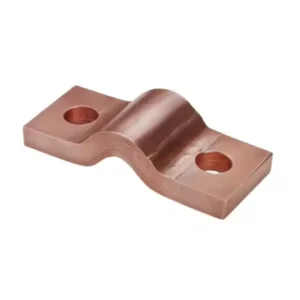
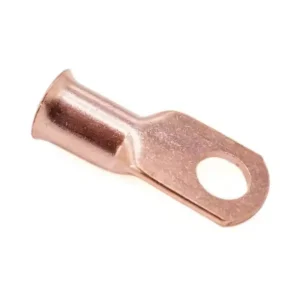
| Copper & Special Alloys | C11000 ETP Copper, C10200 OFC, Brass, Titanium Gr 2 | Precision Stamping, Lamination, Laser Cladding, Nickel/Tin Plating | Thickness ±0.005 mm, Pitch ±0.02 mm | Flexible Laminated Busbars, Power Distribution Sub-Frames, Battery Contacts |
Stress Relief Protocol
Welding creates substantial residual stresses within structural frames that cause progressive warping over time. We utilize Vibratory Stress Relief (VSR) and high-temperature furnace thermal annealing (600°C–650°C) prior to final CNC milling to guarantee long-term dimensional stability.
Robotic Laser Welding
Leveraging high-power automated fiber laser welding with continuous wire-feed technology. This yields extremely deep penetration with a minimal Heat-Affected Zone (HAZ), reducing structural distortion by up to 75% compared to manual arc welding.
Metrology & Laser Trackers
Large frame fabrications undergo inspection via Leica Laser Trackers and portable CMM arms. Real-time spatial measurement ensures position accuracy of multi-axis mounting holes, coplanarity of mounting feet, and frame squareness across 10-meter spans.
Why Sourcing Frame Fabrication from China Delivers Maximum ROI
Global procurement directors leverage our integrated manufacturing footprint in Shenzhen and Guangdong for unmatched supply chain resilience, speed-to-market, and total cost of ownership (TCO) optimization.
Unrivaled Supply Chain Density
Within a 50 km radius of our facility, we access raw metal mills, specialized tooling houses, thermal treatment plants, and surface finishing centers (anodizing, powder coating, plating). This minimizes internal logistics lead times by up to 60%.
72-Hour Rapid DFM & Prototyping
Our senior engineering team conducts full Design for Manufacturability (DFM) reviews within 24 hours of receiving CAD files, launching rapidly from digital twin simulation to physical prototype fabrication within days.
Hybrid Process Synergy
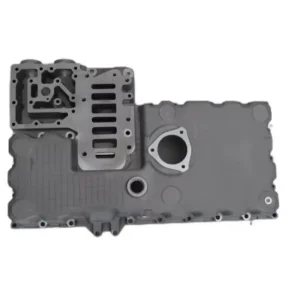
We seamlessly integrate multiple core disciplines under one roof: large-scale structural welding, precision sheet metal stamping, aluminum die casting, and micro-precision turned component integration.
Global Industry Trends Transforming Frame Engineering
Understanding the technological shifts in structural frame design, material science, and digital fabrication enables forward-looking engineering teams to future-proof their product hardware architecture.
Modular Kit-of-Parts
Shift from monolithic welded frames to standardized modular frames using precision extruded aluminum profiles and interlocking CNC joints, allowing scalable field modifications.
Hybrid Light-Weighting
Integration of high-strength carbon steel structural tubing with lightweight aluminum die-cast corner joints and composite panels to reduce dead weight in mobile equipment.
AI Topology Optimization
Using AI-driven generative software algorithms to remove non-load-bearing mass, resulting in organic structural geometry tailored specifically for additive and 5-axis subtractive fabrication.
IoT-Enabled Frames
Embedding structural health monitoring strain gauges and thermal sensors inside hollow frame cavities to provide real-time structural stress diagnostics in Industry 4.0 plants.
Tailored Industrial Frame Solutions Across High-Tech Sectors
Discover how custom frame fabrication adapts to stringent environmental, mechanical, and cleanliness requirements across global industry verticals.
Semiconductor & Optical Equipment
Challenge: Micro-vibrations destroy sub-nanometer wafer processing precision.
Solution: SS316L cleanroom-grade frames featuring vacuum-sealed internal dampening chambers, electropolished surfaces, and post-machined optical alignment pads with flat tolerances below 0.01 mm.
Energy Storage & Renewable Infrastructure
Challenge: Heavy static loads combined with extreme outdoor weather (C5-M corrosion).
Solution: Heavy-duty galvanized steel chassis frames engineered for 20-ton battery rack loads, featuring robotic continuous sealing welds, IP66 enclosure integration, and seismic zone 4 rating validation.
Automotive & EV Battery Sub-Frames
Challenge: Strict crash energy management and weight constraints.
Solution: Low-pressure cast aluminum alloy end-bells combined with extruded friction-stir-welded base frames. Delivers high impact toughness, gas-tight seals, and 30% reduction in vehicle assembly weight.
Medical Robotics & Diagnostic Imaging
Challenge: Zero structural deflection under dynamic cantilevered arm payloads.
Solution: Precision CNC milled aluminum 6061-T6 skeletal frames with anodized non-reflective surfaces, engineered to pass strict ISO 13485 surgical device standards.
Industrial Robotics & Pick-and-Place Gantries
Challenge: Repeated high-speed acceleration/deceleration cycles creating metal fatigue.
Solution: High-tensile steel tube weldments subjected to full Vibratory Stress Relief (VSR), reinforced linear guide mounting slots, and integrated cable carrier tracks.
Communication Electronics Enclosures
Challenge: High electromagnetic interference (EMI) combined with harsh outdoor heat.
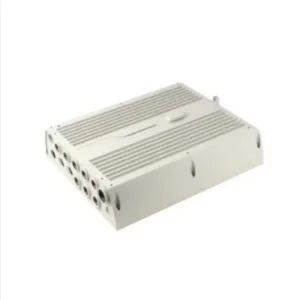
Solution: ODM custom die-cast aluminum frame enclosures featuring integrated cooling fin matrices, EMI conductive shielding gaskets, and UV-resistant powder coat finishes.
Rigorous Quality Assurance & Compliance Engineering
We mitigate international supply chain risk through standardized quality gatekeepers, rigorous raw material verification, non-destructive weld testing, and comprehensive export documentation.
Material Traceability
Every raw sheet, tube, or ingot comes with EN 10204 3.1 chemical and mechanical test certificates. X-ray Fluorescence (XRF) spectrographic analysis verifies metal grade upon arrival.
Weld Integrity Testing
Certified AWS D1.1 and EN ISO 9606 welders perform full penetration joints verified via Dye Penetrant Testing (PT), Ultrasonic Inspection (UT), and Radiographic Testing (RT).
CMM Dimensional Reports
Final inspection utilizes Zeiss 3D Coordinate Measuring Machines and laser trackers. Full First Article Inspection (FAI) reports with Geometric Dimensioning & Tolerancing (GD&T) balloon drawings are included.
Strict IP Protection
All drawings, 3D STEP models, and process parameters are stored in isolated encrypted servers. Bilateral NDAs are executed prior to reviewing any CAD data.
Frequently Asked Questions on Custom Frame Fabrication
Get clear technical insights regarding lead times, manufacturing capabilities, quality validation, and design optimization before initiating your purchase order.
How do you control heat distortion during welding of large structural frames?
Controlling thermal distortion requires a combined strategy: 1) Utilizing Finite Element Analysis (FEA) software to predict thermal expansion paths; 2) Designing custom rigid welding fixtures to hold key geometry during assembly; 3) Implementing symmetrical welding sequences (such as back-step and skip welding) to distribute thermal input evenly; 4) Utilizing automated low-heat robotic TIG/Laser welding; and 5) Subjecting the frame to Vibratory Stress Relief (VSR) or furnace thermal stress annealing prior to final 5-axis CNC portal machining of interface surfaces.
What is the maximum frame dimension and payload your facility can process?
Our heavy manufacturing facility is equipped with large-format 5-axis CNC portal milling machines with a maximum single-setup travel bed of 12.0 meters × 4.5 meters × 2.0 meters. Our overhead gantry cranes handle single weldment structures weighing up to 25 metric tons.
Which welding certifications and quality standards do your shop operations hold?
Our weld production lines operate under ISO 3834-2 (Comprehensive Quality Requirements for Fusion Welding) and EN 1090-2 (Execution of Steel Structures up to EXC3). Our manual and robotic welding operators are certified under AWS D1.1 (Structural Steel), AWS D1.2 (Structural Aluminum), and EN ISO 9606-1 standards.
How do you verify post-machining flatnesses across multi-meter spans?
For large frame weldments where traditional CMM beds are exceeded, we deploy Leica Absolute Laser Trackers and portable FARO Quantum CMM arms. This equipment measures coplanarity, hole position accuracy, and perpendicularity across 10-meter distances with dynamic spatial accuracy under ±0.025 mm.
What DFM feedback can we expect during the RFQ stage?
Within 24 hours of receiving your STEP or DWG files, our senior mechanical engineering team conducts a thorough DFM analysis. We review weld joint accessibility, raw material stock size availability, wall thickness transitions, stress concentrations, surface coating specifications, and suggest design modifications that reduce machining cycle time and tooling costs without sacrificing mechanical performance.
What surface treatments are available for extreme outdoor or cleanroom environments?
We provide a comprehensive range of in-house and partner surface finishing solutions: 1) Outdoor C5-M marine heavy-duty zinc-rich epoxy priming and polyurethane topcoat painting; 2) Architectural powder coating compliant with AAMA 2605; 3) Hardcoat anodizing (MIL-A-8625 Type III) for aluminum frames; 4) Electropolishing and passivating (ASTM A967) for cleanroom stainless steel frames; and 5) Electrophoretic deposition (E-coating) for automotive chassis components.
What are the typical lead times from CAD approval to international delivery?
Standard prototype frames take approximately 10 to 15 business days depending on complexity and material availability. Full-scale production batch runs (20–500 units) average 4 to 6 weeks. Fast-track rapid engineering services are available for urgent time-to-market programs, backed by air-freight or sea-freight logistics support.
How do you protect customer IP and sensitive engineering drawings?
Intellectual Property security is paramount. We sign non-disclosure agreements (NDAs) prior to receiving files. All CAD data is hosted on encrypted internal servers with strict role-based access control, preventing unauthorized data export or third-party exposure.
Accelerate Your Frame Fabrication Program Today
Partner directly with China's leading precision hardware manufacturer. Submit your CAD drawings, STEP models, or project specifications for a comprehensive 24-hour DFM feedback and competitive quote.