
Precision Automation & Hardware Catalog (Part I)
CMM-verified tolerances down to ±0.005 mm across custom turning, optics, carbon fiber, and fluid system assemblies.

1. The Global Industrial Realignment: Sourcing Precision Automation Equipment Components from China
The global industrial automation sector is experiencing an unprecedented technological convergence. Driven by advancing robotics, semiconductor fabrication expansions, electric vehicle (EV) battery assembly lines, and AI-powered physical manufacturing cells, the global market demand for high-precision automation equipment parts has transitioned from standard off-the-shelf catalog ordering toward highly customized, complex, sub-micron tolerance components.
In this global landscape, procurement directors, lead system engineers, and OEM project leads face multi-faceted operational challenges: escalating material costs in Western domestic markets, extended prototype-to-mass-production lead times, volatile supply chains, and stringent quality mandates requiring complete metallurgical traceability (RoHS, REACH, IATF 16949, and ISO 9001:2015).
China has solidified its position as the undisputed center of gravity for industrial hardware manufacturing. However, contemporary procurement strategy extends far beyond basic cost arbitrage. Leading global enterprises leverage China’s mature Industry 4.0 ecosystem for supply chain resilience, extreme rapid prototyping agility, integrated surface treatment capabilities, and seamless vertical integration—from raw billet extrusion and lost-wax investment casting to multi-axis CNC milling, Swiss turning, and cleanroom optical molding.
2. Technical Trends Shaping Modern Automation Parts Manufacturing
How advanced materials, micro-machining, and hybrid manufacturing processes are redefining component lifecycle performance.
Ultra-Precision & Micro-Tolerances
Modern high-speed pick-and-place gantry systems, optical inspection assemblies, and robotic joint gearboxes demand mechanical tolerances down to ±0.005mm. Utilizing high-speed 5-axis CNC machining, jig grinding, and wire EDM, Chinese manufacturers eliminate cumulative stack-up errors in multi-axis motion hardware.
Lightweighting & Hybrid Alloys
Transitioning from heavy carbon steel to aero-grade Aluminum (7075-T6, 6061-T6), Magnesium alloys, Titanium Grade 5 (Ti-6Al-4V), and customized carbon fiber composites reduces inertial mass, enabling automation robotics to operate at higher acceleration speeds with reduced motor wear.
Advanced Surface Engineering
To withstand chemical exposure, friction, and high cycle counts, component factories employ advanced surface treatments: Diamond-Like Carbon (DLC) coating, Hardcoat Anodizing (MIL-A-8625 Type III), Electroless Nickel Plating, chemical passivation, and PVD coating for extreme wear resistance.
3. China Factory 4.0: Supply Chain Resilience, Velocity & Economic Advantage
When international buyers evaluate China automation equipment parts manufacturers, the structural advantage goes far beyond basic labor cost differentials. China’s Pearl River Delta (Shenzhen, Dongguan) and Yangtze River Delta (Suzhou, Wuxi, Ningbo) regions represent hyper-dense manufacturing hubs where raw material mills, tooling suppliers, secondary treatment facilities, and testing labs operate within a 30-mile radius.
Traditional western supply chains suffer from "fragile linear delays"—where casting happens in one facility, machining in another, anodizing in a third, and quality verification off-site. Chinese turnkey manufacturing facilities consolidate this lifecycle under a single quality management program, drastically collapsing time-to-market.
Key Drivers of Chinese Manufacturing Resilience:
- Integrated Tooling and Rapid Prototyping: Transition seamlessly from 1-piece SLA/SLM 3D printed functional prototypes or 5-axis CNC samples directly into mass production tooling (high-pressure die casting dies or plastic injection molds) within 15 to 25 calendar days.
- IoT-Enabled Digital Shop Floors: Automated CNC machine monitoring, real-time spindle status tracking, and inline optical gauging minimize human error and ensure batch-to-batch repeatability across thousands of units.
- Raw Material Traceability & Compliance: Verified mill certificates (MTRs) for physical and chemical composition are provided with every batch, adhering strictly to global standards including ASTM, DIN, JIS, and ISO.
- Agile DFM Engineering Feedback: Before a single cut is made, experienced OEM engineers perform detailed Design for Manufacturability (DFM) analyses—identifying draft angles, deep pocket radius constraints, wall thickness inconsistencies, and thread engagement vulnerabilities to lower unit cost and prevent manufacturing failure.
4. Material Selection & Technical Specification Matrix
Comprehensive metallurgical and thermoplastic selection guide for industrial automation and mechanical assemblies.
| Material Grade | Key Mechanical Properties | Primary Automation Applications | Recommended Surface Finishing |
|---|---|---|---|
| Aluminum 6061-T6 / 7075-T6 | High strength-to-weight ratio, excellent machinability, tensile strength up to 570 MPa (7075). | Robotic arms, gantry brackets, pneumatic actuator housings, optical lens barrels. | Type II/III Anodizing, Bead Blasting, Hardcoat Anodizing, Powder Coating. |
| Stainless Steel 304 / 316L | Superior corrosion resistance, high thermal stability, non-magnetic option (316L). | Fluid control valve bodies, slurry pump impellers, cleanroom structural frames, capillary tubes. | Electropolishing, Passivation, Mechanical Mirror Polishing, PVD Coating. |
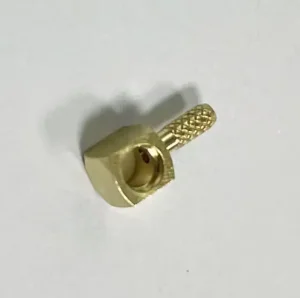
| Brass C36000 / Tinned Copper | Exceptional electrical conductivity, low friction coefficient, excellent machinability. | Electrical wire crimp terminals, knurled insert connectors, busbars, sensor housings. | Tin Plating, Nickel Plating, Gold Flash, Bright Dip Passivation. |
| Titanium Grade 5 (Ti-6Al-4V) | Biocompatible, extreme strength-to-weight ratio, outstanding chemical inertness. | Medical surgical implants, bone screws, aerospace drone connectors, high-temp end effectors. | Anodizing Type II, Micro-Shot Peening, Electropolishing. |
| PA66 Nylon / Polycarbonate (PC) | High impact resistance, electrical insulation, high optical transparency (PC). | Automotive electronic sensor covers, optical windows, solenoids, protective housings. | SPI Mold Finishes (A1 to D3), Anti-Scratch Coating, UV Stabilizing. |
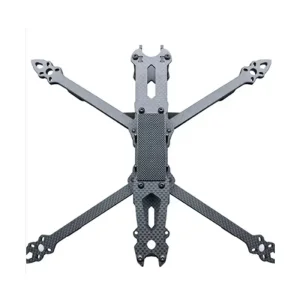
| Carbon Fiber Composite | Ultra-high rigidity, dampens vibration, exceptionally low mass density. | High-speed quadcopter/hexacopter frames, pick-and-place end effectors, structural arms. | Clear Coat Gloss/Matte, UV Protective Lacquer, Raw Edge Sealing. |
5. Application Scenarios & Engineering Case Studies
How specialized OEM/ODM component production powers critical high-tech global industries.
Robotics & Automated Motion Systems
From 6-DOF industrial articulated arms to AGVs and collaborative robots (cobots), structural stability is paramount. Custom CNC machined metal brackets, multi-cavity turned shafts, and carbon fiber armatures reduce joint backlash and dynamic vibration during rapid deceleration cycles.
EV Battery & Electrical Power Distribution
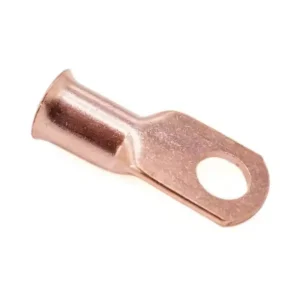
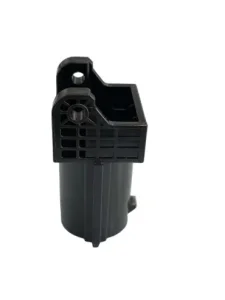
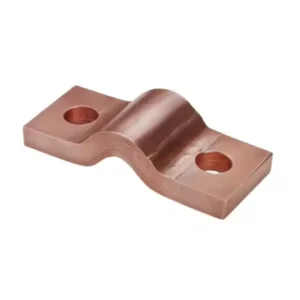
Electrification requires ultra-reliable conductivity. Custom flexible laminated copper busbars and tinned copper lug crimp terminals handle high power densities with zero heat-spot formation. Flame-retardant PA66 sensor housings protect delicate solenoid electronics from harsh automotive conditions.
Semiconductor & Precision Optics
Machine vision systems depend on glare-free, optically isolated housings. Black anodized aluminum lens barrels prevent internal light reflection, while high-transparency PC components offer crystal-clear optical clarity without internal stress distortion or birefringence.
Fluid Control & Chemical Automation
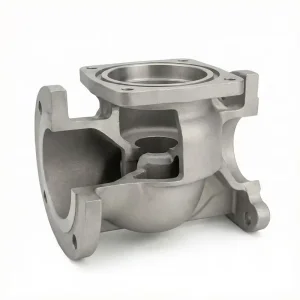
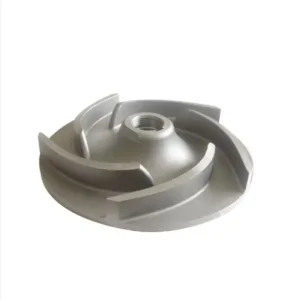
Handling aggressive chemicals or heavy slurries requires robust metallurgical integrity. Lost-wax investment cast stainless steel valve bodies and open impellers offer void-free structural density, preventing internal cavitation corrosion under high hydrodynamic pressures.
Medical Implants & Surgical Equipment
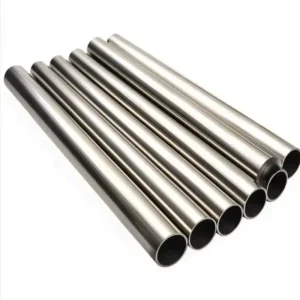
Micro-turned titanium bone screws, dental prosthetic connectors, and stainless steel capillary tubes demand 100% surface perfection. Swiss-type CNC lathes ensure burr-free microscopic features washed in cleanroom ultrasonic degreasing stations.
Industrial Electronics Enclosures
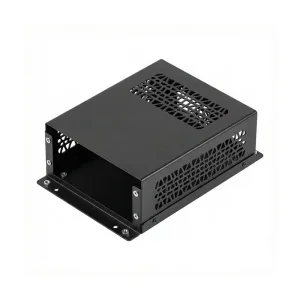
Custom extruded aluminum housings and precision stamped sheet metal enclosures shield sensitive PLC controller boards and power supplies from electromagnetic interference (EMI/RFI) while maximizing thermal conduction away from internal chips.
6. Rigorous Quality Control, Inspection & IP Safeguards
How top-tier China manufacturers ensure zero defect leakage and protect client intellectual property.
CMM & Optical Verification
Every critical geometry is verified using temperature-controlled Zeiss Coordinate Measuring Machines (CMM), optical video measuring systems, and roughness testers. Full First Article Inspection (FAI) reports accompany your initial sampling.
ISO 9001 & IATF Certification
Factories adhere to structured Quality Management Systems (QMS). From raw material receiving inspection (IQC) and in-process patrol inspection (IPQC) to final outgoing audit (OQC), complete traceability is maintained.
Strict IP Protection & NDA
Protecting client engineering data is our highest commitment. Non-Disclosure Agreements (NDAs) are signed prior to drawing transfer, and internal CAD/CAM files are stored on isolated, encrypted engineering servers.
Precision Automation & Hardware Catalog (Part II)
Explore specialized investment castings, medical titanium screws, battery busbars, and custom capillary tubing.
Frequently Asked Questions (FAQ) for OEM Sourcing
Key considerations for international engineering teams and supply chain specialists.