
What Are the Top Types of Medical Machining Parts?

Time:2026-11-04 Author:Sienna
0%

Medical Machining Parts support devices used in diagnosis, treatment, monitoring, and laboratory work. Their forms vary widely. A tiny stainless-steel fastener may secure an instrument, while a precision-machined titanium component may form part of an implant. Other examples include surgical tool components, imaging-system fittings, pump housings, and connectors for fluid paths. Each part has a specific job. Small differences can matter.

The top types are best understood by their function, material, and operating environment—not by popularity alone. Components that contact tissue have different design needs from parts inside a scanner or reusable surgical instrument. Engineers may consider dimensional tolerances, surface finish, corrosion resistance, cleanability, and compatibility with the larger assembly. Details matter. A polished surface, for example, can affect how a component is cleaned or how it fits against another part. Requirements also vary by device and application, so one machining approach does not suit every component.

This guide explores common categories and the features that distinguish them. It also considers how machining choices influence performance, consistency, and inspection needs. The categories can overlap, and that is worth acknowledging: a part may serve several functions at once. There is no universal “best” type. Understanding the use case is a more dependable starting point.
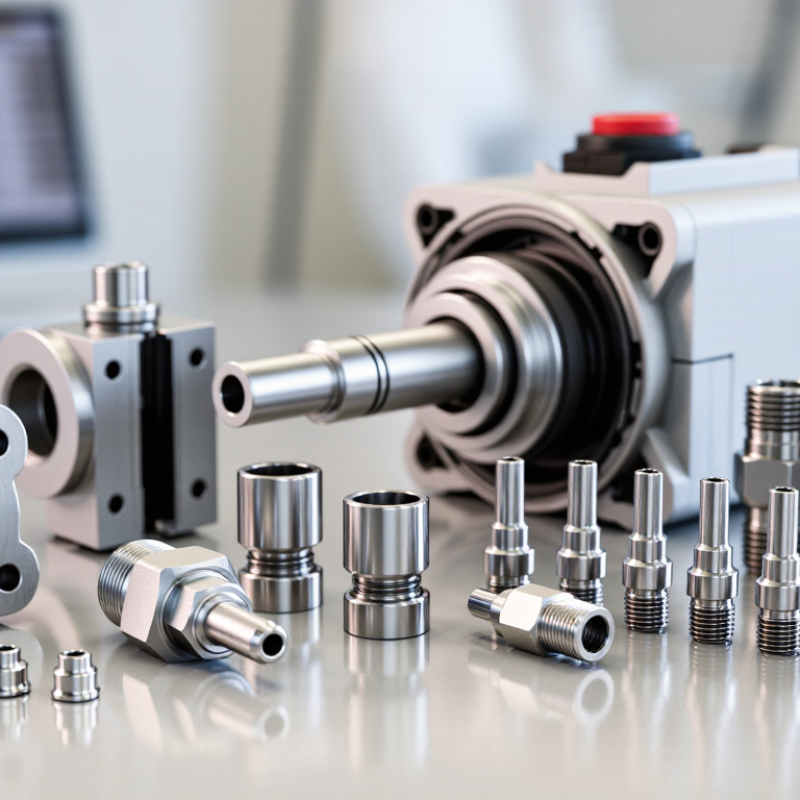
What Are the Top Types of Medical Machining Parts?

How Medical Machining Parts Are Defined and Classified

Medical machining parts are precision components made by cutting or shaping materials for use in medical devices and equipment. They include items such as bone screws, surgical instrument jaws, and small housings that protect internal components. The term refers to the part’s intended use, not one specific shape or manufacturing method. Fit matters. A few microns can affect how a component moves, connects, or sits against another surface. Classification often considers function, material, geometry, and manufacturing requirements.

By function, parts may support an implant, guide a surgical instrument, or form part of diagnostic equipment. Material offers another useful distinction: stainless steel and titanium are common choices, while some applications use engineering polymers such as PEEK. Geometry also helps define a part. A thin-walled housing needs different machining controls from a threaded fastener or a miniature hinge. That matters. In production, machinists may classify components by tolerances, surface finish, and inspection needs as well. These categories can overlap, and terminology varies between teams. A part described as an instrument component in one setting may be grouped by material or geometry in another. This boundary is not always neat, so drawings and functional requirements provide clearer guidance.

Implants and Prosthetic Components

Implants and prosthetic components must fit the body, connect reliably, and tolerate repeated loading. Machining can shape metals or medical-grade polymers into bone screws, joint components, dental abutments, and prosthetic connectors. Each part has different demands. A joint surface may need controlled smoothness, while a connector depends on accurate dimensions and secure assembly. Fit matters.

Material choice affects strength, weight, corrosion resistance, and how a part can be finished or inspected. Machinists also consider tool access, thin walls, and heat that could alter a material’s properties. Tolerances should reflect the part’s function, not simply aim for the smallest possible numbers. A polished surface is not automatically suitable; surface texture must match the design and intended contact. Small flaws matter.

Tips: Review drawings, critical dimensions, and material requirements before production. Ask how parts will be cleaned, inspected, and traced through manufacturing. For implants, surface condition and material compatibility require qualified engineering and clinical review. For prosthetic components, check fit with mating parts under realistic loads. It is easy to overlook assembly variation, so verify the complete interface—not just one machined feature.

Surgical Instruments and Tool Components

What Are the Top Types of Medical Machining Parts?

Surgical Instruments and Tool Components

Surgical instruments rely on small, carefully machined components. Examples include forceps jaws, scissor blades, ratchet teeth, handles, and long instrument shafts. Small parts matter. A jaw that closes unevenly can affect grip, while a rough pivot may make an instrument feel stiff. These details are easy to overlook during design.

CNC milling and turning shape many of these components from medical-grade stainless steel or titanium. Fine grinding can refine cutting edges and contact surfaces. Electrical discharge machining may help form narrow slots or complex features. The right process depends on the material, geometry, and required tolerances. There is no universal recipe. A thin shaft, for example, may flex during machining, so support and tool selection need careful attention.

Inspection should look beyond dimensions. Technicians can check alignment, surface finish, burrs, and how moving parts engage. Edges must be smooth where they touch tissue or the user’s hand, but cutting edges need their intended profile. That distinction matters. Cleaning and passivation may also be specified for certain stainless-steel parts, depending on the design and subsequent processing. I would not treat a polished surface as proof of quality; measurement records and process traceability provide more useful evidence. A ratchet may pass dimensional checks yet still feel rough when tested by hand.

Diagnostic and Monitoring Equipment Components

Diagnostic and monitoring equipment relies on small machined parts to hold sensors, guide probes, and protect delicate electronics. Sensor housings often need precise bores so a detector sits squarely against its mounting surface. A flat, clean interface can reduce unwanted movement during repeated measurements. Small details matter.

Probe sleeves and alignment collars help keep sampling or scanning elements in a consistent position. Their inner surfaces may need a smooth finish, especially where a probe moves through a close-fitting opening. Fluidic manifolds are another common part; drilled channels route small volumes of liquid between ports. Burrs or rough edges can interfere with flow, so deburring and inspection deserve attention. Yet machining alone does not guarantee accurate readings. Calibration, assembly, and the sensor itself also matter.

Monitoring devices may use compact brackets, connector bodies, and heat-dissipating plates. These parts must fit within crowded enclosures while allowing access for cleaning and maintenance. Materials are selected for the environment, load, and cleaning process, rather than appearance alone. In practice, the specification is not always as tidy as the drawing suggests. A tolerance that works on paper may complicate assembly, so engineers should review fit and function together.

What Are the Top Types of Medical Machining Parts? — Diagnostic and Monitoring Equipment Components

Diagnostic and monitoring equipment can include sensor housings, fluidic manifolds, probe shafts, and precision mounts. The chart compares typical material densities for representative material choices; actual materials vary by design and application.

Fluid-Handling Parts and Medical Device Enclosures

Fluid-handling parts and medical device enclosures have different jobs, but both demand controlled machining. Fluid paths may include manifolds, valve bodies, pump housings, and connector blocks. A small burr inside a passage can disrupt flow or trap residue. Designers therefore specify suitable materials, smooth internal transitions, and inspection of hidden features. Stainless steel, titanium, and engineering plastics may be appropriate, depending on the fluid, temperature, and cleaning process. No single material fits every application.

Enclosures protect electronics and provide mounting points, access, and sometimes thermal management. Machined panels need accurate holes and flat mating surfaces; poorly aligned interfaces can complicate assembly. Seals, cable openings, and ventilation features deserve attention early. Grand View Research estimated the global medical devices market at USD 518.46 billion in 2023, with projected growth through 2030. This market estimate signals broad demand, not a guarantee that every component needs tight tolerances. A costly finish can be unnecessary. That is worth questioning.

Tips: Share fluid, cleaning, and operating conditions with the machinist before finalizing drawings. Call out critical dimensions, deburring needs, and inspection points. For enclosures, check connector clearance and seal compression in a physical assembly. A prototype may reveal an awkward access point that CAD missed. Reference: Grand View Research, Medical Devices Market Size, Share & Trends Analysis Report, 2024.

FAQS

Which parts can machining produce for implants and prosthetics?

It can shape bone screws, joint components, dental abutments, and prosthetic connectors. Fit matters.

How should material and tolerance choices be made?

Consider strength, weight, corrosion resistance, tool access, and heat exposure. Tolerances should match each feature’s function, not chase the smallest number. I may be overlooking an assembly detail.

Does a polished surface always suit an implant or joint component?

No. Surface texture should match the design and intended contact. A shiny finish alone does not confirm suitability.

What details matter in surgical instrument components?

Check jaw alignment, pivot movement, ratchet engagement, burrs, and surface finish. Small parts matter.

Which machining processes may be used for instrument parts?

Milling and turning can shape many components. Grinding can refine edges, while electrical discharge machining can form narrow slots. The right process depends on the part.

What should inspection cover beyond dimensions?

Inspect alignment, surface condition, burrs, and moving-part engagement. A ratchet may meet its dimensions yet feel rough by hand.

What can affect machined fluid-handling parts?

Burrs inside passages can disrupt flow or trap residue. Specify the fluid, operating temperature, cleaning process, and inspection needs.

What should be checked on a machined device enclosure?

Check hole positions, flat mating surfaces, connector clearance, seals, and cable openings. A physical prototype may reveal awkward access that CAD missed. Not always obvious.

Conclusion

Medical Machining Parts are precision-engineered components used across a wide range of healthcare applications. They are typically classified by their function, location, and interaction with medical equipment or the human body. Their design may call for accurate dimensions, smooth finishes, and materials suited to the intended use, since even small variations can affect how a component fits or performs.

Common types include implants and prosthetic components, which support or replace body structures; surgical instruments and tool components, which enable controlled medical procedures; and parts for diagnostic and monitoring equipment, which help devices operate reliably. Fluid-handling parts, such as connectors and channels, manage the movement of liquids, while enclosures protect and organize internal device components. Together, these categories show how precision machining contributes to the functionality, durability, and consistent assembly of medical products.

Sienna

Sienna

Sienna is a skilled marketing professional with a deep expertise in our company’s core products and services. With a passion for innovation and detail, she plays a pivotal role in crafting insightful blog posts that not only highlight the unique features of our offerings but also provide valuable......