
Who Are the Top 5 Axis CNC Machining Companies in China?

Time:2026-09-30 Author:Amelia
0%

China has become a major manufacturing base for complex, high-precision components. Its 5 Axis Cnc Machining sector serves aerospace, automotive, medical, energy, and industrial equipment manufacturers. International Federation of Robotics data reported China installed 276,288 industrial robots in 2023, representing more than half of global installations. This automation growth strengthens demand for integrated machining, inspection, and production planning.

However, machine capacity alone does not identify the best supplier. This article examines five leading Chinese companies through practical criteria, including five-axis interpolation, spindle performance, tolerance control, material expertise, and export support. Their capabilities are considered against recognized standards, such as ISO 230-2 for machine tool accuracy testing and ISO 10791 for machining center evaluation. Public company records, technical catalogs, customer sectors, certifications, and reported production experience also support the comparison.

The review focuses on real manufacturing details. These include titanium brackets, aluminum housings, impellers, medical implants, and unattended overnight machining. Reports from Grand View Research and MarketsandMarkets continue to highlight aerospace, automotive, and medical manufacturing as important precision-machining applications. Yet published market reports can simplify complicated supplier differences. No ranking is perfect. A large factory may offer stronger capacity, while a smaller specialist may provide better engineering communication. Readers should verify current equipment lists, sample inspection data, lead times, and after-sales coverage before selecting a partner. This practical approach makes the following top-five comparison more useful than a popularity-based list.
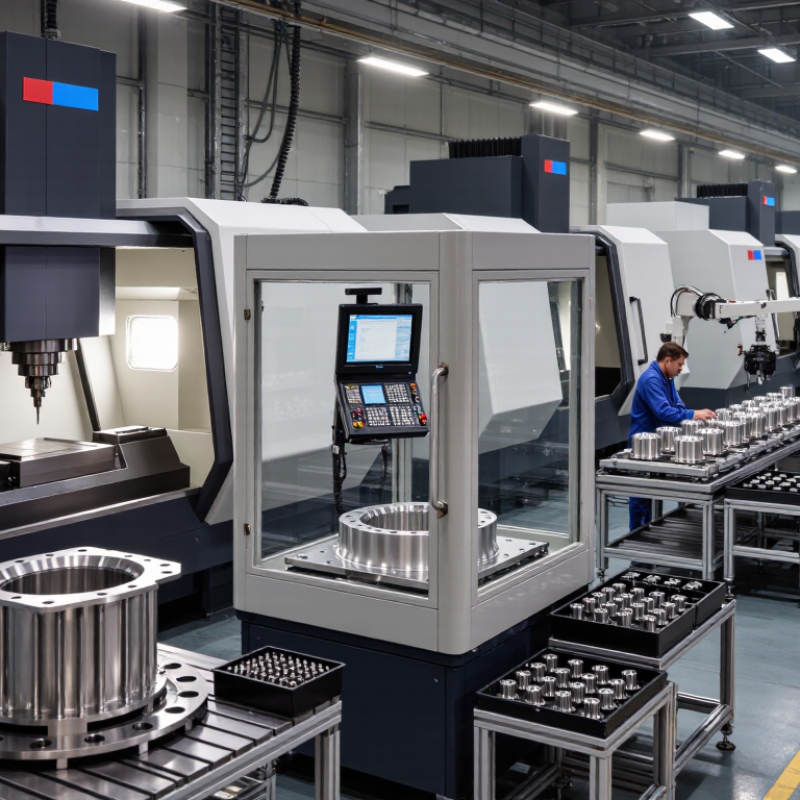
Who Are the Top 5 Axis CNC Machining Companies in China?

Definition and Scope of 5-Axis CNC Machining in China

Five-axis CNC machining refers to the coordinated movement of three linear axes and two rotary axes. This arrangement lets a cutting tool reach several faces of a component in one setup. In China, the field covers both simultaneous five-axis cutting and 3+2 machining, where the rotary axes position the part before cutting begins.

The practical scope is broad. It includes aerospace brackets, medical instrument parts, energy equipment, precision molds, and complex automotive components. A typical workshop may machine titanium, aluminum, stainless steel, engineering plastics, or hardened steel. Operators inspect tool paths, fixture rigidity, spindle condition, and temperature control. Small errors can appear as surface marks, edge mismatch, or dimensional drift. Experience still matters.

When comparing the top five Chinese five-axis machining companies, buyers should examine more than machine quantity. Relevant evidence includes verified inspection records, tolerance capability, material experience, delivery consistency, and engineering communication. A reliable supplier should explain its coordinate systems, probing process, and post-processing controls clearly. It should also provide dimensional reports from suitable measuring equipment.

Not every impressive factory is suitable for every project. Some excel at large parts but struggle with tiny features. Others offer excellent prototypes but lack stable volume production. This is where evaluation becomes less certain. A sample part, drawing review, and controlled trial order often reveal more than promotional claims. Clear documentation and traceable inspection remain essential in China’s competitive five-axis machining market.

Criteria for Evaluating China’s Leading 5-Axis CNC Companies

Evaluating a Chinese 5-axis CNC machining company requires more than checking its machine list.

Fortune Business Insights valued the global CNC machine market at US$83.99 billion in 2023 and forecast US$132.93 billion by 2032. That broad market estimate signals demand, not supplier capability. Buyers should request evidence tied to their own parts: sample inspection reports, machine calibration records, and repeatability results from comparable materials and tolerances. Ask how the shop controls thermal drift during long jobs. Small errors matter.

Technical depth is measurable. Check whether the supplier can share CMM inspection data, tool-life records, and documented process plans for simultaneous 5-axis work. ISO 230-1 provides methods for testing machine-tool geometric accuracy; it is a useful reference, but not proof that every finished part meets specification. Also assess engineering support, lead-time consistency, traceability, and corrective-action practices. A polished sample can hide weak production control. Request results from multiple batches, not one showcase part, and clarify who verifies the final dimensions. Public market reports rarely rank Chinese shops by these criteria, so independent audits and part-specific trials remain essential. Even then, no scorecard removes all uncertainty.

Company Profiles of China’s Top 5-Axis CNC Machining Providers

China’s five-axis machining providers often specialize by part type rather than serving every industry equally. The profiles below describe common strengths, not a verified ranking of named companies.

An aerospace-focused provider may machine titanium brackets and complex aluminum housings, with close attention to inspection records and tool wear. A medical-part supplier may handle compact stainless-steel components, where smooth surfaces and repeatable dimensions matter. Ask how it checks difficult features; a polished sample alone proves little.

A mold-making specialist may excel at deep cavities and curved surfaces, while a prototype shop may offer quicker design feedback and short runs. A production-focused provider may be better suited to larger batches, stable fixtures, and documented process controls. Fit matters. Before choosing, review sample parts, measurement reports, material traceability, and realistic lead times. Capabilities can vary between machines and shifts, and that deserves a direct conversation. A cautious buyer should confirm the exact part requirements before comparing quotations.

Industries and Applications Served by These CNC Machining Companies

Five-axis CNC machining is valuable where parts have compound curves, angled holes, or several faces that must stay aligned. In aerospace, suppliers machine lightweight brackets, turbine-related components, and structural parts from aluminum or titanium. Medical manufacturers use the process for instrument components and precisely shaped implant parts, subject to validated material and quality requirements. Automotive work often involves prototypes, tooling, and complex housings. Tight tolerances matter.

China’s automotive scale gives this sector particular weight. The China Association of Automobile Manufacturers reported 31.28 million vehicles produced in 2024, including 12.89 million new-energy vehicles. That volume supports demand for precise tooling, battery-related enclosures, and lightweight components, though it does not guarantee every shop serves those applications. Buyers should check relevant part samples, material traceability, and inspection records.

Industrial automation is another useful context. The International Federation of Robotics’ World Robotics 2024 report recorded 276,288 industrial robot installations in China during 2023. Five-axis suppliers may machine robot joints, end-effectors, and custom automation components. For buyers comparing leading Chinese machining companies, sector experience matters more than a machine list: ask how fixtures, tool access, and inspection are managed on a real part. A brochure can’t show everything. Late design changes can expose gaps in process control, so request a documented example before committing.

How to Select the Right 5-Axis CNC Machining Partner in China

Selecting a 5-axis CNC machining partner in China starts with your part, not a sales pitch. Share a detailed 3D model, material grade, critical tolerances, and expected order volume. Ask how the supplier will hold the part during machining and verify features that are difficult to reach. A clear answer should mention practical checks, such as probe measurements, tool access, and inspection records. Details matter.

Review the supplier’s quality process and relevant machining experience. Request sample inspection reports and ask how they manage revisions when a drawing changes. If your component has thin walls or deep pockets, discuss likely deformation and how the machining sequence can reduce it. A capable team should explain trade-offs in plain language, not promise that every tolerance is effortless. That is worth checking. Also compare communication, lead times, and packaging plans; a missed update can be costly even when the part is accurate. One caution: a polished sample does not prove repeatable production. Start with a small, clearly specified order, inspect the results, and refine your requirements before scaling up.

FAQS

What is five-axis CNC machining?

It combines three linear axes with two rotary axes. The cutting tool reaches several component faces in one setup. This can reduce repositioning errors.

What does 3+2 machining mean?

The rotary axes position the part before cutting starts. The tool then machines using three linear axes. It is not continuous five-axis movement.

Which parts commonly use five-axis machining?

Typical examples include aerospace brackets, medical instrument parts, precision molds, and complex automotive components. Curved surfaces benefit greatly.

Which materials can these machines process?

Common materials include titanium, aluminum, stainless steel, engineering plastics, and hardened steel. Material experience still varies by workshop.

How should buyers compare machining providers?

Check inspection records, tolerance capability, material experience, delivery consistency, and engineering communication. Machine quantity alone proves little.

What inspection details should a supplier explain?

Ask about coordinate systems, probing methods, fixture control, and post-processing checks. Request dimensional reports from suitable measuring equipment.

Why might an impressive factory fail a project?

Some workshops handle large parts well but struggle with tiny features. Others produce prototypes effectively but lack stable volume production.

Can a sample part confirm supplier capability?

It provides useful evidence, but one polished sample can mislead. Review the drawing, measurement report, and difficult features carefully.

What should a controlled trial order include?

Confirm material, tolerances, surface requirements, inspection documents, and realistic delivery timing. A small trial often exposes process weaknesses.

Why do tool paths and machine conditions matter?

Operators inspect tool paths, fixture rigidity, spindle condition, and temperature control. Small problems can cause surface marks or dimensional drift. Experience matters.

Conclusion

This article explains what 5 Axis Cnc Machining involves in China, including how synchronized movement across multiple axes enables the production of complex parts with fewer setups. It outlines practical criteria for evaluating machining providers, such as equipment capabilities, engineering expertise, quality-control processes, material options, production capacity, and communication.

The article also describes the types of industries and applications these companies may support, from precision components and prototypes to demanding production runs. It concludes with guidance for selecting a suitable manufacturing partner by matching technical requirements, tolerances, timelines, budget, and inspection needs with a provider’s capabilities. The goal is to help readers compare options thoughtfully and make informed sourcing decisions.

Amelia

Amelia

Amelia is a seasoned marketing professional with a wealth of expertise in our company’s core offerings. With an unwavering passion for driving growth and innovation, she plays a pivotal role in shaping our marketing strategies and enhancing brand visibility. A key aspect of her responsibilities......