Global buyers increasingly need reliable Cnc Metal Parts for robotics, medical equipment, automotive systems, and industrial machinery. Dimensional accuracy matters, but it is only one purchasing factor. Material traceability, production capacity, inspection discipline, and delivery consistency can determine whether a component performs well in the field.
Grand View Research reported that the global CNC machine market was valued at approximately USD 83.99 billion in 2023. Its 2024 analysis also projects strong growth through 2030. This expansion reflects wider automation adoption and rising demand for repeatable metal manufacturing. Deloitte’s 2024 Global Manufacturing Industry Outlook highlights supply-chain resilience, advanced technology, and workforce capability as major manufacturing priorities. These pressures affect every sourcing decision.
The best manufacturer is not always the largest one. That deserves attention. A smaller supplier may offer faster engineering feedback, while a global factory may provide broader capacity and stronger process controls. Buyers should review ISO 9001 certification, material certificates, CNC tolerances, first-article inspection reports, and packaging methods. A polished website proves very little. Sample parts, audit records, and clear corrective-action procedures reveal more.
This guide compares leading manufacturers by machining capability, supported materials, quality systems, communication, production scale, and export experience. It also considers practical details, such as burr control on aluminum edges, thread protection during shipping, and inspection records for tight-tolerance steel parts. No ranking is permanent. Market conditions, equipment upgrades, and customer requirements can change quickly. Careful verification remains essential before placing a production order.
What Defines a Reliable CNC Metal Parts Manufacturer
Top CNC Metal Parts Manufacturers for Global Buyers
What Defines a Reliable CNC Metal Parts Manufacturer
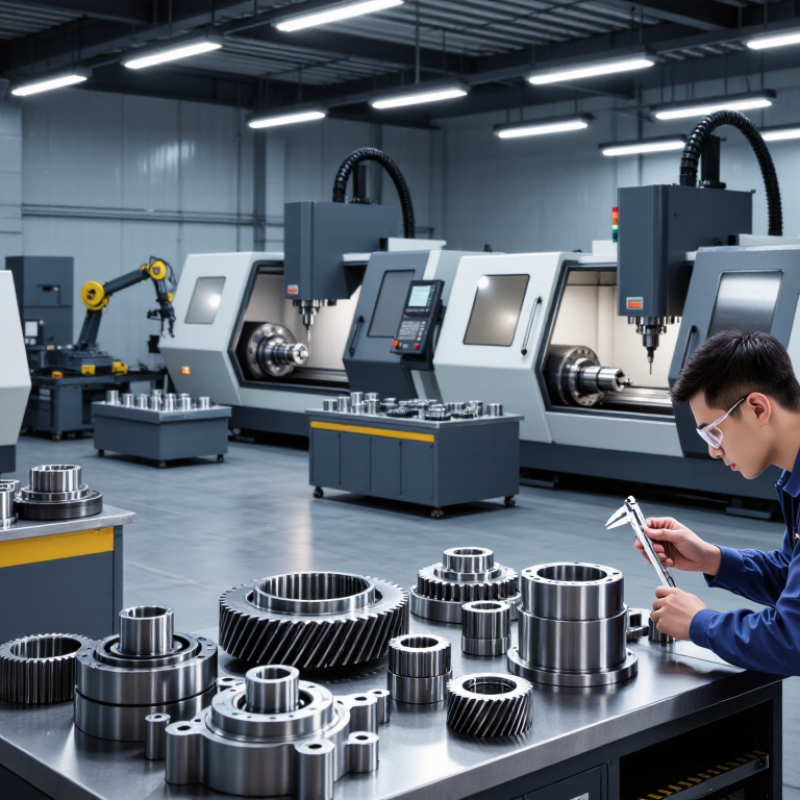
A reliable CNC metal parts manufacturer proves capability before requesting a large order. Their engineers review drawings, tolerances, alloys, surface finishes, and inspection points. They should also identify unclear dimensions instead of guessing silently. That small habit prevents expensive rework.
The ISO Survey 2022 recorded 1,265,216 ISO 9001 certificates across 189 countries and economies. Certification does not guarantee perfect parts. However, it indicates documented quality systems and repeatable controls. Buyers should request material certificates, first-article inspection reports, and calibrated measurement records. Coordinate measuring machines, statistical process control, and lot traceability add practical evidence.
Deloitte’s 2024 Smart Manufacturing and Operations Survey found that 86% of manufacturing executives expect smart manufacturing to become a major competitiveness factor within five years. Reliable suppliers increasingly connect shop-floor data with inspection results. They can show tool-life records, machine maintenance logs, and production updates. Useful communication remains simple and specific. Send photographs. Confirm revision numbers.
Experience also exposes uncomfortable weaknesses. A supplier may pass one inspection and fail the next batch. Therefore, buyers should evaluate process stability, not attractive samples alone. Ask how nonconforming parts are isolated and corrected. Ask who approves a drawing change. The answer may reveal more than a polished certificate. No manufacturer is flawless, and honest reporting is often a stronger reliability signal than confident promises.
Key Manufacturing Processes and Material Capabilities
Top CNC Metal Parts Manufacturers for Global Buyers
Choosing a CNC metal parts manufacturer requires more than comparing hourly prices. Global buyers should examine process control, material knowledge, and inspection discipline. Experienced manufacturers can explain how each operation affects tolerance, surface quality, and delivery risk.
CNC milling handles complex housings, brackets, and precision fixtures with multiple cutting axes.
Turning suits shafts, pins, sleeves, and other round components. For thin walls or deep cavities, manufacturers may combine milling with wire cutting or sinker EDM. Sheet metal parts often require laser cutting, bending, tapping, and deburring. The details matter. A sharp internal corner may require a different tool or design adjustment.
Material capability should match the application, not just the drawing.
Aluminum supports lightweight structures and fast machining. Stainless steel offers corrosion resistance but generates more heat during cutting. Carbon steel is practical for strong, cost-sensitive components. Brass machines cleanly for fittings and electrical parts, while titanium demands careful heat and tool management. Engineering plastics may replace metal where insulation or low weight matters.
Inspection records build trust.
Buyers should request material certificates, dimensional reports, and clearly defined sampling plans. Critical dimensions may need coordinate measuring machines, while surface finish requires calibrated instruments. Even skilled teams make occasional setup errors. A reliable supplier admits this possibility and uses first-article checks, tool-life tracking, and corrective reports.
Perfect production is an attractive idea, but controlled variation is the more honest standard.
How to Evaluate Quality, Precision, and Certification
For global buyers, evaluating CNC metal parts starts with evidence, not polished promises. Ask for material certificates, drawing revision control, and sample inspection records. A reliable manufacturer should explain its machining experience with clear process details. Look for calibrated micrometers, coordinate measuring machines, and traceable inspection reports. A part may appear flawless yet fail after assembly.
Precision must be judged against the drawing, not a vague tolerance claim. Request dimensional reports showing actual readings for critical holes, threads, flatness, and surface finish. Ask how the supplier manages tool wear during long production runs. In practice, the first article may pass while the final batch drifts slightly. That risk needs documented sampling plans and corrective action. Do not accept “high accuracy” alone. It says little.
Certification adds credibility when its scope matches the work. Verify current quality certificates, issuing bodies, certificate numbers, and covered production sites. For materials, confirm heat numbers and required regional documentation. A strong supplier welcomes a remote audit, controlled sample approval, and a small pilot order. I would also inspect packaging: sealed bags, edge protection, and readable labels prevent avoidable damage. Some evaluations miss this detail. That is a mistake. Buyers should record nonconformities, response time, and replacement terms before a larger order. No process is perfect, including mine; repeated review exposes assumptions that a checklist can hide.
Comparing Production Capacity, Lead Times, and Global Delivery
Top CNC Metal Parts Manufacturers for Global Buyers
Comparing Production Capacity, Lead Times, and Global Delivery
Production capacity means more than the number of CNC machines on a factory floor. Buyers should review machine types, operating shifts, material availability, and subcontracting controls. A supplier with twenty machines may still struggle with a complex aluminum housing. Ask for recent production records, inspection reports, and sample batch data. Evidence matters.
Lead times should separate programming, material preparation, machining, inspection, and packing. For a small prototype order, five to ten working days may be reasonable. Larger production runs require a capacity review before approval. Confirm how the supplier handles rush orders, tool wear, engineering changes, and rejected parts. Delays happen. A reliable manufacturer reports them early, not after the shipping date has passed.
Global delivery also depends on disciplined packaging and documentation. Parts should arrive protected from corrosion, scratches, and movement inside the crate. Request packing photos before dispatch. Check commercial invoices, packing lists, certificates, and agreed delivery terms. Regional holidays and customs inspections can change arrival dates, so a practical schedule includes buffer time. This is often overlooked. Buyers should also compare shipment tracking, export experience, and the manufacturer’s response time across time zones. A polished quotation can hide weak coordination. No factory is perfect, but transparent records, repeatable inspection, and clear communication reveal how well it performs under pressure.
Top CNC Metal Parts Manufacturers for Global Buyers
Comparing production capacity, lead times, and global delivery reach
This anonymized benchmark compares common CNC supplier profiles rather than individual companies. Production capacity is shown as approximate parts per month, lead time means typical production time after drawing approval, and global delivery reach represents the percentage of a 100-market reference network served through established export logistics. Actual performance varies by material, tolerances, batch size, tooling, inspection requirements, and destination.
Selecting the Right CNC Partner for Your Project
Top CNC Metal Parts Manufacturers for Global Buyers
Selecting the right CNC partner starts with process evidence, not a polished website. Deloitte’s 2024 Smart Manufacturing and Operations Survey reports that 86% of manufacturers view smart manufacturing as important to future competitiveness. That finding matters for CNC buyers. A capable supplier should show how machines, inspection tools, and production data work together. Ask for tolerance records, material certificates, first-article inspection reports, and traceability procedures. Real details reveal operational maturity.
Tips: Send a complete drawing package. Include material grade, surface finish, tolerance zones, annual volume, and end-use conditions. Request a manufacturability review before quoting. Compare cycle time, inspection plans, packaging, and delivery risk, not price alone.
My practical preference is a supplier that explains limits clearly. Can the shop hold a 0.01 mm tolerance across the required batch? How is tool wear monitored? What happens after a failed inspection? These questions expose weak systems quickly. Capacity also needs proof, such as machine lists, calibration schedules, and backup processes. Communication matters across time zones. A dated production schedule and named technical contact reduce avoidable delays. I have seen attractive quotations fail because drawings were interpreted differently. That mistake is easy to repeat. A short pilot order can test consistency before full production, although it cannot replace a complete supplier audit.
FAQS
Reliable manufacturers review drawings, tolerances, alloys, finishes, and inspection points. They ask questions about unclear dimensions. Silent guessing creates expensive rework.
No certification guarantees perfection. It suggests documented controls and repeatable procedures. Request material certificates, inspection reports, and calibrated measurement records.
Ask for first-article reports, measurement records, and lot traceability. Coordinate measuring machines can verify critical dimensions. Evidence beats attractive samples.
Compare inspection results from several batches, not one successful sample. Ask how defective parts are isolated and corrected. One batch can mislead.
Capacity includes machine types, operating shifts, materials, and subcontracting controls. A large machine count may still hide bottlenecks. Recent records help.
Separate programming, material preparation, machining, inspection, and packing. Small prototypes may take five to ten working days. Larger orders require capacity confirmation.
The supplier should report delays before the shipping date. Ask who approves drawing revisions and how tool wear is managed. Communication may still fail sometimes.
Request packing photos and verify invoices, packing lists, certificates, and delivery terms. Parts need protection from corrosion, scratches, and movement. Customs delays happen.
Shipment tracking reveals coordination quality after dispatch. Fast, clear replies reduce confusion across time zones. A polished quotation proves little.
Conclusion
Choosing a reliable Cnc Metal Parts manufacturer is essential for achieving consistent performance, accurate dimensions, and dependable project outcomes. A strong supplier should demonstrate expertise in CNC milling, turning, drilling, and finishing, while supporting a wide range of metals and engineering requirements. Buyers should assess the manufacturer’s inspection systems, equipment capability, tolerance control, and relevant quality certifications to confirm that every component meets technical specifications.
Production capacity, communication, lead times, packaging, and international delivery should also be considered before making a decision. The right CNC partner can provide stable output for both prototypes and larger production runs, respond quickly to design changes, and maintain quality throughout the manufacturing process. By comparing technical capabilities, quality assurance, pricing, scheduling, and customer support, global buyers can select a dependable manufacturer that aligns with their project goals and delivers durable, precise, and cost-effective Cnc Metal Parts.