
Choosing a Stainless Steel Machining supplier in 2026 requires more than comparing hourly rates. The right partner must control material, tooling, inspection, and delivery under real production pressure. A supplier may promise precision, yet struggle with 316L work-hardening, burr formation, or poor chip control.
Start with evidence. Ask for recent examples involving 304, 316L, duplex, or precipitation-hardening stainless steels. Review dimensional reports, surface-finish results, and material certificates. Check whether their CMM equipment is calibrated. Confirm how they manage coolant concentration, tool wear, and heat distortion. Small details matter. A 0.02-millimeter deviation can affect assembly, sealing, and field performance.
W. Edwards Deming, a respected manufacturing quality authority, said, “Quality comes not from inspection, but from the improvement of the production process.” That principle should shape supplier evaluation. Look for documented process controls, trained machinists, traceability, and honest corrective-action reports. Ask how the team responds when a first article fails. Their answer reveals more than a polished website.
Capacity also deserves careful attention. Can the supplier support prototypes, repeat orders, and urgent revisions without changing quality? Visit the facility if possible. Observe clean work areas, labeled material racks, and machines running representative parts. No checklist is perfect. I have seen impressive equipment produce inconsistent results. Price still matters, but the cheapest quotation can hide rework, delays, or unstable processes. A reliable Stainless Steel Machining supplier earns trust through measurable consistency, transparent communication, and practical experience.
Start with the part, not the supplier’s brochure. State the stainless grade, temper, dimensions, tolerances, surface finish, and annual volume. World Stainless reported about 58.4 million tonnes of crude stainless steel production in 2023. That scale creates many material choices, but it also increases substitution risks. Specify the required standard, such as ASTM A240 or EN 10088, and request heat numbers with each batch. Include critical features, inspection methods, and acceptable cosmetic marks. A drawing alone may be insufficient.
Your 2026 specification should also describe real service conditions. Add temperature, chemicals, salt exposure, weld zones, and cleaning methods. Define Ra values where sealing or hygiene matters. ASME B46.1 provides a recognized framework for surface texture measurement. For corrosion-sensitive parts, require documented passivation and testing aligned with ASTM A967. Ask suppliers to explain machine capability, measurement uncertainty, tool wear controls, and capacity during peak periods. Certificates are useful. Process evidence is better.
Tips: Send one representative sample and one difficult feature for a feasibility review. Request a first-article report, material certificate, dimensional records, and packaging photos. Confirm revision control in writing. Do not assume a tighter tolerance always improves performance; it may only increase cost and scrap. I have seen attractive quotations fail because cleaning requirements were never defined. Leave room for technical dialogue, even when the drawing seems complete.
Choosing a stainless steel machining supplier in 2026 requires more than checking price.
Practical expertise appears in their questions. Do they ask about grade, hardness, tolerances, surface finish, and corrosion exposure? Experienced teams should explain how 316L differs from 17-4 PH during cutting. They should also discuss work hardening, chip control, coolant selection, and distortion risks. ISO’s latest Survey reports more than 1.2 million ISO 9001 certificates worldwide. Certification shows process discipline, but it does not guarantee skilled machining.
Inspect the equipment list carefully.
A modern supplier should provide calibrated CNC lathes, multi-axis machining centers, in-process probing, and coordinate measuring equipment. Ask for recent measurement reports, not only capability brochures. A 2023 NIST report highlights measurement traceability as essential for reliable advanced manufacturing. Useful certifications may include ISO 9001, ISO 13485, or sector-specific approvals, depending on the application. Verify certificate scope, expiry dates, and the actual production site. A certificate can be valid and still offer little evidence about your exact part.
Tips:
Request a sample inspection package. Include material certificates, first-article results, surface-finish readings, and corrective-action records. Check whether operators understand stainless work hardening. Visit the inspection room if possible. Look for clean gauges, controlled temperature, and visible calibration labels. Ask how rejected parts are contained and investigated. This step is often skipped. It should not be. A supplier may own excellent equipment yet lack process ownership. Allow time to challenge your assumptions; low pricing can hide unstable setup methods, weak documentation, or excessive manual finishing.
How to Choose Stainless Steel Machining Suppliers in 2026?
Quality control should be visible on the shop floor, not only in a sales presentation. Ask how operators verify dimensions during production. Reliable suppliers use calibrated micrometers, CMM inspection, and documented sampling plans. Request material certificates and positive material identification records for every relevant batch. Traceability matters when a small surface mark becomes a serious field issue. I also check how nonconforming parts are isolated. A perfect inspection report is not enough.
Material knowledge separates capable suppliers from simple machine shops. Stainless grades react differently to heat, cutting pressure, and contamination. A supplier should explain when 304, 316L, or precipitation-hardening grades fit your design. They should also control tool wear and prevent carbon-steel particles from reaching stainless surfaces. Ask for surface roughness data, not vague claims about a “smooth finish.” Details reveal competence.
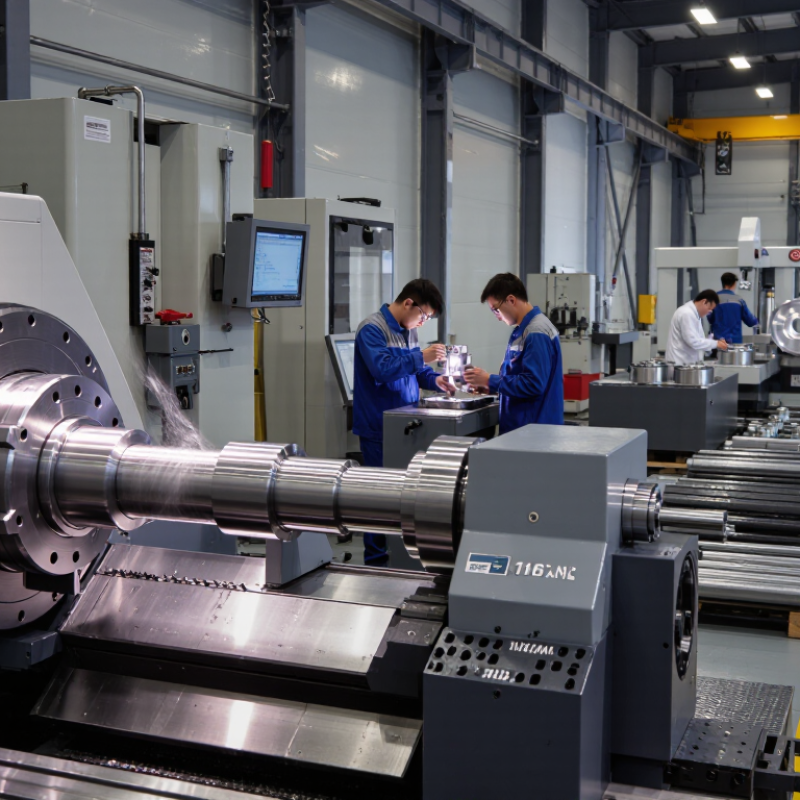
Production capability must match both your part and your schedule. Review machine types, maximum work envelopes, tolerance history, and secondary processes. A five-axis machine may improve access, but it cannot replace skilled process planning. Request a pilot batch before full production. It exposes fixture problems, burrs, and unstable cycle times early. I have seen suppliers promise tight tolerances, then revise them after machining begins. That is disappointing, but useful. Honest communication is often more reliable than impressive equipment lists. Check capacity during peak periods, inspection staffing, and backup plans before approving the supplier.
Comparing quality control, materials, and production capabilities
The chart compares midpoint values from commonly specified ASTM chemical-composition ranges for 304 stainless steel, 316L stainless steel, and 17-4 PH precipitation-hardening stainless steel. Values are shown in weight percent and are intended for supplier screening rather than final material acceptance.
When evaluating a supplier, confirm heat-number traceability, material certificates, positive material identification, calibrated inspection equipment, dimensional inspection records, and documented process controls. Production capability should also match the required alloy, machining tolerance, surface finish, batch size, and heat-treatment requirements.
Cost begins with more than the hourly machining rate. Compare material grades, yield loss, tooling, inspection, packaging, freight, and rework allowances. Stainless steel prices can shift quickly with alloying elements. The International Stainless Steel Forum reported 58.4 million tonnes of global stainless crude steel production in 2023. That scale creates options, but it does not guarantee consistent material quality. Request heat numbers, mill certificates, and a sample inspection report before approving a supplier.
Lead time should be measured from purchase order to accepted parts. Ask for separate timelines for material purchasing, machining, inspection, and shipping. UNCTAD’s Review of Maritime Transport 2024 confirms that maritime shipping carries over 80% of global merchandise trade by volume. Port disruption can therefore affect even a well-planned production schedule.
Require realistic buffer days. A perfect promise may be less useful than an honest delay risk.
Communication is a production control, not a courtesy. Set response times for engineering questions and nonconformance reports. Use drawings with revision control, clear tolerance notes, and documented change approval. Supply stability deserves evidence. Review monthly capacity, backup equipment, approved material sources, and inventory visibility.
Ask whether the supplier can reproduce the same finish after six months. That question is often missed.
A low quote can still be the wrong quote. No scorecard is perfect. Recheck assumptions after the first shipment, especially when surface finish or tight tolerances matter.
How to Choose Stainless Steel Machining Suppliers in 2026?
Selecting the Best Supplier Through Audits and Sample Orders
Stainless steel demand is expanding, but capacity alone does not prove machining quality. The International Stainless Steel Forum reported 62.2 million tonnes of stainless crude steel production in 2024. That scale makes supplier screening more important, not easier. Request an audit before accepting a low-price quotation.
Review calibration records, material certificates, heat-lot traceability, and nonconformance logs. During an onsite audit, inspect chip control, coolant condition, tool-life records, and inspection benches. Ask operators how they react to a drifting diameter. Their answer often reveals more than a polished presentation. ISO’s Survey 2023 recorded 1,265,216 ISO 9001 certificates worldwide. Certification helps. It does not replace verification.
Send a sample order with production-level tolerances, surface-finish requirements, and a defined inspection plan. Measure concentricity, burr height, hardness, and corrosion-sensitive surfaces independently. Ask for raw measurement files, not only a pass certificate. A supplier resisting this request deserves caution. I would still avoid a perfect-score decision. One sample can hide setup variation, rushed inspection, or an unusually skilled operator. Repeat the order later using the same drawing and material grade. That second run may expose the uncomfortable truth.
| Supplier ID | Quality Management Evidence | Material Traceability | Dimensional Pass Rate (Sample Order) |
Surface Finish Result (Ra, µm) |
Critical Dimension Cpk | Sample Lead Time (Business Days) |
On-Time Delivery History | Corrective Action Response | Audit Score (100) |
Recommendation |
|---|---|---|---|---|---|---|---|---|---|---|
| Supplier A | Valid ISO 9001 certificate; documented inspection procedures; calibrated measurement equipment | Heat number, material certificate, and inspection report linked to each lot | 98.5% | 0.62 Within 0.8 µm requirement |
1.67 | 12 | 96% | 8D report submitted within 5 business days | 92 | Preferred for qualification |
| Supplier B | ISO 9001 certificate available; partial evidence of process capability studies | Heat number recorded; certificates supplied on request | 96.8% | 0.74 Within 0.8 µm requirement |
1.42 | 15 | 91% | Corrective action submitted within 8 business days | 84 | Approve with monitoring |
| Supplier C | Quality system documented; certificate renewal evidence requires verification | Material certificates available; lot-to-part linkage incomplete | 94.2% | 0.86 Above 0.8 µm requirement |
1.18 | 18 | 87% | Root-cause response submitted within 12 business days | 72 | Conditional approval |
| Supplier D | Basic quality manual; limited internal audit records and calibration evidence | Heat numbers recorded manually; traceability gaps found in sample documents | 91.6% | 1.12 Above 0.8 µm requirement |
0.96 | 22 | 79% | Corrective action exceeded 15 business days | 58 | Do not qualify yet |
| Supplier E | Valid ISO 9001 certificate; strong first-article inspection and document control | Digital lot genealogy from raw material receipt to final inspection | 99.1% | 0.55 Within 0.8 µm requirement |
1.82 | 14 | 94% | 8D report submitted within 4 business days | 94 | Preferred for qualification |
They should discuss material grade, hardness, tolerances, surface finish, and corrosion exposure.
Look for calibrated CNC lathes, multi-axis machining centers, probing systems, and coordinate measuring equipment.
Check the certificate scope, expiry date, and actual production location.
Request material certificates, inspection results, surface-finish readings, and corrective-action records.
The supplier should understand differences among common stainless grades.
Look for clean gauges, calibration labels, controlled temperature, and organized inspection benches.
A pilot batch can reveal fixture problems, burrs, unstable cycle times, and difficult manual finishing.
Repeat the sample order later using the same drawing and material grade.
Choosing the right Stainless Steel Machining supplier in 2026 begins with clearly defining your project requirements, including material grade, part dimensions, tolerances, surface finish, production volume, and expected delivery schedule. A qualified supplier should demonstrate relevant machining experience, modern equipment, skilled technical staff, and appropriate certifications. It is also important to review their quality control procedures, inspection tools, traceability systems, and ability to work with the required stainless steel materials.
Beyond technical capability, evaluate total cost, lead times, communication efficiency, production flexibility, and supply stability. A competitive quote should be supported by transparent pricing and realistic delivery commitments rather than promises that may compromise quality. Before making a long-term decision, conduct a supplier audit when possible and request sample parts or a small trial order. Reviewing these results can confirm dimensional accuracy, consistency, responsiveness, and overall reliability, helping you select a supplier that can support both immediate needs and future growth.
