Choosing Brass Turned Parts for global sourcing requires more than comparing unit prices. Brass alloy, diameter, tolerance, surface finish, and thread accuracy can change performance significantly. A component that looks identical in a catalog may behave differently in a humid enclosure or under repeated vibration. The U.S. Geological Survey’s Mineral Commodity Summaries 2024 estimated global mined copper production at approximately 22 million metric tons in 2023. This scale reflects a broad and active material supply base, but it does not guarantee consistent brass quality.
Supplier evaluation should connect material evidence with manufacturing capability. Request the alloy designation, chemical analysis, dimensional inspection records, and batch traceability. Confirm whether the supplier controls bar stock, CNC turning, deburring, plating, and final inspection internally. The International Copper Study Group’s market reporting also shows how copper supply, demand, and recycling influence industrial material availability. These factors may affect lead times and price stability. A lower quotation can hide higher rejection costs.
W. Edwards Deming, a leading manufacturing quality authority, stated, “Quality comes not from inspection, but from the improvement of the production process.” That principle applies directly to Brass Turned Parts sourcing. Audit the process, not only the finished samples. Ask for evidence. Check the first article carefully. Some buyers focus too heavily on price, and that is understandable, but incomplete. Even a strong supplier can miss a tolerance after a tooling change. This guide examines practical selection criteria, documentation, communication, and risk controls for dependable international sourcing. The difficult part is admitting that “best supplier” depends on the application, not the brochure.
Define Brass Turned Parts and Their Global Sourcing Requirements
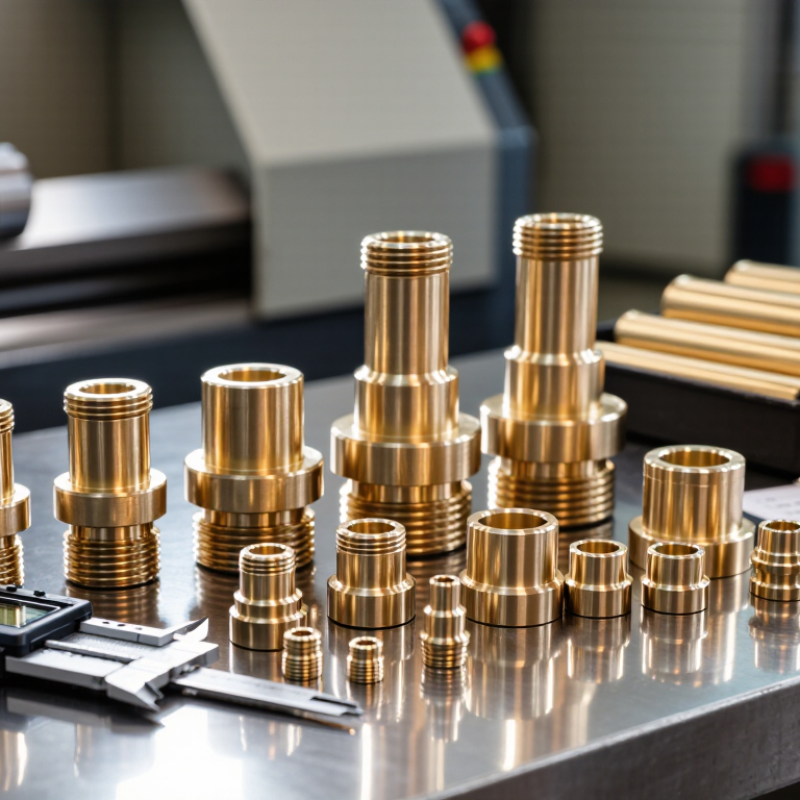
Brass turned parts are precision components machined from brass bar stock on automatic or CNC lathes. The cutting tools form diameters, shoulders, grooves, holes, and threads in one controlled sequence. Common examples include electrical terminals, valve stems, inserts, fittings, and sensor connectors. Their value comes from stable dimensions, good machinability, and brass’s resistance to corrosion. However, “brass” is not one material. Different copper-zinc alloys affect strength, conductivity, plating, and cost.
For global sourcing, start with a complete drawing and a measurable specification. State the alloy grade, raw-material condition, dimensions, tolerances, thread standard, surface finish, and burr limits. Add annual volume, batch size, inspection method, and acceptable defect levels. If the part enters drinking-water, electrical, or automotive applications, confirm applicable regional requirements before quoting. Compliance documents should match the actual material heat or batch, not a generic file from a previous order. Keep it traceable.
A reliable supplier should explain process capability, gauge selection, lead time, packaging, and corrective-action procedures. Request samples, dimensional reports, material certificates, and photographs of packed cartons. For long-distance shipments, specify moisture protection, separator design, labels, and pallet limits. I have learned that a polished sample can conceal unstable production. Pilot runs and independent inspections expose that weakness earlier. Still, inspection plans can become excessive and slow a simple part. The practical balance is to control critical features tightly and review the rest by risk.
Assess Material Grades, Precision, and Part Specifications
Choosing brass turned parts starts with the material grade, not the supplier’s price. C36000 free-cutting brass is widely used for threaded fittings and small shafts. Copper Development Association technical data gives C36000 a machinability rating of 100, used as the industry benchmark. C38500 can improve cutting performance, while C46400 offers better seawater resistance. The choice must match the working environment.
Precision needs measurable definitions. State diameter tolerance, concentricity, thread class, surface roughness, burr limits, and inspection method. ISO 2768 may support general tolerances, but critical features need individual values. A 0.02 mm tolerance sounds impressive. It may be unnecessary. It can also increase production cost sharply. Ask for a dimensional report from first articles, not only a certificate of conformity. Include material certificates showing chemical composition and temper.
Global sourcing adds another layer of risk. The International Copper Study Group’s 2024 market forecast placed global refined copper usage near 26 million metric tons, showing the scale of the supply chain but not guaranteeing stable brass quality. Confirm the exact standard, batch traceability, packaging, and sampling plan. Inspect thread fit with calibrated gauges. Check plating thickness separately. A polished sample can hide poor concentricity. I have seen drawings copied for years without reviewing actual service loads. That is a mistake worth challenging. Specify what truly matters, and leave harmless features flexible.
Evaluate Suppliers, Manufacturing Capabilities, and Quality Systems
How to Choose Brass Turned Parts for Global Sourcing?
A reliable supplier should show more than attractive samples. Ask for process records, inspection reports, and clear answers about material traceability. Confirm the supplier’s experience with brass grades, CNC turning, thread forms, and tight tolerances. A capable team should explain how it controls burrs, tool wear, surface marks, and dimensional drift during long production runs. Request a sample made with the same equipment and material planned for mass production. A showroom sample can mislead.
Manufacturing capability must match your drawing, not just your expected volume. Check machine ranges, automatic feeding systems, secondary operations, and measurement equipment. Quality systems should include incoming material checks, first-article inspection, in-process sampling, and final inspection. Ask how nonconforming parts are isolated and corrected. Calibration records matter. So does honest communication when a tolerance seems unrealistic. Some suppliers promise too much. That is a warning sign. An independent pre-shipment inspection may add cost, but it can reveal mixed batches, damaged threads, or inconsistent plating.
Tips: Compare at least three suppliers using the same technical questionnaire. Request a control plan and material certificates. Define acceptance limits for diameter, thread fit, cleanliness, and packaging. Keep communication written and specific. Do not approve production from photographs alone. I would also review a supplier’s corrective-action history, although this information may be incomplete. That limitation deserves attention.
Compare Costs, Lead Times, Logistics, and Import Considerations
When sourcing brass turned parts, compare landed cost, not only the piece price. A low quotation may hide tooling, plating, inspection, packaging, and destination handling. USGS Mineral Commodity Summaries 2024 reported global copper mine production at about 22 million metric tons in 2023. Copper content makes brass pricing sensitive to metal movements. Ask for an alloy standard, part weight, scrap policy, and quotation validity. Otherwise, the spreadsheet looks precise but is not.
Lead time should separate production, inspection, booking, ocean transit, customs, and final delivery. UNCTAD’s Review of Maritime Transport 2023 states that ships carry over 80% of global merchandise trade. That scale is efficient, yet port congestion and schedule changes remain practical risks. The World Bank’s Logistics Performance Index 2023 evaluates customs, infrastructure, shipment ease, service quality, tracking, and timeliness. Use these dimensions when comparing supplier countries, not assumptions about geography. Request a realistic buffer. Five extra days may protect a production line.
For imports, confirm the HS classification with a qualified customs broker, then model duty, VAT or sales tax, brokerage, and bond fees. Drawings should define thread gauges, burr limits, surface finish, RoHS or other required declarations, and sampling rules. Incoterms clarify responsibilities, but they do not replace import compliance. Air freight can rescue an urgent order, but its cost may exceed the part value. Sea freight is cheaper for volume, though minimum charges can surprise smaller buyers. Forecasts remain imperfect. Recheck metal surcharges and freight quotes before release.
How to Choose Brass Turned Parts for Global Sourcing?
Comparison of estimated landed cost, lead time, logistics, and import planning factors for a standard brass turned part program.
Benchmark basis: 1,000 precision brass turned parts, approximately 10 g per part, repeat production order, standard sea or ground freight, and normal commercial inspection. Costs are planning estimates in USD and exclude destination-country VAT and duties because import rates depend on HS classification and destination.
How to read the chart: Lower landed cost is not always the best choice. Shorter lead times can reduce inventory exposure, while logistics and import costs may offset a lower unit price. Before selecting a supplier, confirm brass alloy, tolerances, certificates, packaging, Incoterms, country of origin, HS code, tariff rate, customs documentation, and any applicable preferential trade agreement.
Verify Samples, Compliance Documents, and Long-Term Supply Reliability
Choosing brass turned parts for global sourcing requires more than inspecting a bright, well-finished sample. Verify the drawing, alloy grade, tolerances, thread gauges, burr control, and surface treatment. Request a dimensional inspection report for every critical feature. Material certificates should show heat numbers and match the supplied batch. Confirm compliance documents for restricted substances and regional requirements, such as RoHS and REACH declarations. I have learned that a polished sample can hide weak process control. One missed thread or oversized shoulder may create assembly failures later.
Long-term supply reliability needs measurable evidence. Ask for monthly capacity, machine availability, quality records, corrective-action history, and on-time delivery data. Review the supplier’s change-control procedure before approval. It should cover tooling, raw materials, subcontractors, and inspection methods. McKinsey’s 2020 supply-chain survey found that 93% of leaders planned to increase resilience investments. That finding remains useful, but resilience must be tested, not promised. The World Bank’s 2023 Logistics Performance Index also highlights customs, infrastructure, and delivery timeliness as key logistics factors. These risks can affect even small precision components.
Tips: Approve samples from normal production, not special trial runs. Request a first-article report and retain sealed reference parts. Audit packaging, labeling, and corrosion protection. Test a second batch after several months. A supplier may pass once and still need closer monitoring. Keep a backup source when tooling or raw-material dependence is high.
FAQS
Request process records, inspection reports, material certificates, and traceability details. A showroom sample is not enough. Ask clear questions about alloy grades, threads, tolerances, burrs, and surface marks.
Equipment and material can change the result. A special sample may look perfect, while normal production develops tool wear or dimensional drift. Approve samples made under planned mass-production conditions.
Check CNC turning ranges, automatic feeding, secondary operations, and measuring equipment. The supplier must match your drawing. Volume alone proves little.
Good controls include incoming material checks, first-article inspection, in-process sampling, and final inspection. Ask how rejected parts are isolated and corrected. Calibration records also matter.
Request dimensional reports for every critical feature. Check diameter, shoulder size, thread fit, burrs, cleanliness, and surface treatment. Use suitable thread gauges. One missed thread can stop assembly.
Material certificates should identify the alloy and batch heat numbers. The numbers must match the delivered material. Also request declarations for restricted substances and applicable regional requirements.
Review monthly capacity, machine availability, delivery records, and corrective-action history. Ask about tooling, raw-material, subcontractor, and inspection changes. Test another batch after several months. One successful batch is not proof.
It can reveal mixed batches, damaged threads, poor plating, or inconsistent dimensions. The extra cost may prevent larger assembly problems. Still, inspection cannot replace supplier process control.
Use the same technical questionnaire for at least three suppliers. Define acceptance limits for dimensions, threads, packaging, cleanliness, and corrosion protection. Keep communication written and specific. Do not approve production from photographs alone.
Be cautious when a supplier promises every tolerance without discussion. Ask what happens when a drawing seems unrealistic. Corrective-action records may be incomplete. That limitation deserves attention.
Conclusion
Choosing Brass Turned Parts for global sourcing requires a structured evaluation of both technical and commercial factors. Start by defining the part’s application, dimensions, tolerances, thread requirements, surface finish, and expected production volume. Confirm that the proposed brass grade provides the necessary strength, corrosion resistance, machinability, and performance for the intended environment. Precision requirements should be clearly documented so suppliers can consistently meet specifications.
Next, assess suppliers according to their machining equipment, production capacity, inspection methods, and quality management systems. Compare total costs rather than unit prices alone, including tooling, packaging, transportation, duties, lead times, and other import-related expenses. Before placing a large order, verify samples, material certificates, inspection reports, and compliance documents. Clear communication, reliable logistics, traceable production records, and a proven ability to maintain stable quality are essential for building a dependable long-term supply relationship.